
Choosing where to legally anchor your business is a major decision that impacts your tax liabilities, how easily you can manage your company, and your long-term legal protection. Many entrepreneurs default to filing in their home state, only to realize later that their funding strategies or business models would have been better served by a different jurisdiction.
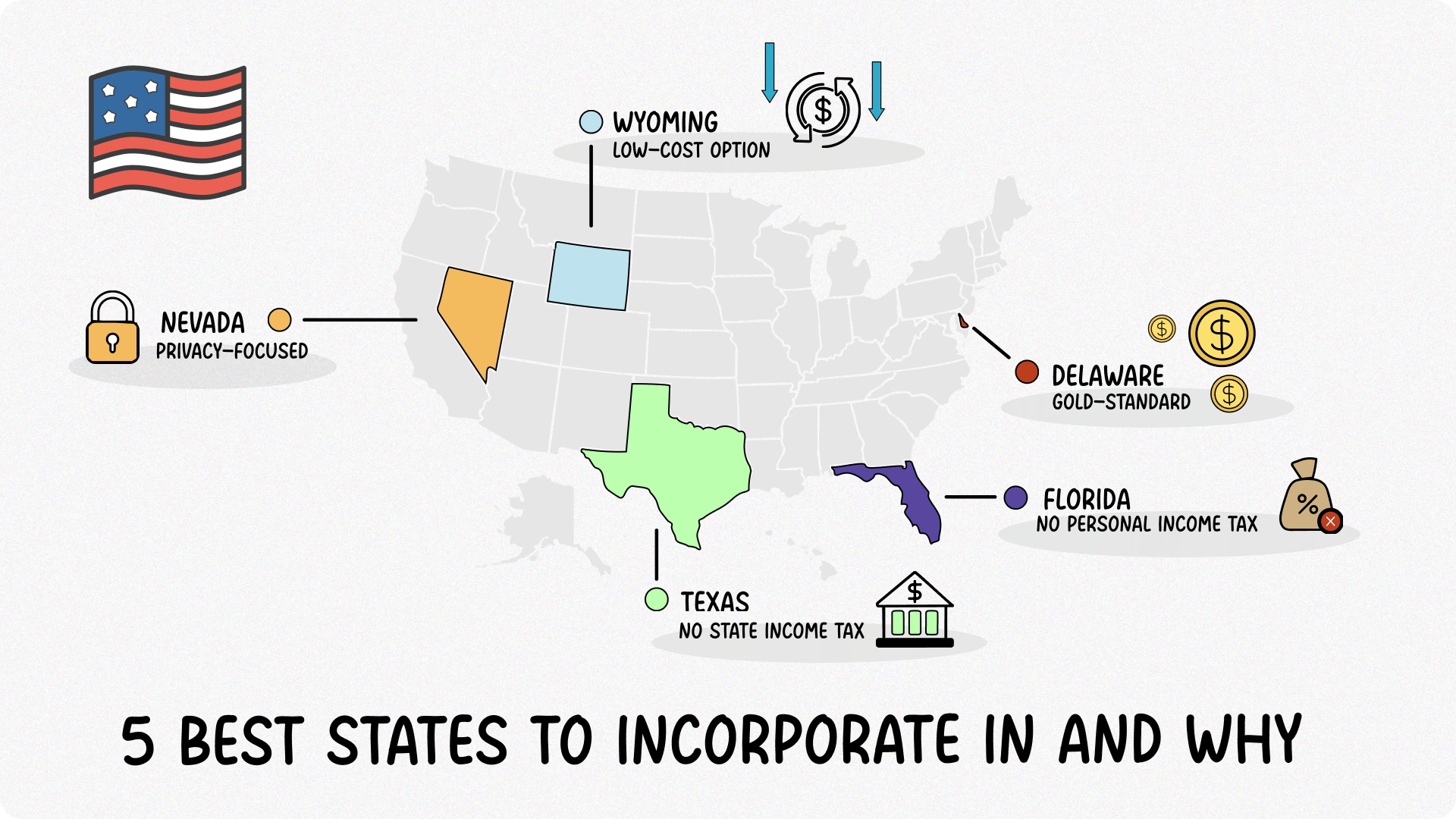
There is no single “best” state for every business. The right choice depends entirely on your capital structure, privacy requirements, and where you physically operate. This guide breaks down exactly how Delaware, Wyoming, Nevada, Texas, and Florida offer distinct advantages for corporate formation, looking beyond basic filing fees to examine the underlying legal and tax frameworks that impact your growth.
In this Article
- Key Factors in Selecting a State
- Comprehensive State-by-State Analysis
- TL;DR: Summary Matrix
- Critical Questions Before Filing
- Final Thoughts
Key Factors in Selecting a State
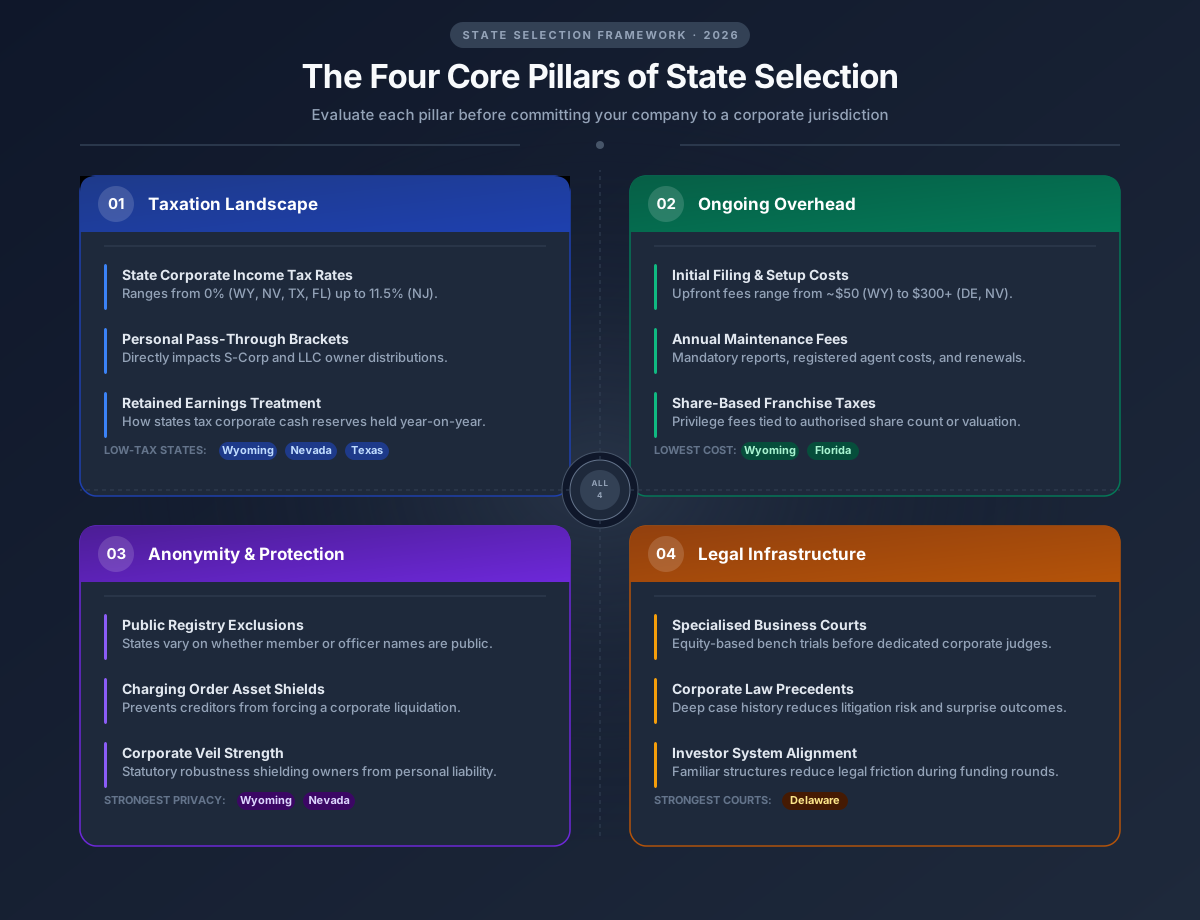
When evaluating a state for incorporation, you need to look at four primary financial and regulatory angles. The right balance depends entirely on your specific business priorities.
- Corporate Income Tax Rates & Structures: U.S. states have wildly different corporate tax landscapes. States like Nevada, South Dakota, and Wyoming don’t levy any state corporate income tax at all. On the flip side, states like California impose a flat 8.84% corporate tax rate, and New Jersey reaches rates as high as 11.5%. Knowing how a state taxes money left in the company versus money you pay out to yourself is essential for mapping out your cash flow.
- Franchise Taxes and Maintenance Fees: Beyond standard income taxes, many states charge a franchise tax, which is a fee for the privilege of existing or doing business in that state. These costs vary significantly. Delaware, for example, uses complex calculations based on your authorized shares or asset value that can result in surprisingly large annual bills for high-growth startups if you aren’t careful.
- Privacy and Legal Protections: The strength of a state’s corporate shield and what information it forces you to make public vary heavily by geography. Jurisdictions like Wyoming and Nevada offer robust privacy protections, allowing companies to keep the names of shareholders, officers, and directors off public state registries. States also differ in their asset protection laws, specifically whether a personal creditor can seize your corporate shares or is strictly limited to a charging order.
- Legal Infrastructure and Precedents: If your business encounters an internal partner dispute or a third-party lawsuit, the predictability of the state court system becomes critical. Some states handle business disputes within general civil courts before a jury, while others feature specialized business courts where experienced judges resolve complex corporate matters quickly based on an extensive body of established legal precedent.
Comprehensive State-by-State Analysis
Delaware: The Institutional and Venture Capital Standard
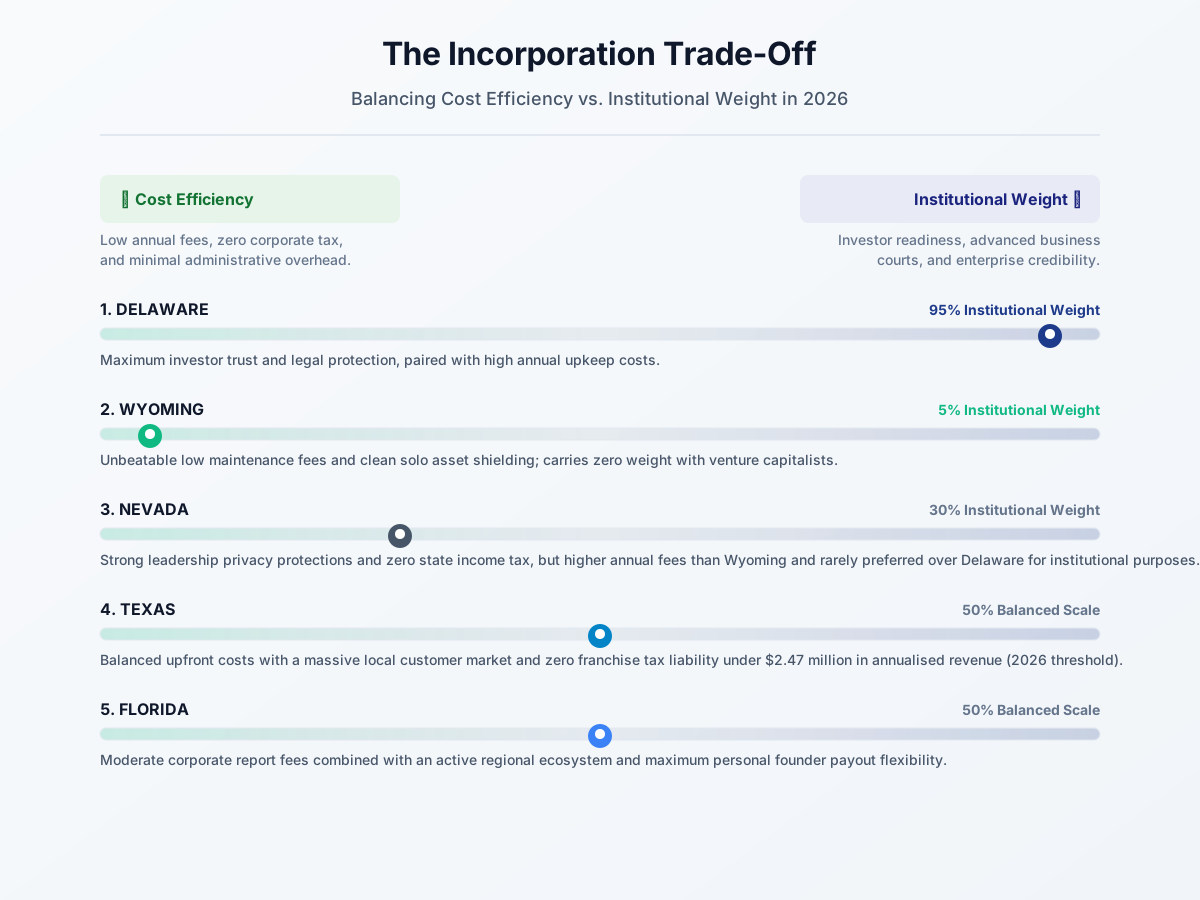
Delaware differentiates itself not by being cost-effective, but by acting as the universally accepted legal framework for outside investors. While other states pitch low fees, Delaware focuses on corporate flexibility, maximizing options for complex equity structures, and offering unparalleled legal predictability. This is why tech giants like Alphabet (Google), Amazon, Apple, and high-growth scale-ups like Stripe and Airbnb choose Delaware.
- Chancery Court: The standout advantage is the Delaware Court of Chancery, which is a specialized trial arena dedicated exclusively to corporate law. Because disputes are decided by expert business judges rather than general juries, rulings are swift, predictable, and backed by centuries of case law.
- Flexible Corporate Governance: Delaware’s corporate laws offer unmatched structural freedom. Boards can seamlessly adjust capitalization, issue multiple classes of stock, protect minority shareholders, or implement staggered board configurations with minimal friction.
- Strong Baseline Privacy: Delaware does not require you to list the personal names of your LLC members or corporate officers in the public formation documents, keeping your internal registry off public search engines by default.
- Important Trade-offs: Delaware is a costly ecosystem to maintain, and it does levy an 8.7% state corporate income tax on companies actually doing business within the state. Expect roughly $89 for initial filing fees, a recurring $50 annual report fee, and a franchise tax that starts at $175 for small entities but can scale rapidly based on authorized shares. You will also need to budget for annual registered agent fees.
Note on Delaware LLCs vs. Corporations: If you form an LLC instead of a corporation in Delaware, you owe a flat $300 annual tax due June 1 each year instead of the franchise tax, and you do not need to file an annual report.
Wyoming: Low-Cost Maintenance and Administrative Simplicity
Wyoming differentiates itself by offering the leanest, most affordable corporate maintenance structure in the country. Where Delaware targets venture-backed corporations, Wyoming targets solopreneurs, digital nomads, and bootstrapped e-commerce brands looking for solid asset protection without ongoing paperwork burdens.
- Elite Charging Order Protections: Wyoming features exceptionally robust asset shielding laws. If you face a personal lawsuit, a creditor’s exclusive remedy against your LLC interest is a charging order, meaning they cannot liquidate your business, seize its underlying operational assets, or strip you of control. This protection legally extends to single-member LLCs.
- True Anonymity Options: Wyoming allows corporate organizers to completely omit member and manager names from the public registry. Only your initial organizer, which is often a filing service, is disclosed, providing clean operational privacy.
- Minimal Recurring Overhead: Wyoming levies no state corporate income tax, no personal income tax, and no franchise taxes. There is also no state property tax on business inventory, which can benefit businesses holding physical goods.
- Important Trade-offs: Wyoming commands virtually no weight with institutional venture capitalists. If you want to raise VC money later, you will likely have to convert the entity to a Delaware corporation, which adds legal and accounting costs. Also note that operating a physical warehouse or fulfillment center in Wyoming does establish sales tax nexus, creating collection and remittance obligations for taxable sales.
- Estimated Costs: The initial setup fee is $100, and your ongoing maintenance is a minimum $60 annual report fee.
Nevada: Premium Privacy and Robust Asset Protection
Nevada differentiates itself by actively shielding corporate leadership teams from public visibility. It combines a zero-tax structure with some of the strictest operational privacy rules in the United States.
- Advanced Leadership Anonymity: Nevada strictly prohibits the public disclosure of corporate shareholders and does not require you to list officers or directors in the public Articles of Incorporation. It also provides strong statutory immunity for officers and directors against personal liability for corporate actions.
- Specialized Business Court Dockets: To emulate Delaware’s speed, Nevada has established specialized Business Court dockets in Clark and Washoe counties. Commercial disputes bypass crowded civil courts and land directly in front of judges trained specifically in complex business litigation.
- No State Income Tax: Nevada levies no corporate income tax, franchise tax, or personal income tax, making it a powerful foundation for high-earning entities. Businesses with over $4 million in Nevada gross revenue are subject to a Commerce Tax where rates vary by industry, but most small businesses will never reach this threshold.
- Important Trade-offs: Nevada is expensive relative to Wyoming. The initial filing fee starts at $75 and scales with authorized stock value, but you must also file a $150 initial officer list and pay a $500 annual business license fee for corporations. Total recurring annual fees are approximately $650. While Nevada markets its privacy aggressively, all U.S. businesses must still file federal tax returns with the IRS regardless of state of incorporation because Nevada’s privacy protections apply to state-level public registries, not federal obligations.
Texas: Scaling Infrastructure and High-Volume Local Markets
Texas differentiates itself by being an operational powerhouse rather than a passive filing haven. It is built for growing agencies, technology scale-ups, and companies that intend to establish a physical footprint, hire local talent, and capture market share within a massive domestic economy.
- High Franchise Tax Exemption Floor: Texas uses a Margin Tax instead of a traditional corporate income tax. Companies generating under $2.65 million in annualized revenue owe $0 in state franchise tax for the 2026 report year. Above that threshold, the rate is 0.375% for wholesale and manufacturing businesses and 0.75% for most others. Note that the Comptroller adjusts the no-tax-due threshold for inflation on a biennial cycle, so businesses should verify the current figure directly with the Texas Comptroller when filing for 2027 and beyond.
- Zero Personal Income Tax Drag: There is no state personal income tax, meaning founders can draw significant salaries or distributions without losing percentages to local tax brackets.
- Vibrant Business Ecosystem: Incorporating in Texas provides immediate local credibility, linking your entity to deep talent pools and collaborative networking hubs across major metropolitan markets like Austin, Houston, and Dallas, which host the headquarters of companies like Tesla, Oracle, and CrowdStrike.
- Important Trade-offs: Initial formation costs are relatively high with a flat $300 Certificate of Formation fee. The Texas Enterprise Fund does provide performance-based grants to attract business investment, but it is specifically designed for large competitive relocation projects that create a significant number of jobs, meaning it is not a resource available to typical startups or small businesses.
Important Compliance Note: Even if your revenue is below the $2.65 million threshold and you owe zero franchise tax, you are still required to file a Public Information Report with the Texas Comptroller by May 15 each year. Skipping this filing triggers a $50 penalty.
Florida: Balanced Taxation and Regional Ecosystem Growth
Florida differentiates itself by offering an ideal tax environment for business owners who prioritize personal income retention. It strikes a highly attractive balance with a predictable low-rate corporate tax and a completely tax-free landscape for individual income.
- Founder-Centric Tax Efficiency: With zero personal state income tax, business owners can pass corporate profits through an S-Corporation or LLC structure directly to their personal accounts, completely unburdened by state income taxes.
- Competitive Corporate Environment: For entities operating as C-Corporations, Florida imposes a clean, flat 5.5% corporate income tax rate, with no franchise taxes or capital-stock taxes based on company net worth.
- Rapidly Expanding Tech Hubs: Florida offers an active, high-growth consumer market and rapidly evolving technology corridors in Miami, Tampa, and Orlando, which host major footprints like Chewy and Citrix Systems, blending lifestyle advantages with genuine regional growth.
- State-Specific Incentives: Florida provides a complete sales and use tax exemption on machinery and equipment purchased for manufacturing. The Capital Investment Tax Credit is also available for large-scale capital projects requiring a minimum $25 million investment and 100 new jobs, offering up to 5% of eligible capital costs annually for up to 20 years.
- Important Trade-offs: Unlike Wyoming or Nevada, Florida does have a corporate income tax system. If you retain profits inside a C-Corporation, you face an annual state tax filing obligation. The initial filing fee is $70, and annual report fees are $150 for corporations and $138.75 for LLCs.
TL;DR: Summary Matrix
| State | Primary Strategic Advantage | Best Suited For | Top Operational Priority |
| Delaware | Institutional credibility, VC readiness, advanced corporate courts | Venture-backed startups, high-growth entities, complex boards | Raising Outside Capital / IPO Roadmap |
| Wyoming | Maximum affordability, asset shielding, low paperwork | Solopreneurs, e-commerce, bootstrapped digital companies | Minimizing Upkeep & Protecting Solo Assets |
| Nevada | Strict leadership anonymity, asset protection, business courts | Privacy-conscious owners, asset managers, mid-size firms | Maximum Operational Privacy |
| Texas | Massive regional market, zero franchise tax under $2.65M revenue | Agencies, regional employers, manufacturing, tech scale-ups | Scaling Physical Infrastructure & Local Hiring |
| Florida | Balanced founder tax environment, high consumer market access | Profitable brands, regional agencies, expanding tech hubs | Founder Wealth Maximization & Distribution |
Critical Questions Before Filing
To avoid inadvertently triggering double-compliance obligations, analyze these operational realities prior to registration:
- Physical Nexus vs. Virtual Presence: If you reside in a state with strict tax laws like California or New York but incorporate in a tax-free state like Wyoming, your home state still considers your day-to-day management to be a local operation. You will likely need to register as a Foreign Entity in your home state, facing filing requirements, registered agent fees, and corporate tax exposures in both jurisdictions.
- Governance and Exit Strategies: If your roadmap includes seeking angel investment, participating in institutional startup accelerators, or issuing stock options to early employees, select Delaware from inception. Converting a non-Delaware entity into a Delaware C-Corporation later can introduce thousands of dollars in unnecessary legal restructuring and accounting fees.
- Banking and Merchant Account Strategy: Some payment processors and traditional banks require physical verification of business operations within the state of incorporation before opening an account. If you choose an out-of-state filing like Nevada or Wyoming, ensure your banking partner explicitly supports virtual business structures using registered agents.
- Intellectual Property Holdings: If your business centers around proprietary software, patents, or brand trademarks, consider how a state treats intangible assets. Delaware offers highly specialized tax holding rules for IP, whereas moving an asset-heavy tech company into a state with aggressive local corporate reporting rules can complicate tax filings.
- Owner Privacy Requirements: If you value personal privacy or operate in sensitive industries, Nevada and Wyoming allow you to keep your name entirely off public state databases. If public transparency builds consumer trust for your brand, states with open public registries like Florida may be a cleaner fit.
- What is your expected revenue timeline? If you expect to scale rapidly past $2.65 million in your first two years, Texas’s Margin Tax and Nevada’s Commerce Tax, which applies above $4 million in Nevada gross revenue, require proactive accounting planning that a pre-revenue startup wouldn’t normally need to consider.
Final Thoughts
Every entrepreneur starts exactly where you are right now: staring at a blank filing form, weighing numbers, and trying to predict the future layout of their company.
If you find yourself stuck in analysis paralysis, simplify your decision by looking at your business model’s immediate 12-month horizon:
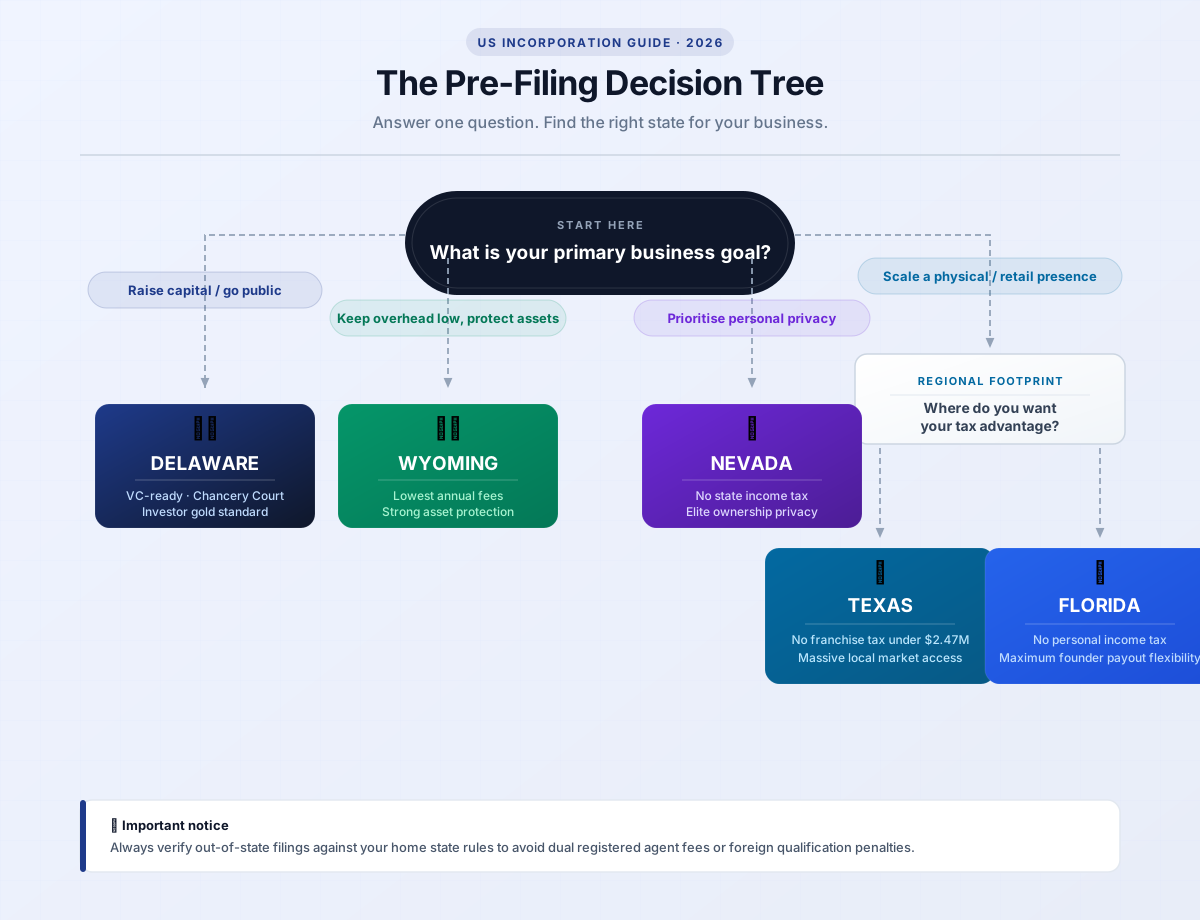
- Raising outside funding immediately? File in Delaware.
- Bootstrapping a lean, remote business with minimal hassle? Choose Wyoming.
- Personal privacy is paramount and you have the budget for upkeep? Select Nevada.
- Building a physical office, warehouse, or team in a booming local economy? Look to Texas or Florida.
Once you have identified the state that aligns with your current priorities, your next steps are straightforward: secure a registered agent in that jurisdiction, file your Articles of Organization or Incorporation, and obtain your federal EIN.
One final reminder that applies regardless of which state you choose: incorporating in a different state from where you actually live and operate does not eliminate your home state tax obligations. You will almost certainly need to register as a foreign entity in your operating state, meaning you pay fees and meet compliance requirements in both. Factor this into your total cost comparison before making a final decision.
By taking the time to match your state selection to your actual operational strategy today, you protect your personal assets and build a clean foundation for wherever your business takes you next.
For a visual breakdown of how these specific legal and financial trade-offs operate side-by-side, this Wyoming LLC vs. Delaware LLC video provides a practical analysis of ongoing maintenance fees, asset protections, and exact filing pathways to help you choose the correct entity structure.
About the Author
Isabella Jones started her career at Deloitte, where she worked on tax compliance for some of the country’s fastest-growing companies. She later joined Fynlo as Senior Financial Strategist, bringing that experience to freelancers and small business owners who need practical financial guidance without the corporate complexity.
With an Accounting degree from Villanova University, Isabella focuses on making financial planning easier to understand and apply in day-to-day business. She works closely with freelancers and small businesses on areas like taxes, cash flow, and building more stable financial systems.