
Running a micro-business or a growing freelance operation means constantly balancing costs against value. You know you need professional accounting software—you need reports, tax compliance, and clean books. Yet, paying a monthly subscription for QuickBooks or Xero when your income is still irregular can feel like an unnecessary burden.
You’re looking for a free alternative, but the search can be overwhelming. There are dozens of tools out there, and finding one that is truly free and powerful enough for a real micro-business is a challenge. The right tool is a strategic investment; it saves you time and ensures you build the solid financial foundation you need for future growth.
Here, we review the top genuinely free alternatives available today. We look at their core features, limitations, and help you find the best starting point for your micro-business.
Note: Fynlo is developed and operated by our team. We aim to keep this review entirely fair and balanced, evaluating all platforms purely on their documented features, limitations, and operational suitability.
In this Article
- 8 Platforms at a Glance
- Functional Limits of Each Free Plan
- Strengths and Constraints of Each Platform
- Administrative and Economic Implications of Free Software
- Maintaining Data Portability and Compliance
8 Platforms at a Glance
- Wave
A primary option for North American service-based freelancers who require professional invoicing without recurring costs. - Zoho Books
A highly scalable system for small businesses that plan to eventually utilize a broader ecosystem of business applications. - QuickFile
A specialized tool for low-volume businesses that require advanced features like multi-currency support and MTD compliance.
- Pandle
A straightforward bookkeeping solution prioritizing ease of use and specific compliance requirements for UK-based users.
- Fynlo
A specialized choice for global founders requiring high-level multi-currency tracking and budget variance analysis.
- Manager.io
A comprehensive desktop-based accounting suite offering extensive features for users who prefer offline data management.
- Akaunting
An open-source, modular accounting platform that provides founders with complete control over their financial data.
- ZipBooks
A modern, data-focused platform that offers automated expense categorization and intuitive financial feedback.
Functional Limits of Each Free Plan
These platforms all offer a permanently free tier, making them excellent starting points for sole traders and service-based freelancers.
| Software | Primary Free Plan Name | Ideal Use Case | Key Free Limitations |
| Wave | Starter Plan | North American Micro-Businesses | Many automated bookkeeping features, including bank connection functionality, are reserved for the Pro plan; Receipt scanning is available as a paid add-on or included with Pro |
| Zoho Books | Free Plan | High-Growth Small Teams | Revenue limits (typically <$50k USD / £35k UK, depending on region and eligibility rules) |
| QuickFile | XS, S, and M | UK Low-Volume Transactions | Limited to 1,000 accounting entries (nominal ledger postings) per year |
| Pandle | Pandle Free | Simplified Bookkeeping | Automated bank feeds reserved for paid version |
| Fynlo | Forever Free | Global / Multi-Currency | Restricted to 20 monthly invoices |
| Manager.io | Desktop Edition | Privacy & Offline Power Users | No cloud access or mobile application |
| Akaunting | Standard (Self-Hosted) | Tech-Savvy Owners | Advanced modules and bank feeds carry extra costs |
| ZipBooks | Starter Tier | Digital Service Providers | Restricted to a single user and basic reporting |
Strengths and Constraints of Each Platform
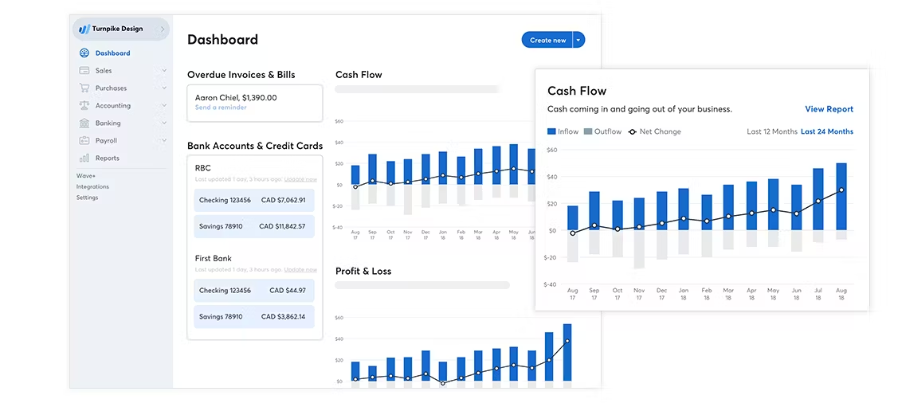
1. Wave
Wave has established itself as a leading choice for micro-businesses in the United States and Canada, reporting support for more than 5.9 million small business owners since 2009 (company data, accessed May 2026). It carried approximately a 4.4/5 rating on G2 as of May 2026 and remains popular due to its lack of caps on the number of customers, invoices, or transactions.
The “Starter Plan” provides a full double-entry accounting system at no cost. However, it is important to note that as of 2026, Wave has moved several core features to its “Pro” tier. Many automated bookkeeping features, including bank connection functionality, are now reserved for Pro users in most cases. Transaction data may therefore need to be manually uploaded via CSV or Excel files. Receipt scanning is available as a separate paid add-on on the free Starter plan, or included at no extra cost for Pro users. Certain invoice customization options also require a paid subscription.
Wave generates revenue primarily through payment processing fees, making it a viable long-term solution for businesses that accept credit card payments through the platform.
2. Zoho Books
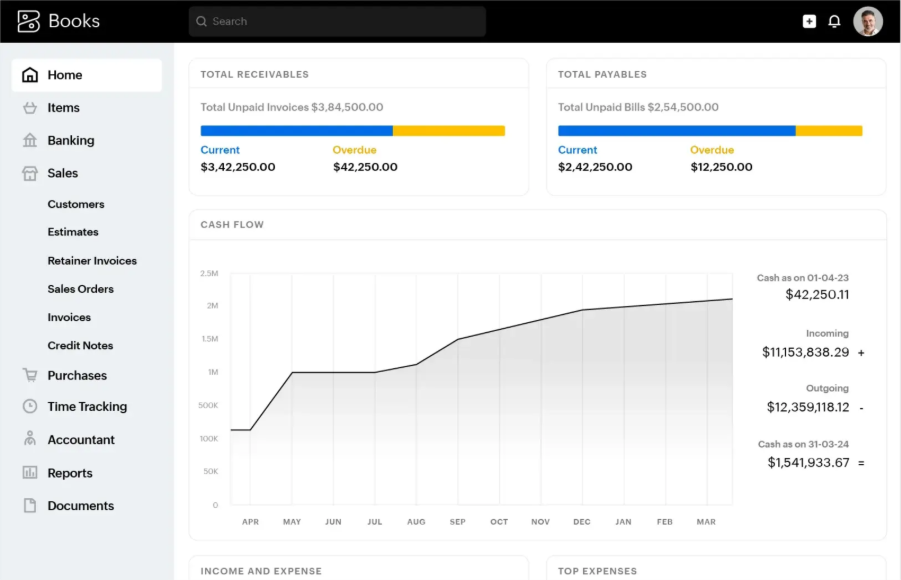
Zoho Books is part of a much larger ecosystem of business software, giving it a powerful advantage in scalability. It currently held approximately a 4.6/5 rating on G2 and a 4.7/5 rating on SoftwareSuggest as of May 2026.
The “Free Plan” is generous but carries strict operational caps: it is limited to a single user plus one accountant, and allows for up to 1,000 invoices per year. Furthermore, the plan is only available to businesses that do not exceed an annual revenue threshold specific to their region, such as approximately $50,000 in the USA or £35,000 in the UK. For businesses under these limits, Zoho offers sophisticated features including a dedicated client portal and multi-lingual invoicing. However, more advanced requirements like multi-currency handling and automated bank reconciliation are reserved for the paid tiers starting at $20 per month.
3. QuickFile
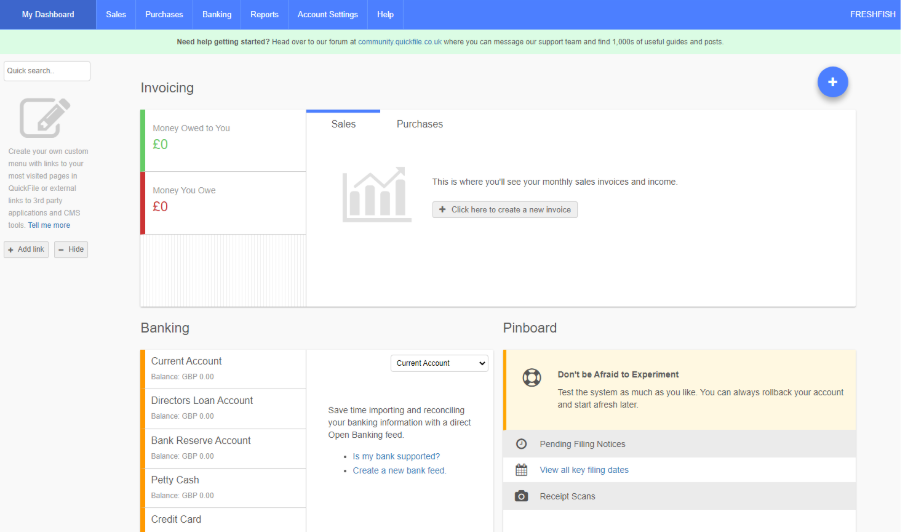
QuickFile is a feature-rich solution that is highly regarded for its flexibility, especially within the UK market. It carries a 4.8/5 rating on Trustpilot as of May 2026.
The software is permanently free for businesses that maintain fewer than 1,000 accounting entries (nominal ledger postings) in a rolling 12-month period. Unlike many free competitors, QuickFile includes full multi-currency support and MTD-compatible VAT filing within its free tiers (XS, S, and M). If a business exceeds the 1,000-transaction limit, an annual fee of £60 plus VAT applies. It also offers a “Power User” subscription for approximately £54 + VAT per year, which unlocks advanced customization and white-labeling options for those requiring a more professional appearance.
4. Pandle
Pandle is designed with a focus on simplicity, currently maintaining approximately a 4.7/5 rating on Trustpilot based on more than 800 reviews as of May 2026. It is particularly popular among UK-based sole traders due to its built-in Making Tax Digital (MTD) VAT compliance.
The “Pandle Free” plan provides unlimited invoicing, customers, and core bookkeeping features without a revenue cap. Its primary limitation is the lack of automated bank feeds; free users must manually import bank statements and categorize transactions. While it lacks some of the complex inventory and project management features found in larger platforms, its “Smart Automation” features (available in the £5/month Pro version) are designed to eventually reduce manual entry as the business grows.

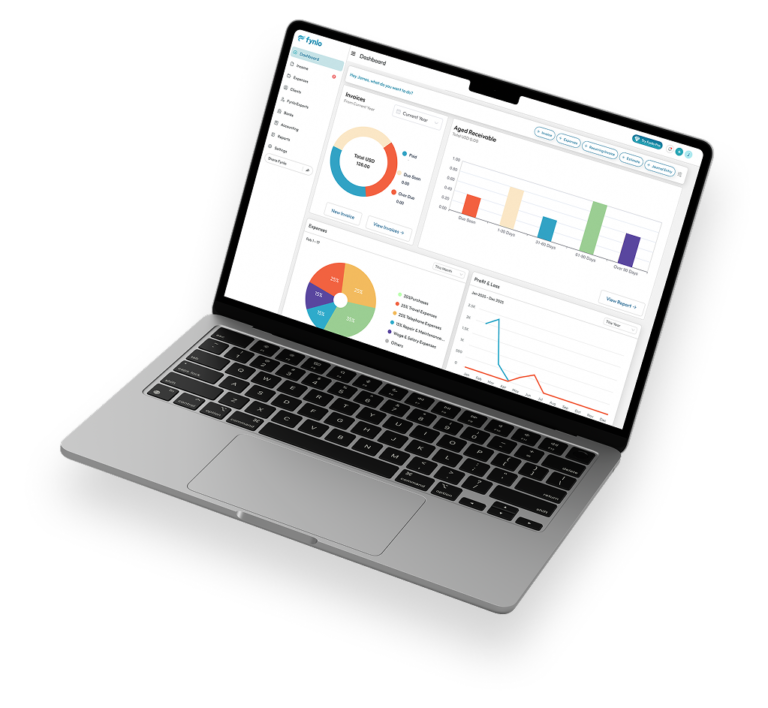
5. Fynlo
Fynlo is a specialized accounting tool designed for global freelancers and micro-businesses that require robust multi-currency reporting and project-level budget tracking.
The “Forever Free” plan allows for up to 20 monthly invoices and includes income and expense tracking, budget variance analysis, and multi-currency reporting. Fynlo also includes automatic Foreign Exchange (FX) gain/loss calculations, which may be particularly useful for businesses working with international clients. The free tier supports access for one user plus one accountant. However, the free tier’s 20-invoice monthly cap may be restrictive for businesses with higher client volume. More advanced features, such as automated payment collection and advanced budgeting, are available in the paid Starter ($9/month) and Professional tiers.

6. Manager.io
Manager.io provides a unique value proposition for businesses that prefer offline data storage and privacy. Its desktop version is free and has no limits on data volume or the number of entities managed. It held approximately a 4.7/5 rating on GetApp as of May 2026.
The desktop edition is a comprehensive accounting engine that includes inventory management, fixed asset tracking, and limited payroll functionality depending on jurisdiction—features that are rarely free in cloud-based software. Because it is an offline application, it does not require an internet connection to operate, though this also means that mobile access and cloud collaboration are not available. Users who eventually require multi-user access can migrate to the Cloud Edition for $39 per month.
7. Akaunting
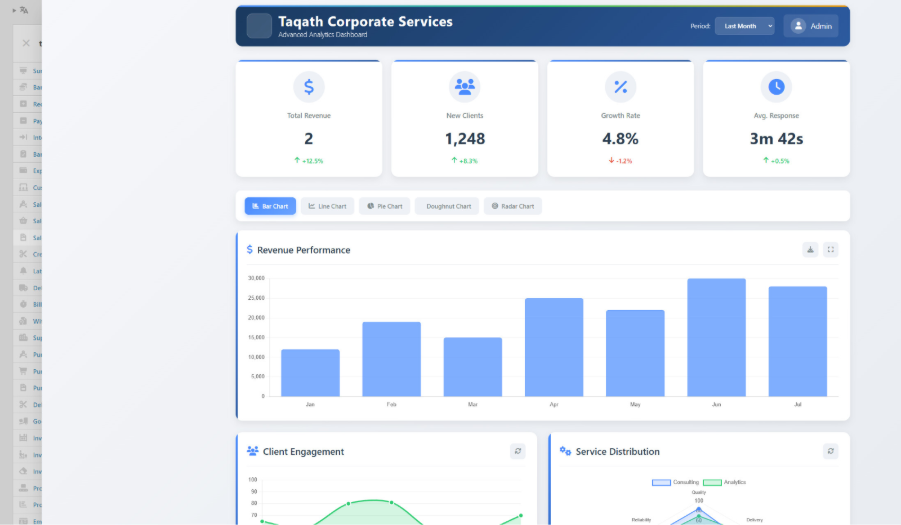
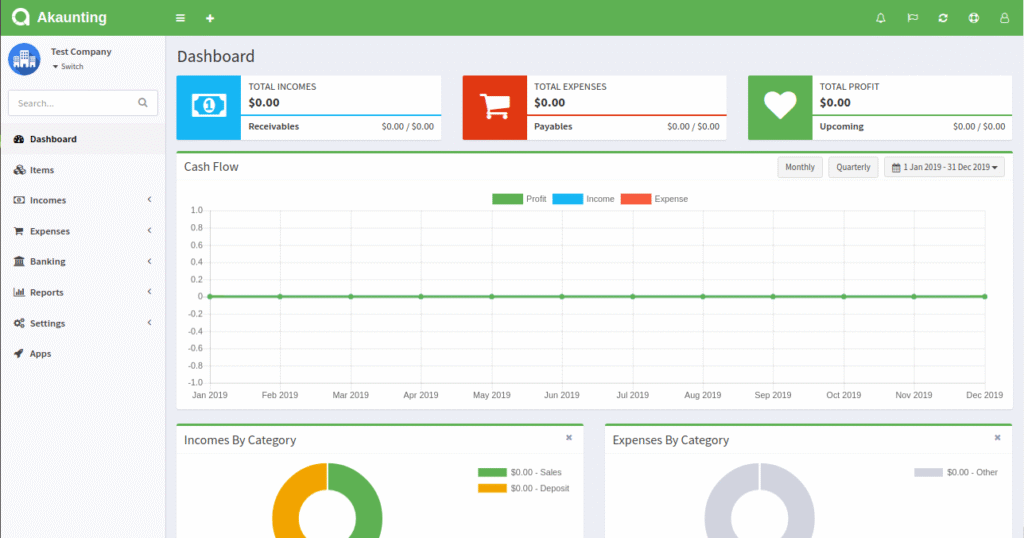
Akaunting is an open-source, modular platform that is currently utilized by over 270,000 small businesses worldwide. It carries a 2.3/5 rating on SoftwareSuggest as of May 2026.
The “Standard” plan of the self-hosted version is entirely free and provides unlimited invoices, customers, and payments. The software is designed to be highly customizable through an internal marketplace of “apps.” While the core accounting features are free, adding advanced functionality like project management or professional automated bank feeds often requires a one-time or recurring fee for specific modules. This makes it a strong choice for tech-savvy owners who want to build a custom financial suite without the monthly overhead of a traditional SaaS product.
8. ZipBooks
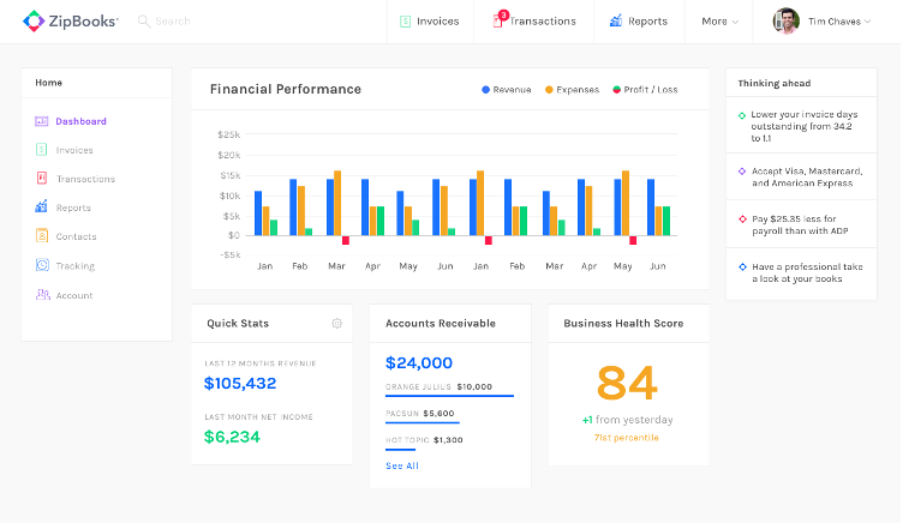
ZipBooks is an intuitive accounting solution that prioritizes a modern user interface and data-driven insights. It held approximately a 4.5/5 rating on Capterra as of May 2026 and is favored by digital agencies and consultants.
The “Starter” tier allows for one user to manage unlimited invoices and customers. It includes basic financial reports and the ability to accept digital payments. The primary constraint of the free tier is its limited reporting depth and the inability to save frequently used line items or connect multiple bank accounts. ZipBooks focuses on “Business Health Scores,” giving owners a visual representation of their financial standing, though the most granular AI insights are typically reserved for the paid “Smarter” and “Sophisticated” plans.
Administrative and Economic Implications of Free Software
While utilizing free accounting software can save a micro-business approximately $300 to $600 annually in subscription fees, it is necessary to evaluate the internal labor costs associated with these tools.
Most free plans in 2026, including the widely used Wave Starter Plan, have restricted automated bank synchronization. Without this feature, business owners must manually download bank statements and categorize transactions. If these administrative tasks consume four hours of your time each month, and your billable rate is $75 per hour, the opportunity cost may outweigh the direct subscription savings.
Strategic selection involves choosing a platform that matches your transaction volume. For a freelancer with five to ten transactions per month, manual entry is often a manageable trade-off. For an e-commerce business with fifty or more transactions weekly, the automation provided by a paid plan often delivers a higher return on investment than a free alternative.
Maintaining Data Portability and Compliance
The transition from a free tool to a paid system is a natural part of business growth. To ensure this transition does not result in data loss or significant downtime, we recommend adopting three administrative habits:
Standardize the Chart of Accounts
Use standard tax categories (consistent with IRS Schedule C or HMRC requirements) for your expenses. This ensures your records remain compatible with larger accounting systems in the future.
Conduct Quarterly Data Audits
Export your general ledger and customer lists as CSV files every three months. This ensures you maintain a physical record of your financial history independent of the software provider.
Implement External Document Storage
Do not rely solely on your accounting software for receipt storage. Maintain a mirrored file structure in a secure cloud drive (e.g., Google Drive or Dropbox) to ensure your audit trail is easily accessible in the event of a platform migration.
The Right Financial Foundation for Your Growing Business
A free accounting platform is a valuable resource for a growing business, provided the selection is based on specific operational requirements rather than just cost. Whether your priority is the privacy of Manager.io, the UK compliance of QuickFile, or the global flexibility of Fynlo, the key to success is maintaining disciplined record-keeping from day one.
About the Author
Isabella Jones started her career at Deloitte, where she worked on tax compliance for some of the country’s fastest-growing companies. She later joined Fynlo as Senior Financial Strategist, bringing that experience to freelancers and small business owners who need practical financial guidance without the corporate complexity.
With an Accounting degree from Villanova University, Isabella focuses on making financial planning easier to understand and apply in day-to-day business. She works closely with freelancers and small businesses on areas like taxes, cash flow, and building more stable financial systems.