
8 Free QuickBooks Alternatives for 2026: Maintaining Financial Clarity Without the Subscription
Running a micro-business or a growing freelance operation means constantly balancing costs against value. You know you need professional accounting software—you need reports, tax compliance, and clean books. Yet, paying a monthly subscription for QuickBooks or Xero when your income is still irregular can feel like an unnecessary burden. You’re looking for a free alternative, but the search can be overwhelming. There are dozens of tools out there, and finding one that is truly free and powerful enough for a real micro-business is a challenge. The right tool is a strategic investment; it saves you time and ensures you build the solid financial foundation you need for future growth. Here, we review the top genuinely free alternatives available today. We look at their core features, limitations, and help you find the best starting point for your micro-business. Note: Fynlo is developed and operated by our team. We aim to keep this review entirely fair and balanced, evaluating all platforms purely on their documented features, limitations, and operational suitability. In this Article 8 Platforms at a Glance Functional Limits of Each Free Plan These platforms all offer a permanently free tier, making them excellent starting points for sole traders and service-based freelancers. Software Primary Free Plan Name Ideal Use Case Key Free Limitations Wave Starter Plan North American Micro-Businesses Many automated bookkeeping features, including bank connection functionality, are reserved for the Pro plan; Receipt scanning is available as a paid add-on or included with Pro Zoho Books Free Plan High-Growth Small Teams Revenue limits (typically <$50k USD / £35k UK, depending on region and eligibility rules) QuickFile XS, S, and M UK Low-Volume Transactions Limited to 1,000 accounting entries (nominal ledger postings) per year Pandle Pandle Free Simplified Bookkeeping Automated bank feeds reserved for paid version Fynlo Forever Free Global / Multi-Currency Restricted to 20 monthly invoices Manager.io Desktop Edition Privacy & Offline Power Users No cloud access or mobile application Akaunting Standard (Self-Hosted) Tech-Savvy Owners Advanced modules and bank feeds carry extra costs ZipBooks Starter Tier Digital Service Providers Restricted to a single user and basic reporting Strengths and Constraints of Each Platform 1. Wave Wave has established itself as a leading choice for micro-businesses in the United States and Canada, reporting support for more than 5.9 million small business owners since 2009 (company data, accessed May 2026). It carried approximately a 4.4/5 rating on G2 as of May 2026 and remains popular due to its lack of caps on the number of customers, invoices, or transactions. The “Starter Plan” provides a full double-entry accounting system at no cost. However, it is important to note that as of 2026, Wave has moved several core features to its “Pro” tier. Many automated bookkeeping features, including bank connection functionality, are now reserved for Pro users in most cases. Transaction data may therefore need to be manually uploaded via CSV or Excel files. Receipt scanning is available as a separate paid add-on on the free Starter plan, or included at no extra cost for Pro users. Certain invoice customization options also require a paid subscription. Wave generates revenue primarily through payment processing fees, making it a viable long-term solution for businesses that accept credit card payments through the platform. 2. Zoho Books Zoho Books is part of a much larger ecosystem of business software, giving it a powerful advantage in scalability. It currently held approximately a 4.6/5 rating on G2 and a 4.7/5 rating on SoftwareSuggest as of May 2026. The “Free Plan” is generous but carries strict operational caps: it is limited to a single user plus one accountant, and allows for up to 1,000 invoices per year. Furthermore, the plan is only available to businesses that do not exceed an annual revenue threshold specific to their region, such as approximately $50,000 in the USA or £35,000 in the UK. For businesses under these limits, Zoho offers sophisticated features including a dedicated client portal and multi-lingual invoicing. However, more advanced requirements like multi-currency handling and automated bank reconciliation are reserved for the paid tiers starting at $20 per month. 3. QuickFile QuickFile is a feature-rich solution that is highly regarded for its flexibility, especially within the UK market. It carries a 4.8/5 rating on Trustpilot as of May 2026. The software is permanently free for businesses that maintain fewer than 1,000 accounting entries (nominal ledger postings) in a rolling 12-month period. Unlike many free competitors, QuickFile includes full multi-currency support and MTD-compatible VAT filing within its free tiers (XS, S, and M). If a business exceeds the 1,000-transaction limit, an annual fee of £60 plus VAT applies. It also offers a “Power User” subscription for approximately £54 + VAT per year, which unlocks advanced customization and white-labeling options for those requiring a more professional appearance. 4. Pandle Pandle is designed with a focus on simplicity, currently maintaining approximately a 4.7/5 rating on Trustpilot based on more than 800 reviews as of May 2026. It is particularly popular among UK-based sole traders due to its built-in Making Tax Digital (MTD) VAT compliance. The “Pandle Free” plan provides unlimited invoicing, customers, and core bookkeeping features without a revenue cap. Its primary limitation is the lack of automated bank feeds; free users must manually import bank statements and categorize transactions. While it lacks some of the complex inventory and project management features found in larger platforms, its “Smart Automation” features (available in the £5/month Pro version) are designed to eventually reduce manual entry as the business grows. 5. Fynlo Fynlo is a specialized accounting tool designed for global freelancers and micro-businesses that require robust multi-currency reporting and project-level budget tracking. The “Forever Free” plan allows for up to 20 monthly invoices and includes income and expense tracking, budget variance analysis, and multi-currency reporting. Fynlo also includes automatic Foreign Exchange (FX) gain/loss calculations, which may be particularly useful for businesses working with international clients. The free tier supports access for one user plus one accountant. However, the free tier’s 20-invoice monthly cap may be restrictive for businesses with higher client volume. More advanced features, such as automated payment collection and advanced budgeting, are available in the paid Starter ($9/month) and Professional tiers. 6. Manager.io Manager.io provides a unique value proposition for businesses that prefer
Beyond the Invoice: A Practical Guide to Business Cash Flow Projections
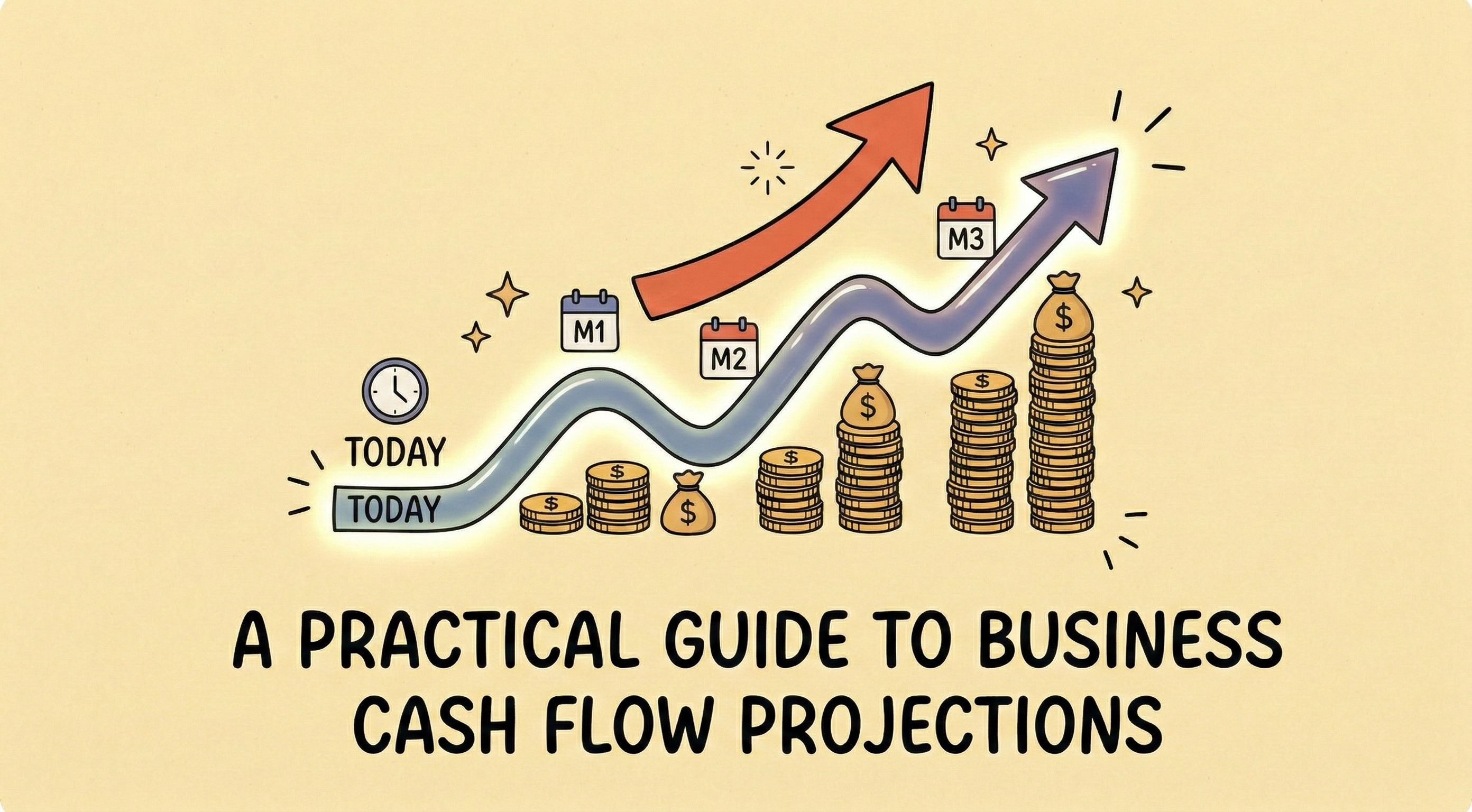
Imagine you have just finished a significant project. The client is pleased, and you have issued a professional invoice. On paper, your business is performing well. Then you check your bank balance. Your accounts receivable look strong. Your revenue is growing. But the actual cash available to pay software subscriptions, rent, or payroll is lower than expected — because that payment is still moving through a 30-day processing cycle. This is one of the most common financial traps in growing businesses: strong revenue, weak liquidity. A Cash Flow Projection exists to solve this problem. It is not just a spreadsheet exercise. It is a forward-looking control system that shows you — weeks or months in advance — whether your business will have the liquidity to operate smoothly. Profit is an accounting concept. Cash is a survival metric. Many profitable businesses do not fail because they lack clients. They fail because they run out of cash before payments arrive. In this article Distinguishing between paper profit and actual cash It is a common misunderstanding to assume that a “profitable” month automatically means a healthy bank account. You can be profitable — and still be unable to pay your bills on time. Cash Flow is the real-time movement of money into and out of your accounts. Profit is what remains after expenses are deducted from revenue — regardless of whether the money has physically arrived. The difference is timing. And in business, timing determines survival. To operate with stability, you must prioritize Liquidity. This means having sufficient cash on hand to cover recurring costs like software, rent, and taxes precisely when they are due. Managing the essentials of cash inflow and outflow A reliable cash flow projection is built on two categories: inflows and outflows. By tracking these accurately, you move from reacting to your finances to controlling them. Cash Inflow (The money entering your business) Record inflows based on when you expect the money to be available, not when you finish the work. Confirmed Payments: Only include revenue from signed contracts or completed milestones. The Payment Buffer: A practical best practice is to forecast payments arriving seven days later than the client’s stated due date. This accounts for bank processing times and administrative delays. Cash Outflow (The money leaving your business) Modern business expenses are increasingly digital and recurring. The Technology Stack: On average, professional freelancers and small agencies now spend 12–15% of their revenue on the software and tools required to stay competitive. The Tax Reserve: One of the most vital professional habits is allocating 25–30% of every incoming payment into a dedicated tax account. By documenting this as a mandatory “outflow” in your cash flow projection, you ensure that quarterly tax deadlines never disrupt your operations. Forecasting your monthly closing balance Once you understand your inflows and outflows, you can calculate your Closing Balance. This figure represents exactly how much cash you will have remaining at the end of the month. Closing Balance= (Starting Balance+Total Inflow) − Total Outflow A positive balance gives you flexibility to reinvest, build reserves, or absorb slow periods. A negative balance is not a crisis. It is an early warning signal. The purpose of a projection is not prediction; it is preparation. Implementation: Your cash flow projection template To help you move from theory to practice, we have provided a structured cash flow projection template below. Week Starting Balance Expected Inflow Planned Outflow Projected End Balance Week 1 $5,000 $1,200 ($800) $5,400 Week 2 $5,400 $0 ($1,500) $3,900 Week 3 $3,900 $3,500 ($400) $7,000 Week 4 $7,000 $500 ($2,000) $5,500 When you review this weekly, patterns begin to emerge: These patterns are where financial control begins. Financial health Q&A 1. Should I include “potential” leads in my forecast? No. To keep your projection accurate, only include projects where a contract is signed. Relying on a “potential” lead to cover fixed costs can lead to significant cash shortages. 2. How do I handle unpredictable monthly income?Build your projection based on your “Financial Floor”—your guaranteed retainers or your lowest historical monthly earnings. Anything earned beyond that is a bonus, but your essential bills should be covered by your most conservative estimate. 3. What if my projected balance turns negative?First, do not panic; the entire purpose of a projection is to give you time to adjust before the situation becomes an actual problem. Review variable costs such as marketing campaigns, new equipment, or discretionary spending. These can often be deferred. At the same time, use the projection as a prompt to follow up on overdue invoices to accelerate inflow. The earlier you see the dip, the more options you have. 4. How do I know if my business is “safe”?Aim to maintain a “Cash Floor” that can cover at least three months of your total outflows. Running out of cash is one of the top 5 reasons small businesses fail. This provides the security to navigate project delays or seasonal dips in work without compromising your operations. 5. What hidden outflows should I watch for? Commonly missed expenses include: Always forecast based on net cash received, not the gross amount invoiced. From Reactive Bookkeeping to Proactive Control Taking control of your cash flow is the most effective way to eliminate the “financial fog” that often leads to burnout. Projections move you away from the stress of wondering if a client payment will arrive in time to cover rent, allowing you to focus on the work that actually grows the business. Resilience isn’t built by hoping for a good month; it is built by seeing a potential dip sixty days out and having the clarity to adjust your spending or follow up on invoices before it becomes a crisis. When you master your cash flow, you stop being a passenger in your business and start being the pilot. About the Author Isabella Jones started her career at Deloitte, where she managed tax compliance for some of the country’s fastest-growing companies. She later joined Fynlo as Senior Financial Strategist, bringing that experience to freelancers and small business owners who need practical financial guidance without the corporate complexity. With an Accounting degree from Villanova University, Isabella focuses on making
Stop the 20% Profit Leak: Why 88% of Spreadsheet Budgets Struggle to Scale (+ Free Templates)
When you first start a business, financial oversight is natural. With a team of five, you likely see every receipt and approve every software subscription. But as you grow, that direct visibility begins to fade. You decentralize, giving credit cards to department heads and autonomy to managers. This transition often leads to what procurement professionals call “Maverick Spend”: purchasing that happens outside of agreed-upon budgets or central visibility. It isn’t usually the result of bad intentions; it is simply the result of a growing team moving faster than its financial systems. A 35-person SaaS company discovered they were paying for 214 SaaS licenses, but only 147 were active users. The excess cost them $4,800 per month. No one intended the waste. It accumulated silently. Most founders don’t lose control because they’re reckless. They lose control because their systems were built for 5 people—and they’re now managing 50. In this guide, we explore how to regain control of this “profit leak” and provide a practical blueprint for departmental financial health. In this article What is a Departmental Budgeting? At its core, a departmental budget is a financial roadmap for a specific segment of your business. It is a document, typically a spreadsheet or dashboard, that forecasts revenue and expenses for a set period—usually a month, quarter, or year. Core Elements: The Spreadsheet Risk Multiplier While decentralization causes visibility issues, the tools we use to manage that growth often introduce their own risks. Most scaling companies rely on a master spreadsheet—a file with dozens of tabs and thousands of rows. The danger here is rarely a single massive catastrophe; it is the accumulation of small, invisible mistakes. Imagine a manager accidentally hard-coding a $5,000 monthly expense into a cell rather than using a dynamic formula. At a small scale, you might spot the discrepancy. Yet in a complex file, that static number remains unchanged while your actual costs triple. By the time the error is caught six months later, you have over-allocated $60,000 based on a single “broken cell.” In a landscape where research by Professor Ray Panko shows that 88% of spreadsheets contain significant errors, these minor technical slips are often the hidden reason runways disappear faster than expected. Top Free Budgeting Templates If you aren’t ready for software, a template is a solid starting point. The right choice depends on your team’s bandwidth, your comfort with formulas, and whether you need basic tracking or in-depth departmental ROI analysis. Microsoft Office Templates: SlideTeam Presentation Templates: Liveflow SaaS Templates: Smartsheet Budget Templates: Your 5-Step Implementation Guide If you’re ready to move from a single consolidated budget to departmental accountability, follow this path: Step 1: Assign Departmental Leads Identify your primary departments (e.g., Marketing, Sales, Product, Ops). Assign one leader to each who is responsible for their team’s spending accuracy. Step 2: Conduct a 3-Month Look-Back Gather the last 90 days of transactions and categorize them by department. You will likely find expenses that “belong” to everyone (like Slack seats) and expenses that should be isolated (like specific LinkedIn ad spend). Step 3: Define Your Fixed Monthly Costs Work with leads to determine their fixed monthly costs—salaries and essential software. This is their “Baseline.” Any spend above this must be linked to a specific growth target. Step 4: Establish the Request Protocol Create a process for new expenses. If Marketing wants a new $200/month tool, they must identify which “Baseline” expense they are cutting to make room for it, or prove how it increases their specific ROI. Step 5: Monthly Performance Comparison On the 5th of every month, sit down with your leads for 15 minutes. Compare what they planned to spend vs. what they actually spent. This creates a culture of transparency where numbers aren’t a surprise. The Strategic Blueprint for Advanced Control 1. The Zero-Based Variance AuditMany companies take last year’s figures and add 5%. This often makes wasteful spending permanent. A more robust method is the Zero-Based Audit, where once a year, every department must justify their expenses from $0 up. This is the most effective way to identify “ghost subscriptions” for tools your team no longer uses. 2. Aligning Budgets with Contribution Margins Rather than simply assigning a “pot of money,” consider setting budgets based on Contribution Margin targets. This means every dollar allocated to a department should be tied to an efficiency metric. For instance, you might authorize a budget that fluctuates based on the team’s ability to keep the Customer Acquisition Cost (CAC) within a certain range. 3. Decentralizing Responsibility through LERTrue financial control happens when department heads feel ownership. One way to foster this is by tracking the Labor Efficiency Ratio (LER). By asking managers to monitor how much gross profit their specific team generates for every dollar spent on their payroll, you shift their focus from “spending” to “value creation.” 4. Implementing “Soft-Close” VisibilityWaiting for a formal “Month-End Close” is often too slow. Implementing a Soft-Close dashboard allows you to see “committed spend” (money promised to vendors) alongside “actual spend” (money that has already left the bank). This prevents the surprise of a large, unforecasted vendor bill hitting your books on the 30th. The Path to Strategic Oversight Spreadsheets eventually reach a functional breaking point. When you’re spending more time fixing formulas than analyzing margins, it’s a clear sign you’ve outgrown manual tools. Shifting toward an integrated system lets you stop reacting to data and start using it as a strategic dashboard to steer your growth. About the Author Isabella Jones started her career at Deloitte, where she worked on tax compliance for some of the country’s fastest-growing companies. She later joined Fynlo as Senior Financial Strategist, bringing that experience to freelancers and small business owners who need practical financial guidance without the corporate complexity. With an Accounting degree from Villanova University, Isabella focuses on making financial planning easier to understand and apply in day-to-day business. She works closely with freelancers and small businesses on areas like taxes, cash flow, and building more stable financial systems.
8 Free Business Reporting Templates for Small Businesses
Trying to get a clearer picture of how your small business is doing can feel like a big task, especially when you’re focused on the day-to-day. You might wonder about profitability, cash flow, or customer trends without wanting to dive into complicated systems. If that sounds familiar, this post will offer some helpful starting points. We’ve gathered 8 free business report templates that can provide valuable insights, and to make things a little easier, we’ve also found links to free, straightforward templates that you can explore. Most of them are compatible with Microsoft Excel and Google Sheets, allowing you to easily customize them to fit your specific business needs. Let’s see how these templates can help you move from guesswork to making informed decisions, all without any cost. Table of Contents 1. Profit and Loss (P&L) Statement P&L statement summarizes revenue, costs, and profits over a period (monthly, yearly), revealing your business’s profitability. It identifies cost-saving opportunities or growth potential, helping you make data-driven decisions to boost your bottom line. Free Templates: Smartsheet IntuitConta 2. Monthly Sales Report A monthly sales report tracks sales performance, including volume and revenue, on a monthly basis. It highlights trends, informs marketing strategies, and assists in optimizing pricing or promotions, ensuring revenue maximization with minimal effort. Free Templates: HubSpotDocsAutomator Unito 3. Inventory Report An inventory report tracks stock levels, costs, and turnover for products or supplies. It prevents overstocking or shortages, reduces waste, and optimizes purchasing, ensuring efficient operations and cost control for retail or service businesses. Free Templates: Template.net Smartsheet ClickUp 4. Marketing Campaign Report A marketing campaign report evaluates marketing efforts (e.g., social media, email) through KPIs like engagement or conversions. It optimizes marketing spend, crucial for small budgets, and refines campaigns to attract more customers. Free Templates: Smartsheet Semrush Goodocs 5. Balance Sheet Balance sheet shows your business’s financial position by listing assets (what you own, like cash), liabilities (what you owe, like loans), and equity (your net worth) at a specific time. It helps assess financial health, secure loans, or plan investments, giving clarity on stability without complex accounting. Free Templates: SCORE Association Agriculture and Horticulture Development Board (AHDB) Compeer Financial 6. Annual Business Performance Report An annual business performance report offers a comprehensive overview of your company’s yearly performance, encompassing financial results, operational achievements, and strategic milestones. It’s invaluable for stakeholders and aids in setting future goals. Free Templates: Adobe Smartsheet ClickUp 7. Project Status Report A project status report monitors project progress, timelines, and resource allocation. It keeps stakeholders informed about developments, milestones achieved, and any issues encountered, ensuring transparency and accountability. Free Templates: ZapierSmartsheetAtlassian 8. Employee Performance Report An employee performance report evaluates employee productivity and sets performance goals. It assists in conducting regular performance reviews, setting objectives, and providing feedback, fostering employee development and satisfaction. Free Templates: WPS TemplateTeamflectSmartsheet Final Thoughts Managing business reports doesn’t have to be overwhelming. With these eight free templates, you can efficiently track finances, sales, and projects, allowing you to focus on growing your business. Start by selecting a template that fits your needs, customize it to reflect your brand, and update it regularly. Sharing these reports with stakeholders ensures transparency and keeps everyone aligned. If you’re looking to further simplify your reporting, consider exploring tools designed to enhance financial tracking and support your business’s success. Fynlo offers an all-in-one accounting platform that combines income tracking, budgeting, and reporting in one place. It’s free, making it an excellent value for small businesses and freelancers. [Sign Up for FREE]
Say Goodbye to Messy Word Docs: 5 Free Ways to Create Professional Invoices
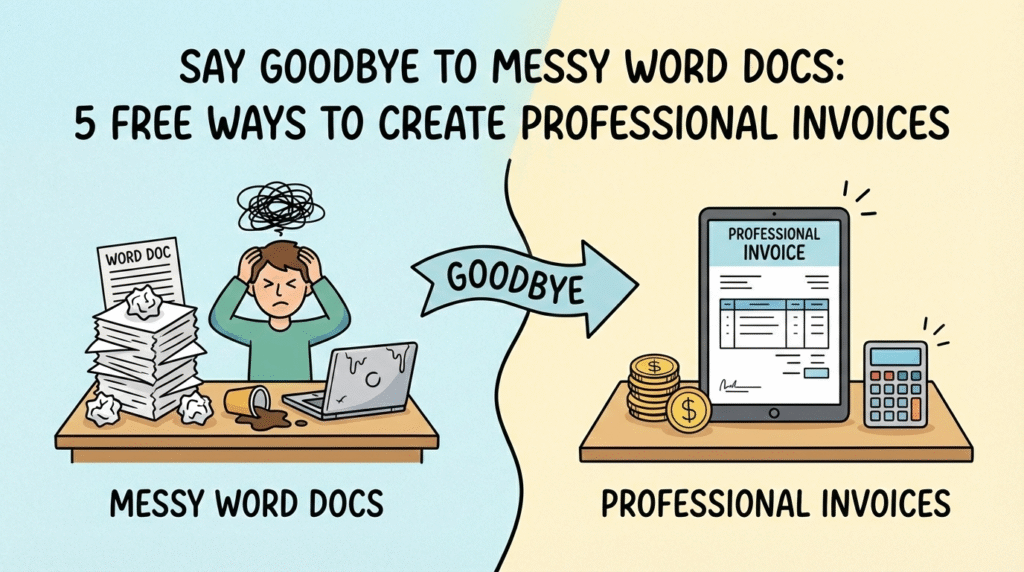
You’ve just exported the final file, closed the 17 browser tabs you’ve had open for a week, and hit “Send” on the final deliverable. You lean back in your chair, take a deep breath, and feel the weight of the project lift off your shoulders. But before you can fully celebrate, there is one last administrative hurdle: asking for the money. For many of us, this part feels awkward. We rush through it, typing a few lines into a document and hoping it looks “official enough.” But the reality is, your invoice is the final handshake of your project. It’s the last impression you leave. Sending a polished, branded invoice does more than just look good—it changes the power dynamic. Data suggests that you are 3x more likely to get paid simply by adding a company logo to your invoice. Psychologically, a sharp invoice signals, “I take my business seriously, and I expect you to do the same.” Here are 5 completely free ways to upgrade your invoicing today, ranked from the simplest quick-fix to fully automated systems. In this article 1. Free Online Invoice Generators Sometimes you just need to send one invoice, right now. You don’t want to sign up for a new platform or remember another password; you just need a PDF that doesn’t look like it was made in 1999. Quick Tip: Look for generators that allow you to change the currency symbol if you are working with international clients. Sites like Invoice Generator or Shopify are great places to start. 2. Google Docs & Sheets Templates If you are just starting out and want total control over every pixel, the Google Workspace gallery is likely your best friend. It is accessible, cloud-based, and you likely already use it for your actual work. Quick Tip: Always export as a PDF before sending. Sending an editable Google Doc looks unprofessional and allows clients to accidentally (or intentionally) change the figures. 3. Canva Templates Who says invoices have to be boring spreadsheets? If you are in a creative field—graphic design, social media management, or photography—your invoice is another piece of your portfolio. It should look as good as your work. Quick Tip: Create a “Master Template” in Canva so you don’t have to re-design it every time. Just duplicate the page and update the line items. 4. Stripe or PayPal Invoicing If your priority is getting money into your bank account fast, you might want to skip the PDF attachment entirely and send a digital invoice directly through your payment processor. Quick Tip: Enable “recurring invoices” if you have clients on a monthly retainer. The system will bill them automatically without you lifting a finger. 5. Dedicated Invoicing Software (Wave, Zoho, Fynlo) Eventually, manual templates and fees become a bottleneck. If you are sending more than 5 invoices a month, you need a system that automates your entire billing workflow—remembering your clients, numbering your invoices, and chasing payments for you. Quick Tip: With Fynlo’s Forever Free plan, you get a professional dashboard that tracks invoice views. This means a client can never use the excuse “I didn’t get the email” again, because you’ll know exactly when they opened it. Make Getting Paid the Easy Part Professionalism doesn’t have to cost money, but looking amateur will cost you opportunities. As your workload grows, tools that automate invoicing, reminders, and tracking can make a noticeable difference. Exploring a dedicated invoicing platform like Fynlo is a simple next step if you want fewer follow-ups and more predictable payments. Book a free demo to see how Fynlo might fit into your day-to-day.
The Ultimate Year-End Accounting Checklist for Small Business Owners
The end of the year isn’t just about wrapping projects; it’s the critical moment to finalize your finances, maximize every deduction, and ensure you’re compliant, no matter where your clients or operations are based. Skipping this process can lead to costly errors, audit triggers, or missed opportunities to save money. Let’s be honest: most small business owners would rather focus on clients than spreadsheets. But investing just a few focused hours now can save you weeks of cleanup, stress, and last-minute panic later Year-end accounting can feel like a marathon, but this structured checklist will help you stop scrambling, clean your books confidently, and kick off the new business cycle with peace of mind. Table of Contents Step 1: Define Your Timeline and Filing Deadlines Before you start any data entry, you must confirm your accounting year. For many small businesses globally, the fiscal year aligns with the calendar year (ending December 31st), which is standard for sole proprietorships and LLCs in the USA or freelancers in many parts of Asia. However, some countries or business structures, like many companies in the Philippines or large corporations worldwide, choose a different period, such as an April 30th or June 30th year-end. Once your year-end date is set, you need to immediately confirm your official tax filing and account submission deadlines with the relevant tax authority. For instance, in the UK, a private limited company that files its accounts more than 6 months late can face an automatic penalty of up to £1,500. Knowing your exact deadline well in advance gives you the power to plan properly and avoid unnecessary fines. Step 2: Ensure Complete Data Capture of All Records The foundation of accurate financial reporting is complete data. This cleanup phase requires you to meticulously gather all transaction records, ensuring every piece of the puzzle is accounted for. Make sure all your income is recorded, whether from invoices issued or direct payments received. Crucially, you must record every single expense. Go beyond the obvious software fees and office supplies to include less visible costs, such as home office expenses, mileage allowances, and depreciation. If you’re a global freelancer dealing with different currencies, confirm you’ve captured all foreign income and expenses, as missing these details can lead to understating your true cost of doing business. Step 3: Reconcile Every Bank and Payment Account Reconciliation is the process of matching every entry in your accounting system to your official statements. You must verify that the final balance in your ledger precisely matches the closing balance for the last day of the fiscal year across all your accounts: bank accounts, credit cards, and payment processors like PayPal or Stripe. During this review, you’re looking to clear up any discrepancies. This includes chasing any old deposits or checks that haven’t cleared the bank yet. If you find unexplained fees or transfers, allocate them now to the correct expense category. A clean reconciliation ensures your books are grounded in reality and ready for audit. Step 4: Value Inventory and Calculate Cost of Goods Sold If your business sells physical products, this step is mandatory. You need to conduct a physical count or stocktake of all products, materials, and supplies on hand at the close of the fiscal year. This value is critical because it directly determines your Cost of Goods Sold (COGS). An accurate COGS figure is essential for determining your gross profit and ultimately your net income. Any error here—either overstating or understating your inventory—will directly result in misstating your profitability and, therefore, your tax liability. This step requires precision and shouldn’t be guessed. Step 5: Update Fixed Assets and Post Depreciation Businesses rarely use their assets up in a single year, so you need to account for their ongoing wear and tear. Review all your Fixed Assets (like computers, machinery, or vehicles) and record any new purchases made during the year. The main action here is calculating and posting the depreciation expense. This non-cash deduction recognizes the expense of using an asset over its useful life, and it reduces your taxable income globally. Ensure you’ve applied the correct depreciation method (straight-line, declining balance, etc.) required by your local tax authority. Step 6: Resolve All Outstanding Client Invoices (Receivables) Before closing the books, you need a realistic picture of the money owed to you. For invoices you’ve issued but not yet received payment, list these as trade receivables. You need to analyze the likelihood of collection. Any invoices that are significantly overdue (e.g., 90 days or more) and clearly uncollectible should be flagged for potential bad debt write-off. Writing off bad debt is a legitimate accounting practice that helps clean your Accounts Receivable and can reduce your taxable income, although the specific rules vary by jurisdiction. Step 7: Record All Unpaid Bills (Accounts Payable) Accounting principles require you to record expenses in the period they were incurred, not just when you paid them. You must ensure you’ve recorded all vendor invoices and bills received before the year-end date, even if the payment isn’t due until the next year. Recognizing these trade payables gives you a more accurate picture of your true profitability and current liabilities for the year, adhering to the crucial matching principle of accounting. Failing to record these outstanding bills will overstate your profit and potentially lead to overpaying taxes for the closed year. Step 8: Handle Multi-Currency Gains and Losses If your business operates globally or uses multi-currency bank accounts, you face the complexity of foreign exchange (FX) fluctuations. When you finally convert foreign funds (like Euros or Pounds) into your home currency, the exchange rate will likely have changed since the invoice date, resulting in either a gain or a loss. You must calculate and record these realized gains or losses for the fiscal year. This is a critical step for compliance in global reporting, as tax authorities require accurate tracking of these figures. If exchange rates have been quietly eroding your revenue, check out our guide on managing
How to Transition from Spreadsheets to Accounting Software
In the early days of your business, a spreadsheet is often the perfect way to track your first few invoices and expenses. But as your business grows, that once-simple spreadsheet can start to feel less like a helpful tool and more like a liability. The manual data entry becomes a time-sink, the risk of a broken formula looms large, and you have no real-time view of your financial health. If this sounds familiar, you’re not alone. You’ve just hit a growth milestone—the point where your business is ready for a system that’s as professional as you are. And the data shows why this is so important: a recent study found that 94% of spreadsheets contain critical errors. A single typo can lead to flawed financial data, impacting everything from your budget to your tax filings. Making the switch to accounting software can feel like a daunting task, but it doesn’t have to be. This guide will walk you through a clear, stress-free process to make the transition seamless. Table of Contents Step 1: Acknowledge It’s Time for a Change The first step is recognizing that moving on from your spreadsheet isn’t a failure—it’s a sign of success. Your business has outgrown its starter tool. You’ve likely reached this point if you’re experiencing a few of these common growing pains: If you’re nodding along, it’s time to upgrade to a system that gives you clarity and your time back. Step 2: Choose the Right Software for Your Needs The goal is to find a platform that simplifies your life, not one that requires an accounting degree to operate. As you explore your options, look for a solution that prioritizes these key features: Step 3: Plan Your Migration (A Step-by-Step Guide) A little bit of planning makes the actual transition smooth and stress-free. Don’t try to do everything at once; follow these simple steps. A. Pick a Clean Start Date The easiest way to make a clean break is to start at the beginning of a fresh accounting period. A new month or quarter is ideal. This means you can close out the previous period in your old spreadsheet and start the new one fresh in your new software. B. Gather Your Key Documents Before you begin, have your essential financial information ready. This includes: C. Organize and Clean Your Existing Data Before importing your spreadsheet data, take a little time to clean it up. This step is crucial for a smooth migration and gives you a fresh, accurate starting point in your new system. Be sure to: D. Set Up Your New System This is the foundational work. Once you’re in your new software, the first steps are usually to: E. Input Your Opening Balances This is a critical step. For your new software to be accurate from day one, you need to tell it where your business stands financially. This means entering the closing balance from your bank account on your start date, as well as any outstanding invoices and bills you gathered in step B. F. Run in Parallel for One Month (Optional) If you’re feeling nervous, you can run both systems for a single month. Keep using your spreadsheet while the software works in the background. At the end of the month, you can compare the two. This will build your confidence and prove that the new system is working correctly before you say goodbye to your spreadsheet for good. Step 4: Embrace the Benefits Once you’ve made the switch, you’ll quickly start to feel the benefits. That sense of nagging uncertainty will be replaced by clarity. The hours you used to spend on tedious data entry can now be spent on growing your business. You’ll be able to create a professional Profit & Loss statement in a few clicks, see exactly who owes you money, and head into tax season feeling organized and prepared. Make the Move to Financial Clarity Making a change to your financial workflow can feel like a big step, but it’s one of the most powerful moves you can make for your business’s health and your own peace of mind. It’s an investment in efficiency, accuracy, and your future growth. Curious how this could look for your business? Schedule a free call with our team—we’ll walk you through it. Or jump in now and explore Fynlo for free. No credit card required.
6 Must-Have Financial Reports Every Small Business Owner Needs
As a small business owner, you’ve got a “number” in mind. It may be new clients, annual revenue, or the amount you need in the bank to sleep easy. But in the daily grind of client work and projects, it’s easy to lose track of how you’re really doing. An Intuit survey found that 30% of small businesses struggle to track cash flow, leaving owners stressed and second-guessing their finances. Sound familiar? You’re not alone. Financial reports aren’t just for accountants—they’re your business dashboard, providing clear insights to keep you on track. Think of them like the gauges on your car’s dashboard: you don’t need to be a mechanic to read the speedometer or check the fuel level. Here are the six reports that make up your business dashboard. Table of Contents Profit and Loss (P&L) Statement or Income Statement Example of Income Statement (Source: principlesofaccounting.com) This is your business’s report card. In the simplest terms, it tells you if you made or lost money over a set period, like a month, a quarter, or a year. For years, I just watched my bank balance. If it went up, I figured it was a good month. But the P&L showed me the truth. I once discovered I was spending nearly 20% of my revenue on various software trials and subscriptions I’d forgotten about. Seeing it in black and white was the wake-up call I needed. Balance Sheet Example of Balance Sheet (Source: principlesofaccounting.com) Think of this as a snapshot of your business’s financial health on one specific day. It shows what your business is worth at that moment. This report is crucial for seeing your stability. However, because it’s a snapshot on a single day, it can’t show you the flow of money. It tells you that you have $10,000 in the bank today, but not how it got there or where it went last week. For that, you need the next report. Cash Flow Statement Example of Cash Flow (Source: principlesofaccounting.com) This is the story of the cash moving through your business. While the P&L can be misleading (it includes sales you haven’t collected cash for yet), this report tracks the actual hard cash that has come in and gone out. A frequently-quoted study by Jessie Hagen found that 82% of business failures are due to poor cash flow. This report is your early warning system. While the Balance Sheet shows a snapshot of your cash at one moment, the Cash Flow Statement is like a video, showing you exactly when money came in and when it went out over a period. This helps you spot dangerous trends, like if you’re consistently spending cash faster than you’re collecting it. Accounts Receivable (A/R) Aging Report Example of A/R Aging Report (Source: highradius.com) This is your “who owes me money?” list. It’s a simple but powerful report that gives you a detailed breakdown of all your unpaid invoices. This report is your action plan for getting paid. A Melio survey shows more than half of small businesses experience late payments by large companies, and while most operate on net 30 terms, 25% report waiting 20–30 days past the due date. Instead of a vague feeling that “some clients are late,” this report tells you exactly who to call first. Sales by Customer (or Client) Summary Example of Sales by Customer Summary (Source: avaza.com) This report can be a real eye-opener. It shows you exactly which clients are generating the most money for your business. I used to think my “biggest” client was the one who made the most noise and took up the most time. After running this report, I realized my most valuable client was actually a quiet, low-maintenance account that paid on time, every time. This insight is gold. It helps you understand who to focus on. Expenses by Vendor (or Category) Report Example of Sales by Customer Summary (Source: accurabooks.com) Just as you track where money comes from, it’s critical to see where it’s going. This report breaks down your spending so you can see every detail. Why it matters: This report helps you find “cost leaks.” You might discover that your shipping costs have quietly doubled or that you’re spending far more on one software tool than you realized. Seeing it laid out so clearly makes it easy to spot chances to save. TL;DR: The 6 Reports at a Glance From Information to Action Running these reports isn’t about creating more paperwork. It’s about trading anxiety for clarity. Start by picking just one or two of these to look at each month. Get familiar with the story they tell. When you understand your numbers, you stop guessing and start making strategic decisions. You gain the confidence that comes from truly knowing your business, inside and out. Ready for True Financial Clarity? Feeling more confident about these reports is a great first step. The next is putting them to work without losing hours of your time. At Fynlo, our software makes running these reports simple, and our team of experienced accountants can help you understand the story behind the numbers. Stop guessing and start knowing, schedule a free call with us today.
How to Create a Cash Flow Forecast That Actually Works: Step-by-Step Guide with Templates
Running a small business is like navigating a winding river. One moment, the waters are smooth — customers are happy, sales are rolling in, and you’re thinking about your next move. The next, a late payment, an unexpected bill, or a seasonal slump hits your cash reserves. Even with a great product and loyal clients, your business can quickly veer off course if the money doesn’t flow when it’s needed. You’re not alone. A QuickBooks survey found that 2 out of 5 small business owners (42%) experienced cash flow problems in the past year, and 61% say they’ve faced cash flow challenges at some point while running their business. Even more striking, nearly one-third (32%) have been unable to pay vendors, repay loans, or even cover payroll — including their own pay — due to cash flow issues. A simple, realistic cash flow forecast helps you take back control. It shows what’s coming in, what’s going out, and when — so you can plan ahead with clarity instead of reacting in crisis mode. This step-by-step guide will walk you through how to build a reliable forecast, avoid common mistakes, and use your numbers to make better business decisions. We’ll even include templates to help you get started today. Table of Contents Understanding Cash Flow Forecasting A cash flow forecast predicts how much cash will flow into and out of your business over a period, such as a month or year. It shows the real money coming in and going out of your business — for example, when a customer actually pays a $1,000 invoice or when you pay your rent — not just projected sales or income like a profit and loss statement does. Small businesses often use the direct method, listing actual payments for short-term plans. It’s like checking your bank balance for accuracy. The indirect method estimates cash using overall financial reports, better for long-term goals but less precise. Used consistently, it helps you stay prepared, stable, and ready to grow. Why does this matter? A cash flow forecast helps you avoid cash shortages, letting you pay suppliers and staff with confidence. It reveals when you can invest in growth, like new equipment. It also strengthens loan applications by showing smart money management. Without a forecast, you risk missing bills or stalling growth. Now that you know why it matters, let’s walk through how to build a cash flow forecast step by step. Step-by-Step Guide to Creating a Cash Flow Forecast These eight steps will help you build a cash flow forecast that’s accurate and practical. Each step is straightforward, ideal for small business financial planning. Step 1: Set Your Goal and Time Frame Decide why you’re forecasting—covering monthly bills, planning a purchase, or preparing for a loan. Choose a time frame: Most small businesses, especially retailers managing rent and inventory, start with a monthly, three-month forecast for simplicity and accuracy. Step 2: Collect Historical Data Your cash flow forecast needs a strong foundation. Gather past financials to identify patterns, like seasonal sales or recurring costs: New businesses can estimate based on industry norms as a practical starting point, but your business has unique patterns. Reviewing at least six months of historical data will give you a clearer, more reliable picture. Step 3: List Cash Inflows Identify all cash entering your business during the forecast period. Focus on actual payments, not potential sales. Key inflows include: Check accounts receivable to see when clients pay (e.g., 30 days after invoicing). Use historical sales patterns, like December retail spikes, for accurate cash flow forecasting. Be cautious—expect some late payments. Step 4: List Cash Outflows List all cash leaving your business, dividing into: Review accounts payable to know when bills are due. Experts suggest checking sales records to estimate variable costs and noting irregular expenses, like annual subscriptions, to avoid surprises. For example, include $1,000 marketing costs only for peak-season months. Step 5: Calculate Net Cash Flow Subtract outflows from inflows for each period (e.g., month) to find net cash flow: Use: Net Cash Flow = Inflows – Outflows. Experts note a 5% variance between projections and actuals is acceptable, but larger gaps require revising assumptions. For example, if inflows are $10,000 and outflows $9,000, your net cash flow is $1,000. Step 6: Determine Opening and Closing Balances Start with your opening cash balance—the cash in your bank account at the period’s start, found on your bank statement. Then: For example, an opening balance of $8,000 plus $1,000 net cash flow gives a $9,000 closing balance, which starts the next month. Templates simplify this with spreadsheet formulas. Step 7: Build Your Forecast Combine your data into a cash flow forecast. Use a spreadsheet or template to organize: Input estimates from Steps 3–6. Verify fixed costs (e.g., $2,000 rent) and adjust variable costs based on sales trends. Organized forecasts help retailers avoid inventory shortages. Test your forecast by comparing one month’s predictions to actuals. Step 8: Review and Update Monthly Compare your cash flow forecast to actual cash flows monthly. If you predicted $6,000 in sales but got $5,000, adjust future estimates. Update for: Experts emphasize that regular checks against actuals catch errors and improve accuracy. Weekly reviews keep your cash flow management sharp. Templates A cash flow forecast template saves time and reduces errors. Explore these options: What’s Next A cash flow forecast is your key to financial control, helping you avoid cash shortages and plan growth. By following these eight steps—setting goals, collecting data, estimating inflows and outflows, calculating cash flow, setting balances, building, and reviewing your forecast—you’ll stay ahead of pitfalls. Using accounting templates and avoiding mistakes like overly optimistic estimates ensures your forecast works. Ready to master cash flow management? Our small business financial planning solutions offer automated forecasting, real-time insights, and expert support to keep your cash flowing. Schedule a call with our team to learn more. [Schedule a Call]
What is an Invoice? (And How to Create One)
Getting paid on time doesn’t have to be a struggle! Creating clear and professional invoices is the first step towards reliable income. In this article, you’ll learn exactly what an invoice is and how to create one that helps you get paid faster. Table of Contents What is an Invoice? An invoice is a formal document you send to customers requesting payment for the goods or services you’ve provided. It provides a detailed breakdown of the costs involved, including individual items or services, quantities, rates, and any applicable taxes or discounts. It tells your customer everything they need to know to pay you by the specified due date. It’s important to remember that invoices are different from quotes (estimates of cost) and receipts (proof of payment). Creating an Effective Invoice: A Step-by-Step Guide with Sample Want to get paid faster and keep things running smoothly with your clients? Here are some key best practices to keep in mind, referencing the sections you’ll typically find on a professional invoice like the one below: Top Tips for Smoother Invoicing Want to make invoicing easier for both you and your clients? Here are some key best practices to keep in mind: What’s Next? Invoicing doesn’t have to be complicated or time-consuming, and it definitely shouldn’t stand between you and getting paid. By creating clear, professional invoices and following a few simple best practices, you can reduce delays, avoid misunderstandings, and maintain smoother relationships with your clients. Start creating your next invoice with confidence. Fynlo offers professional templates and flexible editing tools to help you build, send, and track invoices that get you paid faster. Find out more about Fynlo and see how easy invoicing can be.