
5 Smart Ways to Make Sure your Invoices are Paid On Time
You’ve done the work. You poured your expertise into the project, delivered fantastic results, and the client is thrilled. Now comes the less glamorous, but critically important part: getting paid for it. For so many freelancers and small business owners, the time between sending an invoice and seeing the money in your account can be a source of major stress and uncertainty. If this feels familiar, you are far from alone. According to a QuickBooks survey, 73% of businesses are negatively impacted by late invoices. Let’s be honest, chasing down payments is the last thing you want to spend your time on. It’s awkward, time-consuming, and disrupts the cash flow that keeps your business running smoothly. The good news is that getting paid on time isn’t about luck; it’s about having a professional and consistent process. Here are five smart, actionable ways to ensure your invoices are paid promptly, so you can spend less time chasing and more time doing what you do best. 1. Set Clear Expectations Before You Start the Work The single best time to ensure an invoice is paid on time is before you’ve even created it. A lack of clarity is one of the biggest sources of payment delays. Setting professional boundaries and expectations from the very beginning prevents confusion down the line. In your contract or project proposal, include a dedicated section for payment terms. Clearly outline: Discussing these terms upfront frames prompt payment as a core part of your professional agreement, not an afterthought. 2. Make Your Invoices Clear, Complete, and Professional An amateurish or confusing invoice is an easy excuse for a client to “put it aside to deal with later.” A professional invoice, on the other hand, signals that you are a serious business and makes it easy for the client’s accounting department to process. Every invoice you send should include: Using a clean, branded template not only looks more professional but also ensures you never forget a critical detail. Want to get every part just right? Check out our deep-dive guide, What Is an Invoice? (And How to Create One), for pro tips on crafting the perfect bill. 3. Offer Convenient, Modern Payment Options Think about it from your client’s perspective. If their only option is to find a checkbook, write a check, and mail it, you’ve created friction. In today’s digital world, friction leads to procrastination. The easier you make it for someone to pay you, the faster you will get paid. On every invoice, include a direct link for online payments. Allowing clients to pay instantly via credit card or an ACH bank transfer is a game-changer. It turns paying your invoice into a simple, two-minute task they can do right from their email, dramatically reducing delays. 4. Automate Your Follow-ups (Politely and Persistently) This might be the most powerful, yet underutilized, strategy. Most payment delays aren’t malicious; they’re often due to simple forgetfulness. However, manually tracking who has paid and who needs a reminder is a huge time-sink and can feel personally awkward. This is where a system can do the heavy lifting for you. Set up automated email reminders to go out: Automating this process removes the emotion and ensures no invoice ever falls through the cracks. It’s a persistent, professional system that does the “nagging” so you don’t have to. 5. Establish a Late Fee Policy (and Mean It) No one likes to talk about late fees, but they serve a crucial psychological purpose. A late fee policy communicates that your time and financial stability are valuable, and it provides a clear financial incentive for clients to pay on time. The key is to include it in your contract and state it clearly on your invoice (e.g., “A late fee of 1.5% per month will be applied to balances not paid within 30 days.”). You may choose to waive it for a first-time offense with a good client, but the policy’s mere existence is often enough to encourage prompt payment. It transforms the due date from a suggestion into a deadline with a tangible consequence. Build a System for Success Notice a common thread here? The most effective strategies are built on clear communication and consistent systems, not just wishful thinking. When you create a professional process for invoicing and collections, you are taking control of your cash flow and demonstrating the value of your work. Getting paid on time shouldn’t be a struggle. It should be the routine, satisfying conclusion to a job well done. Fynlo gives you everything you need: professional invoice templates, online payment links, automated reminders, consolidated invoice records, and built-in analytics, all in one place. Sign up for free today and take control of your cash flow!
Financial Statements: A Comprehensive Guide
Most of us who go out on our own do it for the work itself. Whether you’re a designer, a writer, or a consultant, you’re driven by the craft. But then you start your business, and you realize you’ve also become its reluctant Chief Financial Officer. I remember my first year, staring at my accounting software and feeling completely out of my depth. I was great at my actual job, but when it came to the money side, I was just guessing. I’d look at my bank account, see money in there, and figure I was doing okay. But I always had this low-level hum of uncertainty. Am I really making a profit? Am I charging enough? Where is all the money going? It turns out the answers to those questions are sitting in three financial reports. They sound intimidating, but they’re really just tools to help you trade that uncertainty for clarity. Table of Contents The Income Statement: Answering, “Did I Actually Make a Profit?” Example of Income Statement (Source: principlesofaccounting.com) This is the most basic question, and the Income Statement (often called the P&L for Profit & Loss) answers it directly. It’s a simple summary of your revenue versus your expenses over a specific period, like a month or a quarter. In my early days, I felt like I was working constantly but my savings weren’t growing. I finally sat down and looked at my P&L. The “aha!” moment wasn’t some huge, dramatic discovery. It was seeing I was spending nearly $150 a month on various software subscriptions I’d signed up for and forgotten about. It’s the small leaks that often sink the ship. The P&L helps you spot them. It shows you the real cost of doing business, beyond just the big, obvious expenses. The Balance Sheet: A Snapshot of Your Business’s Financial Health Example of Balance Sheet (Source: principlesofaccounting.com) Being profitable month-to-month is great, but you also want to know if you’re building a stable business over the long term. That’s where the Balance Sheet comes in. If the P&L is a movie of your recent performance, the Balance Sheet is a snapshot of your business’s financial health right now. It’s based on a simple formula: Assets (What you have) = Liabilities (What you owe) + Equity (What’s yours) Honestly, for a long time, I ignored my Balance Sheet. It felt too “corporate.” But it’s surprisingly practical. And critical, too: according to Intuit QuickBooks, 57% of small business owners have experienced problems with their cash flow. Business owners lose $34,000 on average by being forced to turn down work, specifically due to issues created by insufficient cash flow. That “Accounts Receivable” line shows you exactly how much money you’re waiting on from clients. Seeing that number get too big can be the nudge you need to get better about your payment terms and follow-ups. The Cash Flow Statement: Tracking Where Your Money Really Goes Example of Cash Flow (Source: principlesofaccounting.com) This is the big one. Have you ever had a profitable month on paper but felt completely broke? I’ve been there. You’ve done the work, you’ve sent the invoices, but your bank account is dangerously low and bills are due. This is a cash flow problem, and the Cash Flow Statement is the tool that explains it. It tracks the actual cash moving in and out of your business. According to SCORE, 82% of small businesses that fail do so because of poor cash flow. It’s not that they aren’t profitable, it’s that they run out of cash. A friend of mine who runs a small trade business almost learned this the hard way. His P&L looked fantastic because he was landing big jobs. But he was paying his suppliers in 30 days, while his clients were taking 60 or even 90 days to pay him. His business was profitable, but it was being starved of cash. The Cash Flow Statement made this timing gap impossible to ignore. It forced him to start collecting deposits upfront and tighten his payment deadlines. It didn’t just lower his stress; it saved his business. From Numbers to Know-How Look, nobody gets into freelancing because they have a passion for spreadsheets. But you owe it to yourself and your business to understand the basics. You don’t need to become an accountant, you just need to get curious. Start small. Ask your bookkeeper or use your accounting software to run your P&L once a month. Take 20 minutes to look at it. Where did your money come from? Where did it go? Doing this consistently replaces that vague financial anxiety with quiet confidence. You start making decisions based on real data, not just a gut feeling. And in this line of work, having fewer unpleasant surprises is one of the best assets you can have. Ready to trade that financial uncertainty for clarity? At Fynlo, we handle the accounting and bookkeeping so you can focus on what you do best. Let us help you understand the story your numbers are telling. Schedule a free call with us today.
5 Critical Aspects of Invoicing and Making Sure You Get Paid
We put in the work, we deliver the results — getting paid should be the easy (and rewarding) part, right? But for many freelancers and small business owners, it’s not always smooth sailing. Missed due dates, unclear invoices, and delayed payments can cause major cash flow problems. According to a survey by Melio and YouGov, the majority of U.S. small business owners say they’ve experienced late payments — especially from larger clients. Alarmingly, 30% say those delays impact their ability to stay in business. If you want your business to run smoothly and get paid on time, mastering invoicing is essential. It’s more than just paperwork — it’s the backbone of your cash flow. In this guide, we’ll cover five critical aspects of invoicing that help ensure you get paid, plus provide tips, examples, and a template to make your process easier. Table of Contents Why Invoicing Matters for Your Business Effective invoicing is key to your business’s financial health. It ensures you have the cash to pay bills, reinvest, and stay afloat during slow periods. Poor invoicing — like sending them late, leaving out key info, or using unclear terms — often leads to late payments and miscommunication. In fact, 60% of small businesses cite cash flow problems caused by delayed payments. But it’s not just about money: professional invoices build trust and help maintain strong client relationships. They set expectations, minimize disputes, and ensure you spend less time chasing payments — and more time growing your business. 5 Critical Aspects of Invoicing to Get Paid To make sure you get paid on time, your invoices need to be clear, complete, and easy to act on. Here are five essentials to include: 1. Include Clear and Complete Details Make sure your invoice includes all the necessary details. That includes your business name, the client’s name, an invoice number, the date, a breakdown of services or products provided, and the total amount owed. Don’t forget to include your contact information in case the client has questions. Using a consistent template helps keep everything organized and easy to understand. 2. Set Clear Payment Terms from Day One Always set clear payment terms upfront. This tells your client when and how to pay. For example, “Net 30” means the payment is due within 30 days. Make these terms easy to spot on the invoice. Also, list which payment methods you accept: whether it’s credit card, bank transfer, PayPal, or another option. The easier you make it to pay, the faster you’ll get your money. 3. Send Invoices Promptly Don’t wait to send your invoices. The sooner you send them, the sooner you can expect to be paid. A good rule of thumb is to invoice within 24 to 48 hours after completing the work. Using email or invoicing software can help speed up the process and track what’s been sent. 4. Make Invoices Professional and Branded Keep your invoices looking clean and professional. A well-designed invoice shows that you take your business seriously. It helps build trust with clients and avoids confusion. You can use tools like Canva, FreshBooks, or Fynlo to create professional invoices with your logo and brand colors. 5. Follow Up (Without Feeling Pushy)Have a follow-up plan in case a client misses the due date. A simple check-in a few days before the due date, another one on the due date, and a final one if the invoice becomes overdue can make a big difference. If the payment still doesn’t come through, consider pausing any future work until it’s resolved. Practical Tips to Avoid Late Payments Beyond crafting clear and professional invoices, implementing strategic practices can significantly reduce payment delays: 1. Automate Payment Reminders: Utilize invoicing software to send automatic reminders a few days before the due date. This proactive approach keeps your invoice top-of-mind for clients and encourages timely payments. 2. Offer Multiple Payment Options: Providing various payment methods—such as credit cards, bank transfers, PayPal, or Stripe—makes it convenient for clients to pay promptly. The easier the process, the faster you get paid. 3. Implement a Clear Late Fee Policy: Clearly state your late payment terms on the invoice. For example: “A late fee of 2% will be applied to invoices unpaid after 7 days past the due date.” This transparency sets expectations and incentivizes on-time payments. 4. Establish a Dedicated Client Contact: Identify and communicate with the specific person responsible for payments within your client’s organization. Direct communication can expedite the payment process and resolve issues swiftly. 5. Utilize Early Payment Incentives: Consider offering small discounts for early payments. For instance, a 2% discount for payments made within 10 days can motivate clients to prioritize your invoice. 6. Regularly Review Outstanding Invoices: Set a routine to monitor unpaid invoices. Regular reviews help you stay on top of your accounts receivable and address any issues before they escalate. Invoice Template Essentials Section What to Include 1. Company Logo Your company logo. 2. Header Your business name, address, email, and phone number. 3. Bill To Client’s name or business, their address, and contact info. 4. Invoice Number, Invoice Date Invoice Number: Unique ID like INV-105; it helps with tracking and follow-up.Invoice Date: The date the invoice is issued. 5. Due Date The clear deadline for payment (e.g., “Due: June 15, 2025”). 6. Itemized List A breakdown of each product/service, quantity, rate, and total. Include dates for service delivery. 7. Total Amount Due Final amount owed. Highlight this clearly. 8. Payment Instructions, Terms & Conditions Payment Instructions: Bank transfer info, PayPal/Stripe link, etc.Payment Terms: Payment terms, late fee policies, refund clauses, etc. Next Steps Effective invoicing is more than just sending a bill—it’s about establishing clear communication, setting expectations, and fostering trust with your clients. By implementing the strategies outlined above, you can enhance your cash flow and reduce the stress associated with late payments. Ready to streamline your invoicing process? Tools like Fynlo can help you create branded invoices, automate reminders, and track payments efficiently. [Sign Up for FREE]
How to Create a Cash Flow Forecast That Actually Works: Step-by-Step Guide with Templates
Running a small business is like navigating a winding river. One moment, the waters are smooth — customers are happy, sales are rolling in, and you’re thinking about your next move. The next, a late payment, an unexpected bill, or a seasonal slump hits your cash reserves. Even with a great product and loyal clients, your business can quickly veer off course if the money doesn’t flow when it’s needed. You’re not alone. A QuickBooks survey found that 2 out of 5 small business owners (42%) experienced cash flow problems in the past year, and 61% say they’ve faced cash flow challenges at some point while running their business. Even more striking, nearly one-third (32%) have been unable to pay vendors, repay loans, or even cover payroll — including their own pay — due to cash flow issues. A simple, realistic cash flow forecast helps you take back control. It shows what’s coming in, what’s going out, and when — so you can plan ahead with clarity instead of reacting in crisis mode. This step-by-step guide will walk you through how to build a reliable forecast, avoid common mistakes, and use your numbers to make better business decisions. We’ll even include templates to help you get started today. Table of Contents Understanding Cash Flow Forecasting A cash flow forecast predicts how much cash will flow into and out of your business over a period, such as a month or year. It shows the real money coming in and going out of your business — for example, when a customer actually pays a $1,000 invoice or when you pay your rent — not just projected sales or income like a profit and loss statement does. Small businesses often use the direct method, listing actual payments for short-term plans. It’s like checking your bank balance for accuracy. The indirect method estimates cash using overall financial reports, better for long-term goals but less precise. Used consistently, it helps you stay prepared, stable, and ready to grow. Why does this matter? A cash flow forecast helps you avoid cash shortages, letting you pay suppliers and staff with confidence. It reveals when you can invest in growth, like new equipment. It also strengthens loan applications by showing smart money management. Without a forecast, you risk missing bills or stalling growth. Now that you know why it matters, let’s walk through how to build a cash flow forecast step by step. Step-by-Step Guide to Creating a Cash Flow Forecast These eight steps will help you build a cash flow forecast that’s accurate and practical. Each step is straightforward, ideal for small business financial planning. Step 1: Set Your Goal and Time Frame Decide why you’re forecasting—covering monthly bills, planning a purchase, or preparing for a loan. Choose a time frame: Most small businesses, especially retailers managing rent and inventory, start with a monthly, three-month forecast for simplicity and accuracy. Step 2: Collect Historical Data Your cash flow forecast needs a strong foundation. Gather past financials to identify patterns, like seasonal sales or recurring costs: New businesses can estimate based on industry norms as a practical starting point, but your business has unique patterns. Reviewing at least six months of historical data will give you a clearer, more reliable picture. Step 3: List Cash Inflows Identify all cash entering your business during the forecast period. Focus on actual payments, not potential sales. Key inflows include: Check accounts receivable to see when clients pay (e.g., 30 days after invoicing). Use historical sales patterns, like December retail spikes, for accurate cash flow forecasting. Be cautious—expect some late payments. Step 4: List Cash Outflows List all cash leaving your business, dividing into: Review accounts payable to know when bills are due. Experts suggest checking sales records to estimate variable costs and noting irregular expenses, like annual subscriptions, to avoid surprises. For example, include $1,000 marketing costs only for peak-season months. Step 5: Calculate Net Cash Flow Subtract outflows from inflows for each period (e.g., month) to find net cash flow: Use: Net Cash Flow = Inflows – Outflows. Experts note a 5% variance between projections and actuals is acceptable, but larger gaps require revising assumptions. For example, if inflows are $10,000 and outflows $9,000, your net cash flow is $1,000. Step 6: Determine Opening and Closing Balances Start with your opening cash balance—the cash in your bank account at the period’s start, found on your bank statement. Then: For example, an opening balance of $8,000 plus $1,000 net cash flow gives a $9,000 closing balance, which starts the next month. Templates simplify this with spreadsheet formulas. Step 7: Build Your Forecast Combine your data into a cash flow forecast. Use a spreadsheet or template to organize: Input estimates from Steps 3–6. Verify fixed costs (e.g., $2,000 rent) and adjust variable costs based on sales trends. Organized forecasts help retailers avoid inventory shortages. Test your forecast by comparing one month’s predictions to actuals. Step 8: Review and Update Monthly Compare your cash flow forecast to actual cash flows monthly. If you predicted $6,000 in sales but got $5,000, adjust future estimates. Update for: Experts emphasize that regular checks against actuals catch errors and improve accuracy. Weekly reviews keep your cash flow management sharp. Templates A cash flow forecast template saves time and reduces errors. Explore these options: What’s Next A cash flow forecast is your key to financial control, helping you avoid cash shortages and plan growth. By following these eight steps—setting goals, collecting data, estimating inflows and outflows, calculating cash flow, setting balances, building, and reviewing your forecast—you’ll stay ahead of pitfalls. Using accounting templates and avoiding mistakes like overly optimistic estimates ensures your forecast works. Ready to master cash flow management? Our small business financial planning solutions offer automated forecasting, real-time insights, and expert support to keep your cash flowing. Schedule a call with our team to learn more. [Schedule a Call]
10 Metrics Restaurant Owners Should Track to Boost Profits and Efficiency
Running a restaurant is no small feat. From managing substantial investments and fluctuating food prices to handling high employee turnover and ensuring regulatory compliance, the challenges are numerous. Not to mention the constant concerns about utility bills and food waste. A recent study indicates that while average restaurant revenues can range from 0% to 15%, profit margins typically hover between 3% and 5%. Daniel of POV Husband recently shared the monthly performance of three restaurants. He noted each restaurant is unique, with numbers varying monthly. During a snapshot month, his restaurants achieved the following: Restaurant Gross Sales Gross Profit Net Income Profit Margin A $119,861 $76,902 $20,463 15% B $70,927 $45,582 $9,001 13% C $256,108 $171,156 $59,783 23% Notice the trend: as restaurants scale, efficiency and profit margins tend to increase, highlighting the challenge for startups. Small restaurants, with minimal room for error, must leverage metrics for data-driven decisions. By using metrics, they can implement effective solutions—like optimizing ingredient costs or refining staffing schedules—instead of resorting to knee-jerk reactions like raising prices. In this article, we’ll explore 10 essential metrics that empower smaller restaurants to thrive. Table of Contents Why Metrics Matter Just as a great dish relies on the right ingredients, a successful restaurant depends on tracking the right metrics. Restaurant owners excel at crafting recipes and selecting high-quality ingredients, but many overlook the “ingredients of success”—the key performance indicators that fuel profitability and efficiency. A metric is any quantifiable, consistently defined measurement of performance. Two decades ago, data and metrics might not have been a focal point in the restaurant industry. However, in today’s competitive landscape, metrics offer invaluable insights into your restaurant’s effectiveness. They help identify strengths and pinpoint areas needing improvement, allowing for informed adjustments to operations and strategies aimed at optimizing profits. Often referred to as Key Performance Indicators (KPIs), these metrics provide a detailed picture of your overall business performance and indicate whether you’re on track to meet your goals. On top of that, understanding your customers through data enables targeted marketing efforts, enhancing sales strategically. For instance, if you know a customer dines out every Friday, you can send them a timely email on Friday afternoon. If you’re aware of an upcoming birthday, offering a complimentary champagne can enhance their experience. Recognizing big spenders allows for tailored loyalty rewards. Understanding spending habits, such as increased spending at month’s end, enables precise targeting. Knowing a customer’s preference for brownies allows for personalized suggestions during ordering. Restaurants that collect and effectively utilize data are poised for success. The pertinent question then becomes: which metrics should we track? 10 Metrics to Help Your Restaurant Thrive 1. Table Turnover Rate This metric tracks how efficiently you’re using your seating capacity. It measures how many times a table is “turned over” or reset for a new party during a specific meal service, like lunch or dinner. More turns generally mean more customers served and increased revenue, but it’s crucial to find a balance that doesn’t compromise the guest experience. You don’t want to rush diners out the door, but you also don’t want tables sitting empty for extended periods. To calculate the table turnover rate, you use the following formula: Table Turnover Rate = Parties Served ÷ Number of Tables For example, if a restaurant with 50 tables serves 200 customer parties during dinner service, the table turnover rate would be 4. This means each table was used an average of 4 times during that period. The industry benchmark for table turnover rate is around 3. This means that, on average, a table in a typical restaurant is used three times during a given meal service, like lunch or dinner. However, this is just a general guideline. Your ideal table turnover rate will depend on factors like: Target audience: A business lunch crowd might expect faster service than a leisurely dinner crowd. Table size and configuration: Smaller tables generally turn over faster than larger ones. To optimize your table turnover rate, focus on creating efficient systems and processes. This includes providing prompt and attentive service, from order taking to food delivery and table clearing. A well-designed restaurant layout can also contribute to smoother flow and faster turnover. 2. Average Check Size Average check size, also known as average customer spend, is a key metric that reveals the average amount each customer spends per visit. This valuable insight helps you understand customer behavior, assess the effectiveness of your menu pricing, and identify opportunities to increase revenue. By analyzing and optimizing the average check size, you can strategically implement upselling or cross-selling techniques to drive more revenue per customer. Here’s how to calculate the average check size: Average Customer Spend = Total Revenue ÷ Number of Customers For example, if your restaurant generated $5,000 in revenue from 200 customers in a day, your average check size would be $25 ($5000 ÷ 200 = $25). Industry benchmarks for average check size vary depending on the type of restaurant. Coffee shops typically have an average check of around $11, while quick-service restaurants range from $8 to $15. Casual dining establishments average between $12 and $15, while upscale full-service restaurants can range from $16 to $25. Fine dining establishments, of course, have significantly higher average checks, often ranging from $50 to $500 or more. There are several strategies you can implement to increase your average check size. These include providing excellent customer service, ensuring your staff has thorough menu knowledge, offering enticing specials, and using high-quality ingredients that justify higher prices. 3. Food Cost Percentage Food cost percentage is a critical metric that reveals how much of your revenue is spent on food and beverages. Given that 52% of restaurant professionals identify high food costs as a top challenge (according to Toast’s Restaurant Success Report), keeping this percentage in check is essential for profitability. By monitoring your food cost percentage, you can make informed decisions about menu pricing and cost control, ultimately protecting your restaurant’s financial health. Food cost percentage is calculated as follows: Food Cost Percentage = Total Food
Am I the Only One Bad with Money? The Psychology Behind Financial Procrastination

Ever feel like your finances are a mess, and you’re just “bad with money”? You’re not alone, and it’s probably not entirely your fault. Many Americans struggle with financial organization. A survey by Ally Financial found that 45% of us are concerned about our finances, and 46% let emotions influence our spending. Yet, despite this emotional connection to spending, 36% never seek support for managing their money. This highlights a key point: there’s a lot of psychology behind why we struggle. Let’s explore these hidden factors and how you can take control! Table of Contents How Organized Are Your Finances? Take This Quiz to Find Out Ready to see how financially organized you really are? Take a quick look at the list below and check off any of these situations that apply to you. It’s a good way to get a clearer picture of where you stand. Don’t worry, you’re not alone if you checked some of these. But if you marked more than five, it’s time to take a closer look at what’s going on. While it’s common to focus on your work or business, neglecting your finances can create serious problems down the road. Let’s explore the psychological factors that contribute to financial disorganization and learn how to master your money. Bad Financial Organization: What and Why? So what is bad financial organization? It’s more than just feeling “bad with money”—it’s a bunch of habits that slowly eat away at your financial well-being. Consider missed payments, clueless spending, no emergency fund, stress shopping, and that constant worry about debt. These are all signs you’re not in control of your money. Why does this matter? On a personal level, it can lead to a ton of stress, anxiety, and even fights with your partner. But financial messes can have way bigger consequences. Remember Enron? They were huge. But they were also faking it ’til they made it (or, well, didn’t make it). They used all sorts of accounting tricks to hide their debt and make their profits look way better than they actually were. When it all came crashing down, it was a mess – lost jobs, ruined reputations, the whole nine yards. It’s an extreme example, but it shows that messing with finances, whether it’s billions of dollars or your weekly grocery budget, can seriously backfire. And here’s the thing: it’s not always about knowing the right formulas. Sure, understanding finances is important, but there’s often more going on. Things like fear, avoidance (who wants to look at those bills?), impulsive spending, and even money habits you picked up from your family can play a big role. These hidden influences can totally wreck your best intentions. So, if you’re struggling, it’s not just about learning how to balance a checkbook, It’s about figuring out why you do the things you do with your money. Let’s explore the psychology of bad financial organization and see what’s really happening. The Psychological Roots of Bad Financial Habits Here are some common psychological factors that influence our finances: Breaking the Cycle: Taking Control So, you’ve discovered that your brain isn’t always rational when it comes to money. Acknowledging the problem is the first step. Now, think of yourself as a machine. Even with the same “input” (financial challenges), changing your operating system (financial habits) can lead to a much brighter financial future. It’s like upgrading your software – you can handle the same stuff, but way more efficiently. Here’s your user manual for the upgrade: Next time you feel like you’re “bad with money,” remember the psychology behind it. You’re not alone, and you can take control. Ready to get started? Schedule a call with us – we can help you develop a plan and conquer those financial challenges.
How to Price Your Rates as a Freelancer (Even With Inflation!)
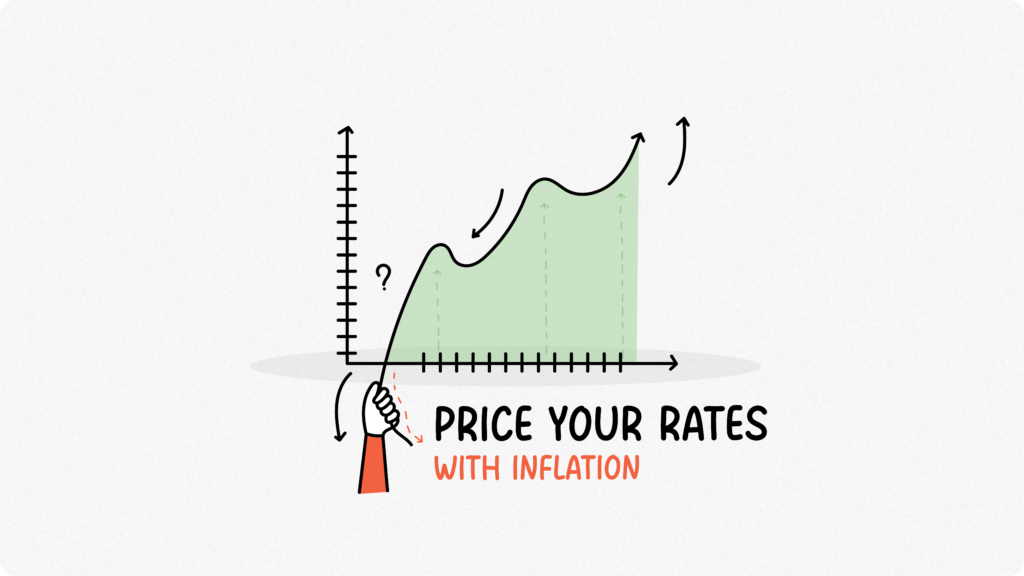
Finding the right balance between being a creative and a business owner is one of the hardest parts of freelancing. Most of us start out wanting to do great work, but eventually hit a wall when the cost of software, health insurance, and taxes begins to consume margins. If you have not adjusted your rates in the last twelve months, you are likely earning less in real terms, even if your nominal income has stayed the same. In the current 2026 economy, pricing is a core part of your business that must keep pace with the world around you. To move from simply surviving to building a sustainable career, you must shift your focus toward professional financial management. In this Article Calculating the Cost of Business Operations A professional rate must support your entire infrastructure. This includes obvious overhead like hardware and subscriptions, but also the invisible costs that traditional employees often overlook. In the U.S., for instance, freelancers are responsible for the full 15.3% self-employment tax. It is also vital to account for non-billable time. If you spend ten hours a week on administration, marketing, and pitching, your active work hours must be priced high enough to fund that unbilled labor. If your rate only covers the moments you are actively producing deliverables, you are effectively subsidising those administrative hours without compensation. The Distinction Between Living and Profiting There is a common trap in the freelance world: setting a rate that covers your bills but leaves nothing for the future. To move into a more secure financial position, your pricing should include a dedicated profit margin, ideally between 10% and 25%. Think of this margin as the research and development fund for your business. This capital pays for a new computer when yours crashes or covers expenses during a slow month. Without a dedicated profit margin, the business has no buffer for reinvestment or volatility, and operates more like a short-term contracting setup than a sustainable company. Purchasing Power and Inflation Inflation is a constant, quiet force that reduces real income over time if rates remain unchanged. With inflation in the U.S. in the mid-3% range in 2026, a project that cost $1,000 last year needs to be priced higher today just to maintain the same purchasing power. Reviewing your rates annually is standard professional maintenance. Most clients find it easier to accept a small, consistent increase each year, often adjusted in line with inflation or the Consumer Price Index, than a larger adjustment after several years of stagnation. Value-Based Communication The prospect of informing a long-term client that your prices are increasing can be stressful. The most effective strategy is to shift the conversation away from your personal expenses and toward the results you deliver. Instead of citing rising costs, focus on the return on investment (ROI) you provided over the last year. If you have helped a client grow their audience or improve their product, they are not paying for your time; they are paying for a specific outcome. Providing 30 to 60 days of notice is the professional standard for this transition, as it allows clients time to adjust their 2027 annual budgets. Freelance Pricing: Frequently Asked Questions How do I know if it is time to raise my rates? If you are constantly booked and turning away work, the market is indicating that your value has exceeded your price. Additionally, if a full year has passed without an adjustment, your real income has likely decreased due to inflation. What is the self-employment tax? In the U.S., the self-employment tax is 15.3%. This covers Social Security and Medicare. Because you are both the employer and the employee, you are responsible for the full amount. You should set this aside before calculating your actual take-home pay. What is a healthy profit margin? Most successful service-based businesses aim for a net profit margin of 10% to 25%. This is the amount remaining after you have paid yourself a fair salary and covered all business overhead. Should I lower my price if a client says I am too expensive? Rarely. If a client has a genuine budget limit, it is better to reduce the scope of the work rather than your rate. For example, if they cannot afford five blog posts, offer them three. This keeps your hourly value intact and maintains your professional standing. Is it better to charge by the hour or by the project? Hourly billing is a safe starting point, but project-based pricing is usually better for experienced professionals. As you become more efficient, hourly billing can actually penalize expertise. Project pricing allows you to be paid for the result and your experience. How do I handle legacy clients on outdated rates? You do not have to move them to your highest current rate immediately. You can offer a loyalty discount that sits between their old rate and your new market value. This acknowledges the relationship while moving the contract toward a sustainable price point. Taking Control of Your Financial Growth Setting professional freelance rates is not an aggressive act; it is a fundamental requirement for a lasting career. By accurately calculating your operational costs, building in a profit margin for reinvestment, and adjusting for economic shifts like inflation, you transition from a gig worker to a business owner. Begin by auditing your current expenses and comparing them against your income over the last twelve months. If your margins have thinned, now is the time to plan your next rate adjustment. Your expertise and the value you provide deserve to be supported by a pricing structure that allows your business to thrive, not just survive.