
5 Smart Ways to Make Sure your Invoices are Paid On Time
You’ve done the work. You poured your expertise into the project, delivered fantastic results, and the client is thrilled. Now comes the less glamorous, but critically important part: getting paid for it. For so many freelancers and small business owners, the time between sending an invoice and seeing the money in your account can be a source of major stress and uncertainty. If this feels familiar, you are far from alone. According to a QuickBooks survey, 73% of businesses are negatively impacted by late invoices. Let’s be honest, chasing down payments is the last thing you want to spend your time on. It’s awkward, time-consuming, and disrupts the cash flow that keeps your business running smoothly. The good news is that getting paid on time isn’t about luck; it’s about having a professional and consistent process. Here are five smart, actionable ways to ensure your invoices are paid promptly, so you can spend less time chasing and more time doing what you do best. 1. Set Clear Expectations Before You Start the Work The single best time to ensure an invoice is paid on time is before you’ve even created it. A lack of clarity is one of the biggest sources of payment delays. Setting professional boundaries and expectations from the very beginning prevents confusion down the line. In your contract or project proposal, include a dedicated section for payment terms. Clearly outline: Discussing these terms upfront frames prompt payment as a core part of your professional agreement, not an afterthought. 2. Make Your Invoices Clear, Complete, and Professional An amateurish or confusing invoice is an easy excuse for a client to “put it aside to deal with later.” A professional invoice, on the other hand, signals that you are a serious business and makes it easy for the client’s accounting department to process. Every invoice you send should include: Using a clean, branded template not only looks more professional but also ensures you never forget a critical detail. Want to get every part just right? Check out our deep-dive guide, What Is an Invoice? (And How to Create One), for pro tips on crafting the perfect bill. 3. Offer Convenient, Modern Payment Options Think about it from your client’s perspective. If their only option is to find a checkbook, write a check, and mail it, you’ve created friction. In today’s digital world, friction leads to procrastination. The easier you make it for someone to pay you, the faster you will get paid. On every invoice, include a direct link for online payments. Allowing clients to pay instantly via credit card or an ACH bank transfer is a game-changer. It turns paying your invoice into a simple, two-minute task they can do right from their email, dramatically reducing delays. 4. Automate Your Follow-ups (Politely and Persistently) This might be the most powerful, yet underutilized, strategy. Most payment delays aren’t malicious; they’re often due to simple forgetfulness. However, manually tracking who has paid and who needs a reminder is a huge time-sink and can feel personally awkward. This is where a system can do the heavy lifting for you. Set up automated email reminders to go out: Automating this process removes the emotion and ensures no invoice ever falls through the cracks. It’s a persistent, professional system that does the “nagging” so you don’t have to. 5. Establish a Late Fee Policy (and Mean It) No one likes to talk about late fees, but they serve a crucial psychological purpose. A late fee policy communicates that your time and financial stability are valuable, and it provides a clear financial incentive for clients to pay on time. The key is to include it in your contract and state it clearly on your invoice (e.g., “A late fee of 1.5% per month will be applied to balances not paid within 30 days.”). You may choose to waive it for a first-time offense with a good client, but the policy’s mere existence is often enough to encourage prompt payment. It transforms the due date from a suggestion into a deadline with a tangible consequence. Build a System for Success Notice a common thread here? The most effective strategies are built on clear communication and consistent systems, not just wishful thinking. When you create a professional process for invoicing and collections, you are taking control of your cash flow and demonstrating the value of your work. Getting paid on time shouldn’t be a struggle. It should be the routine, satisfying conclusion to a job well done. Fynlo gives you everything you need: professional invoice templates, online payment links, automated reminders, consolidated invoice records, and built-in analytics, all in one place. Sign up for free today and take control of your cash flow!
Why Accurate Payroll Accounting Matters More Than Ever
For any business, payroll is more than a routine task; it’s the engine of trust and the foundation of your financial integrity. It’s the core promise you make to your team. While getting payroll right has always been essential, the modern American business landscape has raised the stakes significantly. Did you know that 40% of small businesses are fined by the IRS each year due to payroll mistakes? The surge in remote work, a complex web of multi-layered regulations, and a competitive talent market have created a perfect storm of complexity. A seemingly minor payroll error can quickly spiral into a major liability, leading to costly IRS penalties, legal disputes, and a damaging loss of employee confidence. Before we dive into solutions, let’s look at the regulations that so often trip up small businesses. Table of Contents Navigating Federal, State, and Local Payroll Regulations Managing payroll in the United States is uniquely complex. Unlike in many countries, businesses here must navigate a three-tiered system of regulations that is constantly changing. An outdated or one-size-fits-all approach is a recipe for non-compliance. Key challenges include: Varying Minimum Wage RatesThe federal minimum wage is just the starting point. You must comply with the rate that is most generous to the employee based on their work location. For instance, California’s statewide minimum wage is $16 per hour as of 2025, and cities like Los Angeles set it even higher. Travel a few hundred miles east to Texas, and the rate drops back to the federal floor of $7.25. State-Specific WithholdingEach state has its own rules for income tax withholding, and they can vary dramatically. In New York, you must withhold based on graduated brackets and a set of supplemental rates for bonuses. In contrast, Florida has no state income tax at all, so there’s nothing to withhold. Failing to withhold the correct amount can create tax liabilities for both the business and your employees. Overtime and Leave LawsThe federal Fair Labor Standards Act requires time-and-a-half for any hours worked over 40 in a week. California goes further: workers earn overtime after eight hours in a day and double time after twelve. Leave mandates vary too. Some states, like Oregon, require employers to provide paid sick leave at set accrual rates, while Maine mandates contributions to a paid family leave fund. Getting Worker Classification Right One of the biggest payroll pitfalls is misclassifying talent. An employee on a W-2 is someone whose work you direct—how, when, and where they perform their job—and for whom you must withhold federal and state income tax, Social Security, and Medicare. By contrast, an independent contractor on a 1099-NEC sets their own schedule, uses their own tools, and handles their own self-employment taxes. It can be tempting to classify everyone as an independent contractor, but regulators are paying close attention. The IRS and Department of Labor have recently recovered tens of millions in back taxes and penalties by reclassifying misclassified workers as employees. The Remote Work Revolution and “Nexus” The explosion of remote work offers incredible flexibility, but it has profound payroll implications. When you hire an employee in a new state—even just one—you have likely established a “nexus” there. This means you are now subject to that state’s employment and tax laws. For example, if your main office is in Texas but you bring on a remote worker in California, you must register with the California Employment Development Department, withhold California payroll taxes, and pay into its State Disability Insurance program. Similarly, hiring someone in New York City triggers New York State withholding and New York City’s local wage-garnishment rules. You must also contribute to each state’s unemployment insurance fund—so a remote hire in Massachusetts requires contributions to the Commonwealth’s Department of Unemployment Assistance while a remote hire in Florida does not, since the state has no personal income tax. Managing this compliance puzzle for a team distributed across multiple states turns payroll into a complex, high-stakes operation. With regulations in mind, let’s explore what happens when payroll goes off the rails. The True Cost of Getting It Wrong Payroll errors do more than trigger fines. In 2023, Instacart agreed to a $5 million settlement after misclassifying thousands of shoppers as contractors and failing to pay overtime. That same year, San Francisco tech startup Scale AI—worth $13.8 billion as of 2024—faced a class-action lawsuit when a payroll software glitch systematically underpaid thousands of contract data labelers for weeks, denying them the wages they had earned. These high-profile cases show how a single payroll mistake can damage your finances, your reputation, and your ability to retain talent. The Technology Lifeline Cloud-based payroll tools can transform payroll from a chore into a strength: Automatic Tax Updates Tools like Gusto and Rippling keep federal, state, and local rates current so you never hunt for new tables or type in rates by hand. These automatic updates ensure your calculations are always accurate, reducing the risk of costly penalties or last-minute manual corrections. Built-In Multi-State Support Hire someone in a new state and the software walks you through registration, applies the right tax rules, and files deposits for you. It also generates state-specific reports and sends reminders for upcoming deadlines, so you never miss a filing window. Seamless Time Tracking When your team clocks hours on an app, those times automatically flow into payroll. You can even set up approval workflows so managers sign off on hours before they process pay, catching mistakes early and saving you from end-of-period headaches. Employee Self-Service Your people can pull their own pay stubs, W-2s, or 1099s and update tax withholding online. This level of transparency cuts down on routine requests and frees your HR team to focus on strategic initiatives. Conclusion & Next Steps Accurate payroll is more than a checkbox; it ensures legal compliance, builds employee trust, and protects your bottom line. With the right tools and processes, payroll becomes a competitive advantage rather than a burden. Ready to leave payroll headaches behind? Book a free consultation with our team
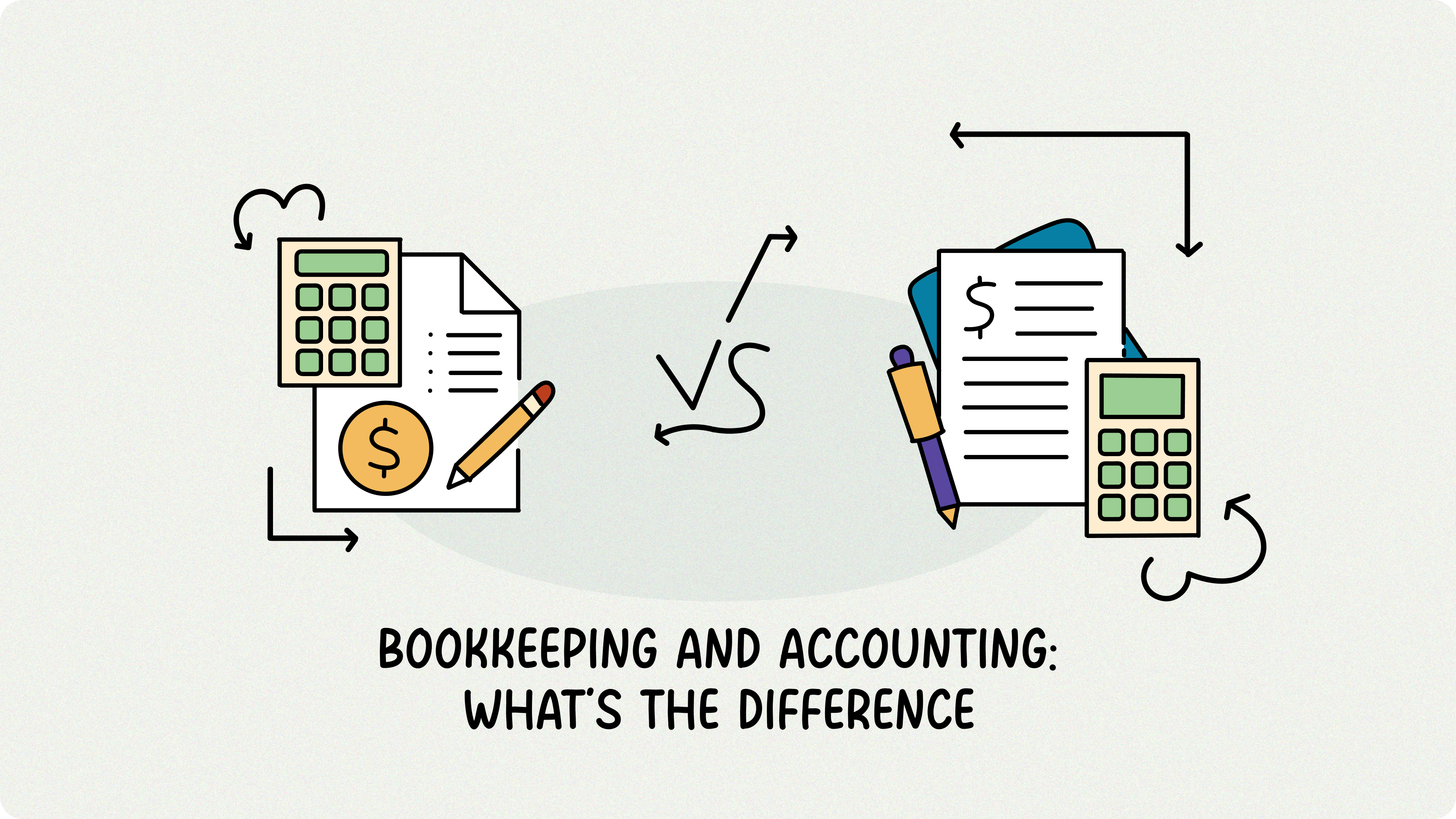
Bookkeeping and Accounting: What’s the Difference?
Ever wondered about the people who keep a company’s financial world spinning? Two key players in this arena are bookkeepers and accountants, and while their roles are often confused, they are distinctly different yet deeply connected. In short, bookkeeping is the process of recording daily financial transactions, while accounting is the high-level process of analyzing and interpreting that data to make strategic business decisions. Think of it like building a house. The bookkeeper is the one laying the foundation and framing the structure, ensuring every brick and beam is perfectly in place. The accountant is the architect who analyzes that structural blueprint, advises on how to develop the property for long-term value, and ensures it complies with all regulations. One builds the structure; the other ensures it’s a sound investment. Table of Contents A Simple Comparison of Core Functions This table offers a clear, side-by-side comparison of the two roles: The Role of a Bookkeeper A bookkeeper is the master of the day-to-day financial records. Their primary role is to ensure every single financial transaction is accurately recorded and categorized. This is a crucial, detail-oriented job that forms the bedrock of a company’s financial reporting. Without it, you’re making decisions in the dark. Key responsibilities of a bookkeeper include: The Role of an Accountant An accountant takes the meticulously recorded data from the bookkeeper and uses it to see the bigger financial picture. They analyze this information, prepare formal financial statements, and provide strategic advice to help the business grow and remain compliant. A good accountant doesn’t just report the numbers; they tell you the story behind them. Key responsibilities of an accountant include: A Real-Life Coffee Shop Example At Joe’s Coffee House, its bookkeeper works on a daily or weekly basis. They record every sale of coffee and pastries, log the invoices for milk deliveries and new equipment, process payroll for the baristas, and reconcile the cash register with the bank deposits. They ensure the fundamental data is flawless. At the end of the quarter, the accountant takes this data. They prepare a profit and loss statement and see that while revenue is high, the cost of goods sold is eating into margins more than expected. They advise the owner to renegotiate with a supplier or adjust menu prices. They also use the year’s data to prepare the tax return and create a budget for the next year, forecasting potential cash flow for a planned renovation. The bookkeeper tracked the individual transactions; the accountant helped the owner see the path to greater profitability. Can Your Bookkeeper and Accountant Be the Same Person? This is a common question, and the answer is yes, it’s possible, especially in certain scenarios. Bookkeeping and accounting are not mutually exclusive; they are two sides of the same financial coin. In very small businesses or for sole proprietors, the owner often handles the basic bookkeeping, and an external accountant is hired for year-end taxes and analysis. Alternatively, many modern accounting professionals and firms offer both bookkeeping and accounting services as a bundled package. A qualified accountant certainly has the skills to perform bookkeeping tasks. Yet, it’s important to remember that they remain two distinct functions. When one person fills both roles, they are “wearing two different hats.” They spend part of their time on the transactional recording (the bookkeeping hat) and part of their time on the high-level analysis and strategy (the accounting hat). The key is to ensure that both essential functions are performed accurately. Ready to Streamline Your Financials? Feeling overwhelmed by the thought of managing both the daily records and the big-picture strategy? You’re not alone. The right tools can make all the difference, automating many of the tedious tasks of bookkeeping so you and your financial advisor can focus on growth. Our accounting software is designed to simplify your financial management. Let’s find out exactly what you need. Schedule a free call with our team today, and we’ll help you build a more efficient and profitable financial future.
The Pros and Cons of In-House vs. Outsourced Accounting
If you’re running a small business, you probably started out as your own “Chief Everything Officer.” That includes being the lead, and only, member of your accounting department. Late nights with spreadsheets and a shoebox full of receipts are a rite of passage for many entrepreneurs. But as your business grows, that system starts to break. The bookkeeping takes more and more of your time, tax questions become more complex, and you start to worry about what you might be missing. You’ve reached a financial crossroads: is it time to hire someone in-house, or should you outsource your accounting to an external firm? This is a major decision, and there’s no single right answer. It’s about understanding your needs, your budget, and what you want your role in the business to be. Let’s break down the pros and cons of each path. Table of Contents The In-House Route This typically means hiring a part-time bookkeeper or a full-time staff accountant. This person is your employee, working within your company on a daily basis. Pros of In-House Accounting: Cons of In-House Accounting: The Outsourced Path Outsourcing means partnering with an external firm (like Fynlo!) that handles your accounting needs remotely. You pay a monthly fee for their services. Pros of Outsourced Accounting: Cons of Outsourced Accounting: Finding the Right Fit: The partnership is crucial. You need to find a firm that understands your industry, communicates well, and feels like a genuine part of your team. TL;DR Comparison: In-House vs. Outsourced For a quick overview, here’s how the two options stack up against each other. Factor In-House Accounting Outsourced Accounting Cost High: Full-time salary + benefits + taxes + software (often $90,000+ total). Flexible: Predictable monthly fee, often a fraction of a salary. Pay only for what you need. Expertise Limited: Expertise is confined to the knowledge of one or two individuals. Broad: Access to a diverse team of specialists (tax, bookkeeping, strategy, etc.). Scalability Difficult: Scaling requires a lengthy and expensive hiring process. Easy: Services can be scaled up or down quickly as your business needs change. Control & Access High: Direct, daily management and immediate on-site access. Structured: Access is through scheduled calls and email. Less direct daily oversight. Response Time Immediate: on-demand support and instant adjustments. Defined: typically within agreed SLA, often same or next business day, and prioritised by urgency. Time Investment High: Requires time for hiring, training, and ongoing management. Low: The firm manages its own team and technology, freeing up your time. Continuity Risky: Operations can halt if your employee leaves or is unavailable. Reliable: Service is uninterrupted by vacations or personnel changes due to team structure. Best For Businesses valuing oversight, data security, and stable finances Businesses seeking cost savings, scalable solutions, and specialized expertise. Which Path is Right for You? The truth is, the best choice depends on your stage of growth. Ultimately, the goal is to get timely, accurate financial information that empowers you to make smart decisions, without draining your time or your bank account. The right solution shouldn’t just do your books; it should give you peace of mind and the freedom to focus on leading your business. Whether you’re considering bringing someone in-house or tapping into outsourced expertise, Fynlo’s advisors can help you weigh the options and find the best fit for your budget and growth plans. Schedule a free consultation today, and let us guide you toward the solution that frees you to focus on what you do best.
6 Must-Have Financial Reports Every Small Business Owner Needs
As a small business owner, you’ve got a “number” in mind. It may be new clients, annual revenue, or the amount you need in the bank to sleep easy. But in the daily grind of client work and projects, it’s easy to lose track of how you’re really doing. An Intuit survey found that 30% of small businesses struggle to track cash flow, leaving owners stressed and second-guessing their finances. Sound familiar? You’re not alone. Financial reports aren’t just for accountants—they’re your business dashboard, providing clear insights to keep you on track. Think of them like the gauges on your car’s dashboard: you don’t need to be a mechanic to read the speedometer or check the fuel level. Here are the six reports that make up your business dashboard. Table of Contents Profit and Loss (P&L) Statement or Income Statement Example of Income Statement (Source: principlesofaccounting.com) This is your business’s report card. In the simplest terms, it tells you if you made or lost money over a set period, like a month, a quarter, or a year. For years, I just watched my bank balance. If it went up, I figured it was a good month. But the P&L showed me the truth. I once discovered I was spending nearly 20% of my revenue on various software trials and subscriptions I’d forgotten about. Seeing it in black and white was the wake-up call I needed. Balance Sheet Example of Balance Sheet (Source: principlesofaccounting.com) Think of this as a snapshot of your business’s financial health on one specific day. It shows what your business is worth at that moment. This report is crucial for seeing your stability. However, because it’s a snapshot on a single day, it can’t show you the flow of money. It tells you that you have $10,000 in the bank today, but not how it got there or where it went last week. For that, you need the next report. Cash Flow Statement Example of Cash Flow (Source: principlesofaccounting.com) This is the story of the cash moving through your business. While the P&L can be misleading (it includes sales you haven’t collected cash for yet), this report tracks the actual hard cash that has come in and gone out. A frequently-quoted study by Jessie Hagen found that 82% of business failures are due to poor cash flow. This report is your early warning system. While the Balance Sheet shows a snapshot of your cash at one moment, the Cash Flow Statement is like a video, showing you exactly when money came in and when it went out over a period. This helps you spot dangerous trends, like if you’re consistently spending cash faster than you’re collecting it. Accounts Receivable (A/R) Aging Report Example of A/R Aging Report (Source: highradius.com) This is your “who owes me money?” list. It’s a simple but powerful report that gives you a detailed breakdown of all your unpaid invoices. This report is your action plan for getting paid. A Melio survey shows more than half of small businesses experience late payments by large companies, and while most operate on net 30 terms, 25% report waiting 20–30 days past the due date. Instead of a vague feeling that “some clients are late,” this report tells you exactly who to call first. Sales by Customer (or Client) Summary Example of Sales by Customer Summary (Source: avaza.com) This report can be a real eye-opener. It shows you exactly which clients are generating the most money for your business. I used to think my “biggest” client was the one who made the most noise and took up the most time. After running this report, I realized my most valuable client was actually a quiet, low-maintenance account that paid on time, every time. This insight is gold. It helps you understand who to focus on. Expenses by Vendor (or Category) Report Example of Sales by Customer Summary (Source: accurabooks.com) Just as you track where money comes from, it’s critical to see where it’s going. This report breaks down your spending so you can see every detail. Why it matters: This report helps you find “cost leaks.” You might discover that your shipping costs have quietly doubled or that you’re spending far more on one software tool than you realized. Seeing it laid out so clearly makes it easy to spot chances to save. TL;DR: The 6 Reports at a Glance From Information to Action Running these reports isn’t about creating more paperwork. It’s about trading anxiety for clarity. Start by picking just one or two of these to look at each month. Get familiar with the story they tell. When you understand your numbers, you stop guessing and start making strategic decisions. You gain the confidence that comes from truly knowing your business, inside and out. Ready for True Financial Clarity? Feeling more confident about these reports is a great first step. The next is putting them to work without losing hours of your time. At Fynlo, our software makes running these reports simple, and our team of experienced accountants can help you understand the story behind the numbers. Stop guessing and start knowing, schedule a free call with us today.
17 Accounting Myths You Probably Still Believe (Debunked)
Most of us dive into freelancing or small-business ownership for the work itself—designing, consulting, baking. The last thing we signed up for was bookkeeping. Yet every conversation comes with unsolicited “advice” from well-meaning friends or relatives: “Just write off everything!” or “You don’t need records—just save your bank statements.” Those myths don’t just create unnecessary stress—33% of small-business owners report they regularly lose sleep over money worries—and they can cost you real dollars if left unchecked. We didn’t get into business to become accountants, so it’s easy to fall for these misconceptions. Let’s debunk these myths and give you the clarity to manage your finances confidently. Myth 1: Accounting is only for tax season. Reality: Accounting is a year-round activity that gives you a real-time pulse on your business’s health. Why It Matters: Scrambling for records in March or April creates stress, missed deductions, and rushed decisions. Reviewing your books monthly, or even weekly, lets you spot small issues, improve cash flow, and cut costs before they spiral out of control. Myth 2: I’m too small to need formal accounting software. Reality: Spreadsheets are prone to errors and can’t scale with your business. In fact, research indicates that up to 88% of spreadsheets contain significant mistakes. Why It Matters: I’ve been there. My first year I tracked everything in a spreadsheet. A single misplaced formula almost cost me $500 in underreported income. Modern cloud software is affordable, automates data entry, and lets you connect your bank feed, so you save hours and get a clearer financial picture. Myth 3: I can write off 100% of my home-office costs. Reality: You can only deduct the portion of your home used exclusively and regularly for business. Why It Matters: Over-claiming this deduction is a classic IRS red flag. You can choose the simplified method (up to $1,500) or the actual-cost method (allocating mortgage, utilities, insurance). Use whichever yields the bigger benefit, but only for truly dedicated office space. Myth 4: A business credit card can replace a business bank account. Reality: A credit card lets you borrow money, while a bank account is where your business’s cash actually lives. You need both, but a separate business bank account is especially important to manage funds properly. Why It Matters: Mixing personal and business money in one account can strip away your LLC’s liability protection, exposing your personal assets if things go wrong. It also turns bookkeeping and tax preparation into a tangled mess. A dedicated business bank account keeps your finances clear, simplifies reconciliations, and ensures your legal and financial records stay rock solid. Myth 5: I don’t need to save receipts if I have a bank statement. Reality: The IRS requires proof of purchase, and bank statements alone don’t show what you actually bought Why It Matters: Picture an auditor asking what a $200 Amazon charge covered. A bank statement alone won’t prove it was for a printer rather than a TV. Instead, digitize and tag every expense as it happens using receipt-capture apps like Dext or QuickBooks Snap. Myth 6: Profit is the same as cash flow. Reality: Your profit on paper may look healthy, but cash flow measures the actual dollars in your account that keep your business running. It’s a crucial difference, and an Intuit study found that 61% of small-business owners struggle with cash-flow issues. Why It Matters: Your Income Statement can show a big profit, but if clients haven’t paid, you can’t pay your bills. This is the single most critical survival concept. Myth 7: I can pay myself whatever’s left in the business account. Reality: You must set aside money for taxes and business savings before paying yourself. Why It Matters: Following Mike Michalowicz’s “Profit First” principle means you allocate percentages to tax and profit accounts before paying yourself. This approach prevents the panic of facing a large tax bill with no funds set aside. Myth 8: Bartering (trading services) isn’t taxable. Reality: The fair market value of services received in a trade counts as taxable income. Why It Matters: If a web designer trades $2,000 of work for $2,000 of photography, each party must report $2,000 of income. Don’t let “free” trades cost you in unreported revenue. Myth 9: An accountant is too expensive for my small business. Reality: A good accountant saves you more money than they cost. Why It Matters: They prevent mistakes, uncover deductions, and save you hours of work. For example, a $2,000 annual fee is repaid when you reclaim just 40 hours of time—hours you can spend on billable work or growing your business. This makes an accountant an investment, not an expense. Myth 10: My bookkeeper and my tax preparer are the same thing. Reality: Bookkeeping is daily transaction recording, while tax preparation is annual return filing. Why It Matters: Clean, year-round books speed up tax season and reduce preparation costs because your accountant can work directly with accurate, organized records. Myth 11: I can deduct the cost of my commute to my office or co-working space. Reality: Commutes from home to your primary workplace are non-deductible, but you can deduct business trips beyond that, such as driving to client meetings. Why It Matters: Misclassifying personal travel as business mileage invites audit scrutiny. Only log miles driven for business purposes beyond your usual commute. Myth 12: Estimated taxes are optional. Reality: If you expect to owe more than $1,000 in tax, you must pay quarterly estimated taxes. Why It Matters: The U.S. is a “pay-as-you-go” system. Missing estimated payments triggers underpayment penalties—just like an employee missing withholding. Myth 13: Putting ‘LLC’ after my name protects me from everything. Reality: An LLC shields personal assets from business debt, but it doesn’t protect you from professional negligence or from commingling personal and business funds. Why It Matters: If a client sues over an error or omission, your LLC structure will not prevent a negligence claim and your personal assets could still be at risk. Beyond separating business and personal finances,
Financial Statements: A Comprehensive Guide
Most of us who go out on our own do it for the work itself. Whether you’re a designer, a writer, or a consultant, you’re driven by the craft. But then you start your business, and you realize you’ve also become its reluctant Chief Financial Officer. I remember my first year, staring at my accounting software and feeling completely out of my depth. I was great at my actual job, but when it came to the money side, I was just guessing. I’d look at my bank account, see money in there, and figure I was doing okay. But I always had this low-level hum of uncertainty. Am I really making a profit? Am I charging enough? Where is all the money going? It turns out the answers to those questions are sitting in three financial reports. They sound intimidating, but they’re really just tools to help you trade that uncertainty for clarity. Table of Contents The Income Statement: Answering, “Did I Actually Make a Profit?” Example of Income Statement (Source: principlesofaccounting.com) This is the most basic question, and the Income Statement (often called the P&L for Profit & Loss) answers it directly. It’s a simple summary of your revenue versus your expenses over a specific period, like a month or a quarter. In my early days, I felt like I was working constantly but my savings weren’t growing. I finally sat down and looked at my P&L. The “aha!” moment wasn’t some huge, dramatic discovery. It was seeing I was spending nearly $150 a month on various software subscriptions I’d signed up for and forgotten about. It’s the small leaks that often sink the ship. The P&L helps you spot them. It shows you the real cost of doing business, beyond just the big, obvious expenses. The Balance Sheet: A Snapshot of Your Business’s Financial Health Example of Balance Sheet (Source: principlesofaccounting.com) Being profitable month-to-month is great, but you also want to know if you’re building a stable business over the long term. That’s where the Balance Sheet comes in. If the P&L is a movie of your recent performance, the Balance Sheet is a snapshot of your business’s financial health right now. It’s based on a simple formula: Assets (What you have) = Liabilities (What you owe) + Equity (What’s yours) Honestly, for a long time, I ignored my Balance Sheet. It felt too “corporate.” But it’s surprisingly practical. And critical, too: according to Intuit QuickBooks, 57% of small business owners have experienced problems with their cash flow. Business owners lose $34,000 on average by being forced to turn down work, specifically due to issues created by insufficient cash flow. That “Accounts Receivable” line shows you exactly how much money you’re waiting on from clients. Seeing that number get too big can be the nudge you need to get better about your payment terms and follow-ups. The Cash Flow Statement: Tracking Where Your Money Really Goes Example of Cash Flow (Source: principlesofaccounting.com) This is the big one. Have you ever had a profitable month on paper but felt completely broke? I’ve been there. You’ve done the work, you’ve sent the invoices, but your bank account is dangerously low and bills are due. This is a cash flow problem, and the Cash Flow Statement is the tool that explains it. It tracks the actual cash moving in and out of your business. According to SCORE, 82% of small businesses that fail do so because of poor cash flow. It’s not that they aren’t profitable, it’s that they run out of cash. A friend of mine who runs a small trade business almost learned this the hard way. His P&L looked fantastic because he was landing big jobs. But he was paying his suppliers in 30 days, while his clients were taking 60 or even 90 days to pay him. His business was profitable, but it was being starved of cash. The Cash Flow Statement made this timing gap impossible to ignore. It forced him to start collecting deposits upfront and tighten his payment deadlines. It didn’t just lower his stress; it saved his business. From Numbers to Know-How Look, nobody gets into freelancing because they have a passion for spreadsheets. But you owe it to yourself and your business to understand the basics. You don’t need to become an accountant, you just need to get curious. Start small. Ask your bookkeeper or use your accounting software to run your P&L once a month. Take 20 minutes to look at it. Where did your money come from? Where did it go? Doing this consistently replaces that vague financial anxiety with quiet confidence. You start making decisions based on real data, not just a gut feeling. And in this line of work, having fewer unpleasant surprises is one of the best assets you can have. Ready to trade that financial uncertainty for clarity? At Fynlo, we handle the accounting and bookkeeping so you can focus on what you do best. Let us help you understand the story your numbers are telling. Schedule a free call with us today.
I Thought I Was Saving Money—Then the IRS Came Knocking
A Client’s Story: How a “Cheap” Bookkeeper Nearly Cost Him Everything At Fynlo, we work with entrepreneurs every day to build and protect their businesses. Recently, a new client came to us with a story so cautionary, we felt it had to be shared. With his permission, here is the real story of how a single decision—hiring the wrong bookkeeper—led to the collapse of his company, and the powerful lessons every business owner can learn from his experience. Table of Contents How It All Started It started with a simple desire to save a few bucks. As the owner of a growing trucking service, he knew every penny counted. Fuel costs, maintenance, insurance – the overhead was already sky-high. So, when he found a bookkeeper who promised to handle all his finances for a fraction of the price of the more established firms, it felt like a savvy business move. It was a decision he would come to regret more than any other. His name was John, a friendly, soft-spoken man the client found after a quick Google search. John’s website highlighted years of bookkeeping experience, so the client trusted him. He talked a good game, promising to streamline everything, maximize deductions, and keep the IRS and state tax authorities happy. For the first year, everything seemed to be running smoothly. The paperwork was filed, the owner received reports that looked professional, and most importantly, he was saving a significant amount on bookkeeping fees. Money he ploughed back into the business, buying a new rig and taking on more drivers. The business was growing, and he felt like he was finally living the dream he’d worked so hard for. The first crack in the facade was small. A letter from the state tax office about a discrepancy in the company’s fuel tax filings under the International Fuel Tax Agreement (IFTA). John brushed it off as a minor clerical error, assuring the owner he would handle it. Busy managing a fleet that was now running 24/7, the owner took him at his word. Then came another notice—this time from the IRS—about underpaid payroll taxes. Again, John had a plausible explanation. It was the government’s bureaucracy, he said, always getting things mixed up. The Audit That Changed Everything The real trouble began when the company was selected for a random audit by the IRS. The owner wasn’t too worried at first; he believed his operation was clean. When he called John to let him know, for the first time, he heard a flicker of panic in the bookkeeper’s voice. John became evasive, promising to get all the necessary documents in order. That was the last proper conversation they ever had. As the audit date loomed, John became harder and harder to reach. Voicemails went unanswered. Emails bounced back. A visit to his small rented office found it empty, cleared out as if he had vanished into thin air. It was then, the owner described, that a cold, hard knot of dread began to form in the pit of his stomach. With the auditors waiting, he had no choice but to hire a reputable accounting firm to make sense of the mess John had left behind. What they uncovered was a nightmare. John, the “affordable” bookkeeper, had been running a sophisticated scam. He wasn’t filing the IRS or state tax returns properly at all. The professional-looking reports he’d been given were complete fabrications. John had been pocketing a portion of the money intended for tax payments, making only the minimum payments required to avoid immediate red flags. He had misclassified employees, failed to remit payroll taxes correctly, and completely ignored the company’s compliance with IFTA. The audit revealed the full, horrifying extent of the damage. The business owed a staggering amount in back taxes—and that was just the beginning. The penalties and interest were astronomical, a testament to years of neglect and deceit. The business, the dream he had poured his life’s savings and countless sleepless nights into, was insolvent. The cost of getting compliant, of paying the IRS and state penalties, was simply more than the company could bear. The Bitter Decision The choice was brutal: face a mountain of debt and potential legal action, or shut down the company he had built from the ground up. With a heavy heart, he closed the doors of his trucking service. The good people he had employed lost their jobs. The trucks were sold off. His dream had turned to dust. He is now in the process of building a new company from the ashes, this time with our team of trusted, verified professionals. The lessons he learned were paid for at a painfully high price. The Hidden Costs of a “Cheap” Bookkeeper Our client’s story is a cautionary tale for every small business owner. The allure of saving money on professional services is strong, but the risks are profound. A bad bookkeeper can do more than just make a few errors; they can systematically destroy a business from the inside out. These are the crucial red flags he now advises every business owner to recognize: Protecting Your Business Before you entrust your finances to anyone, you must do your due diligence. Here’s what our client is doing differently with his new venture—and what we advise for all business owners: Ready to Safeguard Your Finances? Don’t wait until the IRS is at your door to get serious about your bookkeeping. At Fynlo, we combine expert accountants—many with backgrounds at top firms like Grant Thornton, BDO, and Baker Tilly—with cutting-edge software to ensure your books are accurate, compliant, and stress-free. Schedule your free call today and pave the way for a confident, mistake-free financial future.
The Fynlo Guarantee: Accurate, On-Time, and Stress-Free Accounting
Running a freelance gig or small business means juggling dozens of responsibilities, from marketing and client work to operations and finances. At Fynlo, we take accounting off your plate with our Fynlo Guarantee: every client receives bookkeeping and tax services that are Accurate, delivered On-Time, and completely Stress-Free. 1. Accurate Records—Every Time Even minor mistakes can lead to penalties or missed deductions. Accuracy is non-negotiable: Result: Financial statements you can trust, helping you maximize deductions and maintain compliance. 2. On-Time Delivery—And Smarter Decisions Through Clarity Late reports can derail cash-flow plans, loan applications, or investor pitches. With Fynlo: Result: You receive up-to-date financials exactly when expected, plus the strategic clarity to guide your next move. 3. Stress-Free Experience—Focus on What Matters Worrying about bookkeeping drains time and energy. Fynlo makes accounting seamless: Result: Zero late-night “where did that charge go?” moments. Instead, you stay focused on clients and growth. Meet the Team Behind the Guarantee Our combined expertise, backed by best-in-class technology, ensures your accounting is both personalized and scalable. How to Get Started Unlock peace of mind and a clear financial roadmap. Experience Accurate, On-Time, and Stress-Free accounting with Fynlo. Book your free discovery call today.
11 Questions to Ask Before Hiring an Accountant
Table of Contents The Day I Fired Myself It was 1 a.m. on a Tuesday in April. My online boutique had just had its best quarter ever, but I wasn’t celebrating. Instead, I was surrounded by a sea of crumpled receipts, staring at a spreadsheet that looked more like abstract art than a financial statement. I was trying to figure out if I could depreciate my new shipping label printer. I remember thinking, “I spent four years building this brand I love, and now I’m losing sleep over a printer.” That was the night I fired myself… from being my own accountant. For so many freelancers and small business owners in the USA, this story is familiar. We start out wearing all the hats: CEO, marketer, customer service rep, and, yes, bookkeeper. But there comes a point where the time and stress of managing the finances cost more than the money you think you’re saving. The Federation of Small Businesses revealed that small business owners spend up to 44 hours per year on tax compliance alone. That’s a full work week you could be spending on generating sales, creating your product, or just recharging. Hiring an accountant isn’t admitting defeat; it’s making a strategic investment in your success and sanity. But how do you find the right person? It’s not just about finding someone who can file your taxes. It’s about finding a financial partner. To help you find that partner, here are 11 essential questions to ask your potential candidates. 11 Questions to Ask Before Hiring an Accountant 1. Do you have experience with other businesses like mine? The financial landscape of a freelance graphic designer is vastly different from that of a small e-commerce shop or a local restaurant. An accountant who specializes in your field will already be familiar with the specific deductions, tax challenges, and revenue models unique to your industry. They won’t be learning on your dime. Ask them to give examples of how they’ve helped similar businesses. 2. What are your credentials (e.g., CPA, EA)? These letters represent very different skill sets. Knowing their designation tells you exactly where their expertise lies. 3. Who will be my main point of contact? At larger firms, you might meet with a senior partner initially, but your day-to-day work could be handled by a junior associate. There’s nothing wrong with this model, but you need to know who you’ll be speaking with regularly. Building a relationship with the person who is actually in your books is crucial for trust and clear communication. 4. How do you structure your fees? Why it Matters: There’s no single answer here, so you need to find what works for you. Common structures include: A retainer model is often preferred by business owners who want predictable costs and ongoing access to advice without worrying about getting a surprise bill for every phone call. 5. What specific services are included in your fee? This is arguably the most important question to avoid future misunderstandings. Does their fee include just the annual tax return? Or does it also cover quarterly estimated tax calculations, bookkeeping cleanup, payroll processing, and responding to tax notices? Get a detailed list. You need to be comparing apples to apples when you evaluate different accountants. 6. What accounting software do you prefer to work with? The days of the shoebox of receipts are over. Modern accounting live in cloud tools such as QuickBooks, Xero, Wave, or Fynlo. You need an accountant who is proficient with your current system or can seamlessly migrate you to a better one. Their comfort with technology is a good indicator of their overall efficiency. 7. Are you available for questions throughout the year? Your business doesn’t just happen during tax season. You might have a question about a major purchase in June or need to make a hiring decision in October. You want an accountant who sees themselves as a year-round advisor, not just a once-a-year tax preparer. Their answer will tell you a lot about their service philosophy. 8. How would you describe your approach: are you focused on historical compliance or proactive planning? A good accountant keeps you compliant and makes sure your taxes are filed correctly. A great accountant looks ahead. They’ll come to you with ideas for tax savings, help you plan for future growth, and advise on strategies to improve your cash flow. You’re looking for a proactive partner, not a financial historian. 9. Can you represent me in the event of an IRS audit? While IRS audit rates for small businesses are relatively low, they are not zero. If you are ever audited, it can be an incredibly stressful and time-consuming process. CPAs and EAs have unlimited representation rights, meaning they can represent you before the IRS on any matter. Knowing you have an expert in your corner provides invaluable peace of mind. 10. From your experience, what is the biggest financial mistake you see business owners in my position make? This question gives you a glimpse into their expertise and proactive mindset. Their answer will reveal how well they understand the common pitfalls of your industry. It also opens the door for them to provide immediate value and show you how they can prevent you from making those same mistakes. 11. What information do you need from me to get started? A professional accountant will have a clear, organized onboarding process. Their answer to this question will demonstrate their level of organization and set clear expectations for the working relationship. It shows they have a system and are ready to get to work. Finding Your Perfect Match Choosing your accountant isn’t just ticking boxes, it’s about forging a trusted partnership. Take the time to shortlist candidates, interview them, compare answers side by side, and go with the professional you trust. At Fynlo, we understand the challenges of financial management firsthand. That’s why we pair you with seasoned professionals who speak your language. Our junior accountants bring over five years of experience, while our senior accountants boast