
What is California AB 5? Complete Contractor Classification Guide for Small Businesses
Running a small business in California is like navigating a maze of regulations. One wrong turn, like misclassifying a worker, can lead to costly penalties or legal trouble. California AB 5, enacted in 2019, reshapes how businesses classify workers as employees or independent contractors, impacting your payroll, taxes, and compliance. This guide simplifies contractor classification for small business owners, offering a clear path to compliance. We’ll break down AB 5, who it affects, and the small business compliance steps you need—plus answer common questions to keep you ahead. Table of Contents What is California AB 5? California AB 5, signed into law in September 2019 and effective January 1, 2020, is a landmark labor law aimed at reducing worker misclassification. It codifies the “ABC test” from the 2018 California Supreme Court case Dynamex Operations West, Inc. v. Superior Court, making it harder to classify workers as independent contractors. AB 5 applies to California’s Labor Code, Unemployment Insurance Code, and Industrial Welfare Commission wage orders, ensuring workers receive protections like minimum wage, overtime, and benefits. In 2020, AB 2257 amended AB 5, adding exemptions and clarifications, now codified in Labor Code sections 2775–2787. The ABC test presumes workers are employees unless the hiring business proves all three criteria: A UC Berkeley study estimated 64% of workers doing independent contracting as their main job would be reclassified as employees under the ABC test. This shift increased employee protections but reduced self-employment by 10.5% and overall employment by 4.4% in non-exempt occupations, with no significant rise in W-2 employment. AB 5 protects workers and levels the playing field for businesses that properly classify employees, but it’s complex. Small businesses must understand its rules to avoid fines, which range from $5,000–$25,000 per violation for misclassification. Who is Affected by AB 5? AB 5 impacts small businesses across industries, especially those relying on freelancers or gig workers, like retail, hospitality, construction, and trucking. If you hire contractors in California or work with California-based freelancers, you’re affected, even if your business is elsewhere. Key Impacts: Exemptions: AB 2257 expanded exemptions to 109 professions, but exempt workers must still pass the Borello test, which considers factors like control, tools provided, and work duration. A U.S. Department of Labor study found 10–30% of employers misclassify workers, a persistent issue AB 5 aims to address. Implications for Small Businesses California AB 5 reshapes how small businesses operate, presenting challenges that can feel like dead ends in the compliance maze. Understanding its implications helps you navigate these hurdles and stay on track. To avoid these pitfalls, assess your current contractor classification practices now. Review worker roles, check for exemptions, and consult legal experts to ensure compliance. Taking these steps protects your business and keeps you competitive. Key Compliance Needs for AB 5 Complying with California AB 5 means understanding the ABC test, exemptions, and your workers’ roles. Small businesses face legal and financial risks if they misclassify workers, so proactive small business compliance is critical. Core Compliance Needs: Why It Matters: California loses over $7 billion annually to misclassified workers, missing out on taxes and benefits contributions. Proper classification ensures compliance and fair competition. 5 Steps to Comply with AB 5 Follow these five steps to ensure your small business complies with California AB 5 and avoids costly mistakes. Each step is designed for small business compliance with practical examples. Step 1: Audit Your Workers Review all contractors to determine if they pass the ABC test. For example, if your café hires a freelancer to redesign your website, they likely pass “B” (outside your core business of serving food). A barista, however, fails “B” and must be an employee. Use a checklist for A, B, and C criteria. Step 2: Check for Exemptions Identify if your contractors fall under exemptions (e.g., B2B, freelance writers). For B2B, ensure the contractor has a separate business entity, sets their own rates, and doesn’t work directly for your customers. For exempt workers, classification is assessed using the Borello test, a multi-factor standard; consult an attorney to verify eligibility. Step 3: Update Contracts Draft AB 5-compliant contracts emphasizing contractor independence. Specify they control their work, use their own tools, and serve other clients. For example, a photographer’s contract should note they set their schedule and provide their camera. Keep invoices and agreements for audits. Step 4: Reclassify if Needed If a contractor fails the ABC test and isn’t exempt, reclassify them as an employee. Register them with California’s Employment Development Department for taxes and workers’ compensation. Provide benefits like 10-minute rest breaks per four hours and 30-minute meal breaks per five hours. Step 5: Monitor and Consult Regularly review worker classifications as your business or laws change (e.g., AB 2257 updates). Engage an employment attorney to stay compliant, especially for complex cases like trucking or healthcare. Schedule annual audits to catch errors early. Common Questions About AB 5 Compliance Small business owners often have questions about navigating California AB 5. Below, we answer common concerns to help you understand contractor classification and stay compliant. How Can I Use B2B Exemptions? Many small businesses hire contractors for tasks like marketing or IT and wonder if they qualify for the B2B exemption. To use it, your contractor must meet 12 criteria, such as operating as a corporation or LLC, having a separate business location, and signing a written contract. These rules allow flexibility while ensuring compliance. What Documentation Protects Me During Audits? You might worry about proving contractor status if audited. Clear contracts that specify a worker’s independence—such as setting their own hours and serving other clients—are essential. Keep invoices, work agreements, and proof of their independent business (e.g., business license). These records can prevent costly misclassification claims. How Does Proposition 22 Affect My Business? Proposition 22, passed in 2020 and upheld in 2023, classifies app-based transportation and delivery drivers as independent contractors, exempting them from AB 5. However, it mandates certain benefits, such as minimum earnings guarantees and health insurance stipends for qualifying drivers. How Can I Avoid
6 Accounting Red Flags Every Small Business Owner Should Know (Before It’s Too Late)
As a small business owner, you’re likely juggling a million things. While your passion lies in your product or service, the health of your business hinges on its financial well-being. Neglecting your accounting is like ignoring a persistent cough—it might seem harmless at first, but left unchecked, it can signal something much more serious. Recognizing early warning signs in your financial records is crucial for nipping potential crises in the bud, before they threaten your livelihood. Think of your accounting as the vital signs of your business. Just as a doctor monitors blood pressure and heart rate, you need to keep a close eye on key financial indicators. Missing these red flags can lead to cash flow crunches, tax penalties, and even business failure. According to Business Insider, 82% of small business failures are due to poor cash management. Understanding and addressing accounting red flags early can significantly improve your chances of survival and success. This blog post will highlight 6 critical accounting red flags that every small business owner should be aware of. By understanding these warning signs, you can take proactive steps to address potential issues before they become irreversible. Let’s get financially savvy and safeguard your business’s future. Table of Contents 6 Accounting Red Flags to Watch For 🚩1. Inconsistent Cash Flow Cash flow is the money coming into and going out of your business. Inflows are cash you receive, like payments from customers or loans. Outflows are what you spend, like rent, supplier bills, or employee wages. Your cash flow should be steady, with predictable patterns. Big ups and downs without obvious reasons, like holiday sales spikes, are a warning sign. Check your bank statements or cash flow reports every month to spot unusual changes. For example, if your inflows drop suddenly or outflows spike, it could mean trouble. Why It Matters: Uneven cash flow can leave you unable to pay bills, suppliers, or staff, putting your business at risk. It might point to slow sales, late customer payments, or overspending. How to Address It: Use small business accounting software like QuickBooks or Xero to track cash flow daily. Set strict payment terms, like requiring invoices to be paid in 15 days, and chase late payers. Keep a cash reserve—think of it as a savings account—to cover unexpected dips. 🚩 2. Delayed or Inaccurate Financial Reports Financial reports, like your profit and loss statement (which shows your income and expenses) or balance sheet (a snapshot of what you own and owe), should be ready on time and correct. If monthly or quarterly reports are always late or have mistakes—like numbers that don’t match your bank account—it’s a sign of messy accounting. Compare reports to your bank statements to catch errors, such as expenses listed twice or missing sales. If you’re waiting weeks for reports, something’s off. Why It Matters: Late or wrong reports make it hard to make smart business decisions. They can hide problems, like unpaid bills or incorrect revenue, and could cause trouble during tax audits. How to Address It: Automate bookkeeping with tools like FreshBooks or Zoho Books to create reports instantly. Check reports monthly to spot mistakes early. If delays or errors keep happening, hire an accountant to organize your records. 🚩 3. Over-Reliance on a Few Clients Depending on just one or two clients for most of your income is like putting all your eggs in one basket. Add up how much each client contributes to your revenue. If one or two make up more than 20–30%—say, half your income comes from one big contract—you’re at risk. Look at their payment history or contracts for warning signs, like late payments or fewer orders, which could mean they’re struggling. Why It Matters: If a major client stops paying, cuts back, or leaves, your income could dry up, threatening your business. Acquira notes that over-reliance on a few clients comes with significant risks. How to Address It: Spread your income by finding new clients through marketing or offering new services. Use time-saving accounting tools like Invoice Ninja to monitor who pays on time and focus on reliable clients. Build ties with smaller clients to balance your revenue. 🚩 4. Slow Accounts Receivable Turnover Accounts receivable turnover shows how quickly clients pay your invoices. Slow payments mean your cash is stuck, like waiting for a friend to repay a loan. To check this, look at your invoices and see how long it takes clients to pay—30–45 days is normal, but longer is a problem. You can also use an aging report, a list showing who’s late on payments, to spot overdue accounts. If payments are consistently slow, it’s a red flag. Why It Matters: Slow payments strain your cash flow, making it hard to pay suppliers or cover expenses. It could mean your credit terms are too loose or you’re working with unreliable clients. How to Address It: Set clear payment rules, like asking for deposits or 15-day payment deadlines. Use small business accounting software like Zoho Invoice to send automatic payment reminders. Offer small discounts, like 2% off for paying early, to encourage faster payments. 🚩 5. Excessive or Mismatched Inventory Inventory is the products you hold to sell, like clothes in a boutique or parts in a repair shop. Having too much ties up your money, while too little means missed sales. Mismatched inventory—when your records don’t match what’s on your shelves—is a sign of poor tracking. Check your inventory monthly by counting stock and comparing it to your records. You can also calculate inventory turnover (how fast you sell stock) by dividing the cost of goods sold by your average inventory. Slow turnover or frequent mismatches are problems. NerdWallet suggests allocating 17–25% of your budget to inventory, depending on your industry. Why It Matters: Too much inventory raises storage costs and risks unsold products going bad, while too little frustrates customers. Wrong records can mess up your taxes or loan applications. How to Address It: Use inventory tools like NetSuite or QuickBooks to
SECURE 2.0 Act Explained: What Small Businesses Need to Know for 401(k) Accounting
You’re focused on building your business, managing your team (or maybe just yourself), and trying to keep up with ever-changing financial rules. If 401(k) plans feel like something only big corporations need to worry about—think again. The SECURE 2.0 Act is reshaping retirement plans for businesses of all sizes, and it has real implications for how you manage payroll, benefits, and taxes. This article summarizes key provisions of the SECURE 2.0 Act relevant to small businesses. For full details, visit the IRS SECURE 2.0 Act resources at here. Whether you’re offering a 401(k) for the first time or updating an existing plan, this guide breaks down what you need to know, without the legal jargon. Let’s walk through the most important changes and how they could impact your business accounting, your employees, and even your tax bill. Table of Contents SECURE 2.0 Mandatory Provisions Timeline The SECURE 2.0 Act, signed into law in late 2022, introduced over 90 changes to retirement legislation. But don’t worry, you don’t need to understand all of them. What you do need is a clear timeline of what applies to your business and when. Here are key implementation dates, ordered by effective date, to help you prioritize your next steps: Provision Effective Date What It Means Higher startup tax credits 2023 Small businesses can claim larger credits for starting a new retirement plan. Required minimum distribution (RMD) changes 2023–2033 RMD age increases gradually from 72 to 75, affecting withdrawal schedules. Student loan matching contributions 2024 Employers can match student loan payments with retirement contributions. Part-time employee eligibility 2025 Long-term part-time workers become eligible for 401(k) participation sooner. Automatic 401(k) enrollment for new plans 2025 New 401(k) plans must automatically enroll eligible employees (unless they opt out). Retirement Plan Startup Tax Credit Amounts Starting a retirement plan might sound expensive, but the SECURE 2.0 Act makes it more affordable, especially for small businesses. If you’ve been on the fence about offering a 401(k), these expanded tax credits could make it a much easier decision. Here’s what’s new: Why it matters These credits not only reduce your tax burden but also help you invest in your team. Offering a 401(k) becomes a smart move for recruiting, retention, and financial wellness—without a heavy upfront cost. Required Minimum Distribution (RMD) Changes The SECURE 2.0 Act also brings important updates to Required Minimum Distributions (RMDs)—the age at which individuals must begin withdrawing funds from retirement accounts. Here’s what to know: Why this matters for employers While RMDs primarily affect individuals, plan administrators must be aware of the rules to ensure compliance. It may also influence how your employees view long-term planning, and it could affect your recordkeeping and reporting requirements. Accounting note If you provide retirement plan support or resources to employees, consider updating your materials and software to reflect the new RMD ages. Misinformation here could lead to costly mistakes for older employees. Student Loan Matching Contributions One of the more innovative features of the SECURE 2.0 Act is the option to treat student loan repayments like retirement contributions—and match them accordingly. Starting in 2024, employers can choose to match employees’ qualified student loan payments by making contributions into their 401(k) or similar retirement account. Why this matters Many younger employees prioritize paying off student debt over saving for retirement. This provision gives them the chance to build long-term savings without having to choose between the two. For employers This can be a powerful benefit to attract and retain talent—especially if you’re hiring recent grads or younger professionals. Contact your plan provider early to confirm they can administer this feature, as implementation may require verifying loan payments and aligning with IRS guidelines. Part-Time Employee Retirement Eligibility As a small business owner, you may have team members who work limited hours, and under older rules, they may have been left out of your retirement plan. That’s changing. The SECURE 2.0 Act expands eligibility for part-time workers, making it easier for more employees to participate in 401(k) plans. Here’s what’s changing: Why it matters If you have part-time staff—seasonal workers, assistants, or flexible contractors who work year-round but on a limited schedule—you may need to start offering them retirement benefits sooner than expected. Action tip Make sure your payroll system is tracking hours worked per employee per year. That data will be essential for identifying who becomes eligible and when. 401(k) Automatic Enrollment Requirements Starting in 2025, the SECURE 2.0 Act will require most new 401(k) and 403(b) plans to include automatic enrollment for eligible employees. Employees will be enrolled in the plan by default unless they actively opt out. Existing plans are exempt from this requirement. Key details: Exemptions This rule does not apply to businesses with: If you’re launching a plan in 2025 or later, build this into your onboarding and payroll setup from the start. What’s Next In conclusion, the SECURE 2.0 Act introduces meaningful changes for small business owners and freelancers. While expanded tax credits and broader eligibility for part-time employees create valuable opportunities, they can also add complexity to your already full plate. By keeping up with these changes, you not only avoid compliance issues but also create a more competitive and employee-friendly workplace. Feeling overwhelmed by tax rules and bookkeeping? Let us take the pressure off. Schedule a call with Fynlo and get expert guidance tailored to your business.
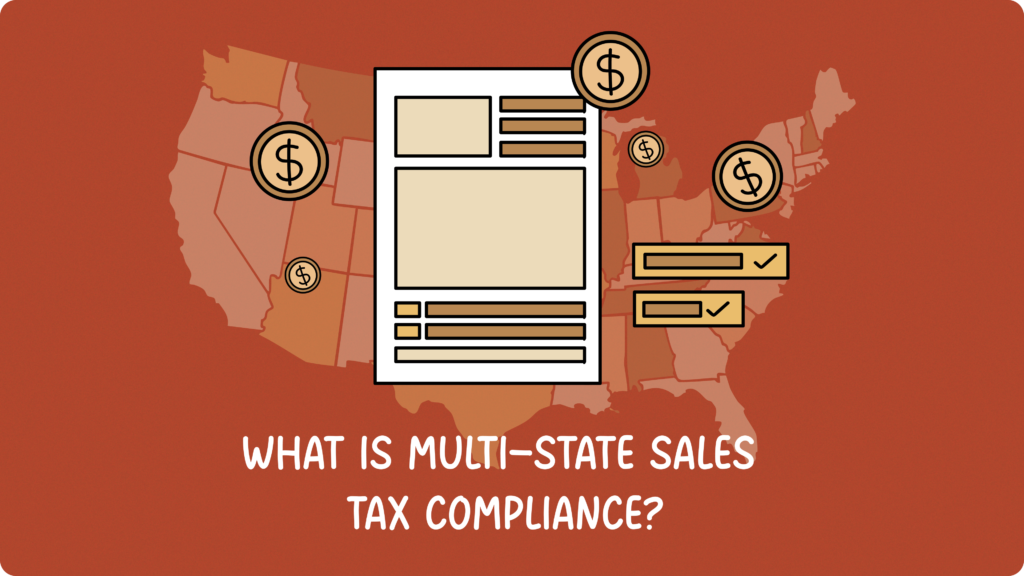
What is Multi-State Sales Tax Compliance? A Complete Guide for E-commerce Businesses
You’ve built an awesome online store, uploaded those product photos you spent all weekend perfecting, and now orders are rolling in from California to New York. What started as a side hustle from your spare bedroom has turned into a growing business with customers across multiple states. Each notification ping brings both excitement and a new challenge you might not have anticipated: multi-state sales tax compliance. Unlike a local shop that deals with one set of tax rules, your online business potentially faces different e-commerce sales tax requirements in every state where you make sales. One day you’re celebrating a surge of orders from a new region, and the next you’re wondering if you’ve just created tax obligations in another state. Keeping track of when, where, and how much to collect can quickly become overwhelming, especially when you’d rather focus on perfecting your products or marketing strategy. Don’t worry—this guide will break down everything you need to know to stay compliant without losing your mind. Table of Contents Economic Nexus: The Foundation of Multi-State Sales Tax Compliance Let’s start with the million-dollar question: When exactly do you need to collect sales tax in a state? This is where “nexus sales tax rules” come into play. Understanding these rules is critical for every e-commerce seller. Nexus means having a connection to a state that’s significant enough to trigger tax obligations there. Traditionally, this meant physical presence—having an office, employees, or inventory in a state. But the e-commerce revolution has completely changed the game. The Evolution of Economic Nexus With the Supreme Court’s monumental Wayfair decision in 2018 removing the physical presence requirement, states can now require you to collect sales tax based solely on your economic activity there—even if you’ve never set foot in the state. This created what tax professionals call “economic nexus.” Here’s an example: Imagine you run an online boutique from your home in Florida. You have zero physical presence in California—no warehouse, no employees, nothing. But your products are a hit with California customers, and last year you sold more than $500,000 worth of merchandise to California residents. Having surpassed California’s economic nexus threshold of $500,000 in annual sales, you now have a sales tax obligation in the Golden State. You’ll need to register for a California sales tax permit, start collecting the appropriate sales tax on all future California sales, and send those taxes to California’s tax authorities on their schedule. U.S. State Sales Tax Rates & Economic Nexus Thresholds (As of Jan 2025) As of January 2025, economic nexus laws are in place across nearly all U.S. states, but the rules vary widely. The table below summarizes each state’s: Did you know? In most states, exceeding either the sales or transaction threshold is enough to establish nexus. But in Connecticut and New York, you must exceed both thresholds before you’re required to collect and remit sales tax. State Sales Tax Rate Sales Threshold Transaction Threshold Measurement Period Marketplace Sales Included? Alabama 4% $250,000 None Previous calendar year Yes Arizona 5.6% $100,000 None Current or previous calendar year Yes Arkansas 6.5% $100,000 200 Current or previous calendar year Yes California 7.25% $500,000 None Current or previous calendar year Yes Colorado 2.9% $100,000 None Current or previous calendar year Yes Connecticut 6.35% $100,000 200 12-month period ending Sep 30 Yes Florida 6% $100,000 None Previous calendar year No Georgia 4% $100,000 200 Previous or current calendar year No Hawaii 4% $100,000 200 Current or previous calendar year Yes Illinois 6.25% $100,000 200 Prior 12 months No Indiana 7% $100,000 None Current or previous calendar year No Iowa 6% $100,000 None Current or previous calendar year Yes Kansas 6.5% $100,000 None Current or previous calendar year Yes Kentucky 6% $100,000 200 Previous or current calendar year Yes Louisiana 5% $100,000 None Previous or current calendar year No Maine 5.5% $100,000 None Previous or current calendar year No Maryland 6% $100,000 200 Previous or current calendar year Yes Massachusetts 6.25% $100,000 None Previous or current calendar year No Michigan 6% $100,000 200 Previous calendar year Yes Minnesota 6.88% $100,000 200 Rolling 12 months Yes Mississippi 7% $250,000 None Prior 12 months No Missouri 4.23% $100,000 None Reviewed quarterly Yes Nebraska 5.5% $100,000 200 Current or previous calendar year Yes Nevada 4.6% $100,000 200 Current or previous calendar year Yes New Jersey 6.63% $100,000 200 Current or previous calendar year Yes New Mexico 5.13% $100,000 None Previous calendar year No New York 4% $500,000 100 Previous 4 quarters Yes North Carolina 4.75% $100,000 None Current or previous calendar year Yes North Dakota 5% $100,000 None Current or previous calendar year No Ohio 5.75% $100,000 200 Current or previous calendar year Yes Oklahoma 4.5% $100,000 None Current or previous calendar year No Pennsylvania 6% $100,000 None Prior calendar year Yes Rhode Island 7% $100,000 200 Prior calendar year Yes South Carolina 6% $100,000 None Current or previous calendar year Yes South Dakota 4.5% $100,000 None Current or previous calendar year Yes Tennessee 7% $100,000 None Previous 12 months No Texas 6.25% $500,000 None Preceding 12 months Yes Utah 4.7% $100,000 None Current or previous calendar year No Vermont 6% $100,000 200 Prior 4 quarters Yes Virginia 4.3% $100,000 200 Current or previous calendar year No Washington 6.5% $100,000 None Current or previous calendar year Yes West Virginia 6% $100,000 200 Current or previous calendar year Yes Wisconsin 5% $100,000 None Current or previous calendar year Yes Wyoming 4% $100,000 None (as of July 1, 2024) Current or previous calendar year No Important notes: Further Aspects of State E-commerce Tax While understanding economic nexus is crucial, several other factors complicate multi-state compliance. Consider this section your mini state-by-state e-commerce tax guide to these additional complexities: Product Taxability Variations What’s taxable varies dramatically across states. For instance, clothing is totally exempt in Minnesota but taxable almost everywhere else, while New York only exempts clothing below certain price thresholds. Consider these important distinctions: Marketplace Facilitator Laws If you sell through platforms like Amazon, Etsy, or Walmart
Tax Filing Guide for S Corp, C Corp and LLC
Picking the right business structure is a big deal, and taxes are a huge part of that decision. In this article, we’re breaking down the tax filing side of things for C Corps, S Corps, and LLCs, so freelancers and business owners can get a handle on the forms and deadlines for each. If you’re looking for a broader comparison, Choosing the Best Business Structure for Freelancers is a solid starting point! The article was last updated as of 4 March 2025. Keep in mind that tax rules and limits can change, so be sure to watch out for updates or consult a tax professional for the latest information. Table of Contents Brief Highlights: Comparing C Corp, S Corp and LLC Here’s a quick rundown of the three business structures to give you the big picture. In the next sections, we’ll break down the details of tax treatment and the specific forms you’ll need to know. It’ll all come together as we go. Category S Corporation (S Corp) C Corporation (C Corp) Limited Liability Company (LLC) Tax Forms – Form 1120-S– Shareholders file Schedule K-1 on personal returns – Form 1120 – Shareholders report dividends on personal returns Depends on tax classification. See LLC section. Filing Deadlines March 15 2025*; extensions available April 15 2025*; extensions available Depends on tax classification. See LLC section. State Taxes Varies; some states do not recognize S Corp status Subject to state corporate income taxes Subject to state taxes depending on classification Eligibility Requirements – Must be a domestic business– Up to 100 shareholders – Individuals only – No limit on shareholders– Can include foreign and corporate owners – No ownership restrictions – Flexible member structure Ownership Restrictions – Max 100 shareholders– One class of stock– U.S. citizens/residents only – Unlimited shareholders– Can issue multiple stock classes – No restrictions– Members can be individuals, corporations, or foreign entities Compliance Requirements – Annual meetings– Shareholder voting– File annual reports – Annual meetings– Corporate governance– Strict record-keeping – Varies by state– Fewer formalities than corporations Average Formation Costs# ~$1,200 ~$633 ~$50-$500 depending on state Fundraising Ability – Limited– Cannot issue preferred stock – High– Can issue both common and preferred stock Limited unless electing C Corp tax treatment Dividend Taxation Distributions taxed once at shareholder level Dividends taxed twice (corporate and shareholder level) Not applicable unless taxed as C Corp Payroll Tax Implications Must pay reasonable salary to shareholder-employees Corporate officers are employees subject to payroll taxes Members typically pay self-employment tax unless S Corp election made Passive Income Limits (such as rent, interest, or certain royalties) Passive income limited to 25% of gross receipts No passive income limitations No passive income restrictions Liability Protection Protects shareholders’ personal assets Protects shareholders’ personal assets Protects members’ personal assets Conversion Flexibility Can convert to C Corp; changing to LLC requires dissolution Can convert to S Corp or LLC with filings and approvals Can elect S Corp/C Corp taxation; conversions depend on state rules Foreign Ownership Not allowed Allowed Allowed Administrative Burden Higher than LLC; less than C Corp High due to strict governance requirements Low; fewer formalities required Key Tax Advantages – Avoids double taxation– QBI deduction available – Potential for certain deductions not available to pass-through entities– Can deduct health insurance premiums for employees – Flexible tax treatment (can choose to be taxed as a partnership, S corp, or C corp)– Simpler tax compliance than C-corp if taxed as a partnership Key Tax Disadvantages – Reasonable salary requirement– Limitations on QBI deduction for certain businesses – Double taxation– More complex tax compliance – Members subject to self-employment tax (unless taxed as C-corp)– Less established than C-corps in some states Best For Small businesses seeking tax savings through pass-through taxation Larger businesses seeking growth through investment and stock issuance Startups, freelancers, or small businesses needing flexibility * For calendar-year corporations, Form 1120 is due on April 15, and Form 1120-S is due on March 15. For fiscal-year corporations, the deadline is the 15th day of the fourth month (1120) or third month (1120-S) after the fiscal year ends. # Formation costs vary by state and the scope of professional services. S Corporations Tax Filing S corps offer a unique tax structure, blending the legal benefits of a corporation with the tax advantages of a partnership. This pass-through taxation model avoids the double taxation burden of C corporations, making it an attractive option for many small businesses. Pass-Through Taxation One of the most significant advantages of an S corporation is its pass-through taxation model. Unlike C corporations, which are subject to double taxation (taxed at both the corporate and shareholder levels), S corps do not pay federal income tax at the corporate level. Instead, the corporation’s profits and losses are passed through to the shareholders, who report them on their individual tax returns (Form 1040). This structure avoids the double taxation burden and can result in significant tax savings for business owners. Form 1120-S Form 1120-S, the U.S. Income Tax Return for an S Corporation, is the primary form S corps use to report income, deductions, gains, and losses to the IRS. It ensures the corporation’s financial activity is accurately reported and provides shareholders with the information needed to complete their individual tax returns. The form is due by March 15th for calendar-year taxpayers (or the 15th day of the third month after the fiscal year ends). If additional time is needed to prepare the return, S corps can request an extension using Form 7004, which grants an automatic six-month extension. However, it’s important to note that an extension to file does not extend the deadline for paying any taxes owed. Estimated tax payments must still be made by the original due date to avoid penalties and interest. Schedule K-1 Schedule K-1 details each shareholder’s individual share of the corporation’s income, deductions, credits, and other tax items. Shareholders use this information to complete their individual Form 1040. W-2 Salary, Distributions, and Form 1040 (The Owner’s Perspective) If you own and work for an S corp, you must
1099-NEC Forms: A Complete Guide for Businesses Hiring Independent Contractors
Reporting payments to independent contractors? This guide explains everything you need to know about the 1099-NEC form, from who needs it to how to file it correctly. What is a 1099-NEC Form? The 1099-NEC (Nonemployee Compensation) form is used to report payments made to independent contractors, freelancers, and other non-employees for services rendered. It’s how the IRS tracks payments to self-employed individuals and ensures they’re reporting their income correctly. This is different from a W-2, which is used for reporting wages paid to employees. Who Needs to Issue a 1099-NEC? Businesses of all sizes are required to issue a 1099-NEC if you meet all of these conditions: Who Doesn’t Get a 1099-NEC? There are some key exceptions: The Importance of Form W-9 Before you even start working with a contractor, have them fill out a Form W-9 (Request for Taxpayer Identification Number and Certification). This form collects essential information you’ll need for the 1099-NEC, including: Getting the W-9 upfront saves you a lot of time and hassle later on. If a contractor is operating as an LLC, the W-9 will tell you how the LLC is taxed (as a sole proprietorship, partnership, C-Corp, or S-Corp), which helps you determine whether a 1099-NEC is required. Filing Deadlines and Penalties The deadline to file 1099-NEC forms with the IRS and provide copies to recipients is January 31st. Missing this deadline can result in penalties, which can range from $60 to $330 per form, depending on how late it is. Intentional disregard of the filing requirements can lead to even higher penalties. Key Takeaways and Best Practices By understanding the rules and following these best practices, you can navigate the 1099-NEC process with confidence and avoid potential penalties.