
Most founders think they need more time. In reality, what they need is fewer interruptions.
The issue usually isn’t the big tasks. It’s the small ones—checking a transaction, replying to a quick message, updating a spreadsheet. Each one only takes a few minutes, but they keep pulling you out of whatever you were doing. Replying to one email isn’t the problem. It’s what it interrupts.
Over time, this constant switching is what makes the day feel scattered. You’re busy the whole time, but it’s hard to point to what actually moved forward.
This is where AI actually helps. Not by doing everything for you, but by quietly removing the small tasks that keep breaking your focus.
In this article
The Productivity Shift: Old Way vs. New Way
| Business Task | The Manual Method | A More Streamlined Approach | Weekly Time Saved |
| Bookkeeping | Sorting receipts & manual entry | Auto-categorization + review | 4–6 Hours |
| Marketing | Starting from a blank page | Draft-first workflow with AI | 3+ Hours |
| Support | Answering the same questions daily | AI + human handoff | 5+ Hours |
| Admin | Moving data between tools | Simple workflow connections | 2–4 Hours |
1. Bookkeeping without constant checking
Bookkeeping is one of those tasks that never feels urgent, but keeps coming back. You check a few transactions, match a receipt, fix a category. It’s quick, but it interrupts your day more than you notice.
Most tools already sync with your bank, but they still depend on you to finish the work. A better setup is when the system starts recognizing patterns. If the same expense shows up every month, it gets categorized the same way without you having to review it repeatedly.
In practice, this shifts your role. You’re no longer doing the bookkeeping piece by piece. You review it when something looks off. Even starting with one or two recurring expenses can reduce the number of times you feel the need to check something, which is often where the interruption begins.
2. Getting past the starting point in marketing
Marketing has a different kind of friction. It’s not the switching, it’s the starting.
You sit down to write something, and nothing happens. So you delay it or move on to something easier. That is where most of the time gets lost.
AI is useful here, but not in the way people expect. It works best when you give it something to build on, such as notes from a client conversation, a few bullet points, or a rough idea. Turning that into a first draft is usually enough to get you moving.
Once there is something on the page, the rest becomes easier. You refine the message, adjust the tone, and add your own perspective. Instead of spending an hour trying to start, you spend that time improving something that already exists.
3. Reducing interruptions in customer support
Customer messages are another constant source of interruption. They do not come in batches. They show up throughout the day, often right when you are focused on something else.
Most of these questions are predictable, such as shipping details, account access, or pricing. They are easy to answer, but they still break your concentration.
This is where AI can help by handling the repetitive questions in the background. At the same time, it is important to stay involved when it actually matters. A simple approach is to define when a human should step in. For example, when certain words like “urgent,” “refund,” or “disappointed” appear, the conversation shifts to you or your team.
That balance tends to work better than trying to automate everything. You reduce interruptions without losing the human side of the experience.
4. Connecting your workflows
A lot of work is not difficult. It is just fragmented. You copy something from an email, paste it into another tool, create a task, and send a follow-up. Each step is small, but together they break your focus again and again.
Instead of trying to fix everything at once, it is more effective to connect one simple workflow. For example, when someone fills out a form, a task is created automatically and they receive a scheduling link. Or when an invoice becomes overdue, a reminder is sent without you needing to check it.
This is where basic automation starts to make a difference. Even linking just one or two steps removes the need to constantly check and act, which is often where a surprising amount of time goes.
Building a system that actually helps
Most people think of AI as a way to do more.
In practice, it is more useful as a way to do less. Less switching, less checking, and fewer small decisions throughout the day.
Once those are reduced, your time does not just increase. It becomes easier to use. You are able to stay on one thing long enough to actually finish it, which is often the bigger challenge.
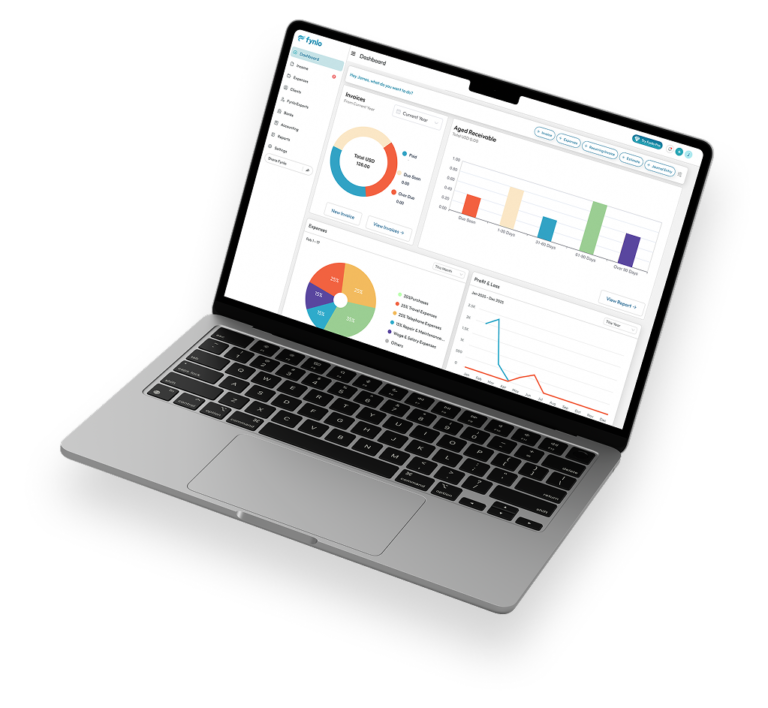
Fynlo is designed to support this on the financial side, so you are not constantly pulled back into bookkeeping and tracking.
If your day often feels fragmented, this is where the shift starts by removing the small tasks that pull you away from real work. Book a quick call and we will walk you through how this can work for you.