
How to Price Your Rates as a Freelancer (Even With Inflation!)
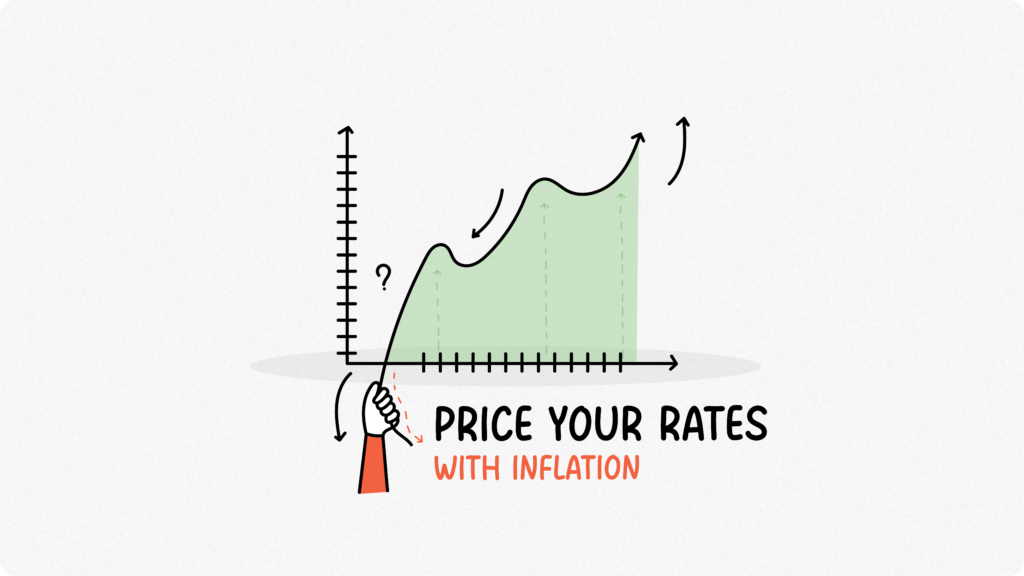
Finding the right balance between being a creative and a business owner is one of the hardest parts of freelancing. Most of us start out wanting to do great work, but eventually hit a wall when the cost of software, health insurance, and taxes begins to consume margins. If you have not adjusted your rates in the last twelve months, you are likely earning less in real terms, even if your nominal income has stayed the same. In the current 2026 economy, pricing is a core part of your business that must keep pace with the world around you. To move from simply surviving to building a sustainable career, you must shift your focus toward professional financial management. In this Article Calculating the Cost of Business Operations A professional rate must support your entire infrastructure. This includes obvious overhead like hardware and subscriptions, but also the invisible costs that traditional employees often overlook. In the U.S., for instance, freelancers are responsible for the full 15.3% self-employment tax. It is also vital to account for non-billable time. If you spend ten hours a week on administration, marketing, and pitching, your active work hours must be priced high enough to fund that unbilled labor. If your rate only covers the moments you are actively producing deliverables, you are effectively subsidising those administrative hours without compensation. The Distinction Between Living and Profiting There is a common trap in the freelance world: setting a rate that covers your bills but leaves nothing for the future. To move into a more secure financial position, your pricing should include a dedicated profit margin, ideally between 10% and 25%. Think of this margin as the research and development fund for your business. This capital pays for a new computer when yours crashes or covers expenses during a slow month. Without a dedicated profit margin, the business has no buffer for reinvestment or volatility, and operates more like a short-term contracting setup than a sustainable company. Purchasing Power and Inflation Inflation is a constant, quiet force that reduces real income over time if rates remain unchanged. With inflation in the U.S. in the mid-3% range in 2026, a project that cost $1,000 last year needs to be priced higher today just to maintain the same purchasing power. Reviewing your rates annually is standard professional maintenance. Most clients find it easier to accept a small, consistent increase each year, often adjusted in line with inflation or the Consumer Price Index, than a larger adjustment after several years of stagnation. Value-Based Communication The prospect of informing a long-term client that your prices are increasing can be stressful. The most effective strategy is to shift the conversation away from your personal expenses and toward the results you deliver. Instead of citing rising costs, focus on the return on investment (ROI) you provided over the last year. If you have helped a client grow their audience or improve their product, they are not paying for your time; they are paying for a specific outcome. Providing 30 to 60 days of notice is the professional standard for this transition, as it allows clients time to adjust their 2027 annual budgets. Freelance Pricing: Frequently Asked Questions How do I know if it is time to raise my rates? If you are constantly booked and turning away work, the market is indicating that your value has exceeded your price. Additionally, if a full year has passed without an adjustment, your real income has likely decreased due to inflation. What is the self-employment tax? In the U.S., the self-employment tax is 15.3%. This covers Social Security and Medicare. Because you are both the employer and the employee, you are responsible for the full amount. You should set this aside before calculating your actual take-home pay. What is a healthy profit margin? Most successful service-based businesses aim for a net profit margin of 10% to 25%. This is the amount remaining after you have paid yourself a fair salary and covered all business overhead. Should I lower my price if a client says I am too expensive? Rarely. If a client has a genuine budget limit, it is better to reduce the scope of the work rather than your rate. For example, if they cannot afford five blog posts, offer them three. This keeps your hourly value intact and maintains your professional standing. Is it better to charge by the hour or by the project? Hourly billing is a safe starting point, but project-based pricing is usually better for experienced professionals. As you become more efficient, hourly billing can actually penalize expertise. Project pricing allows you to be paid for the result and your experience. How do I handle legacy clients on outdated rates? You do not have to move them to your highest current rate immediately. You can offer a loyalty discount that sits between their old rate and your new market value. This acknowledges the relationship while moving the contract toward a sustainable price point. Taking Control of Your Financial Growth Setting professional freelance rates is not an aggressive act; it is a fundamental requirement for a lasting career. By accurately calculating your operational costs, building in a profit margin for reinvestment, and adjusting for economic shifts like inflation, you transition from a gig worker to a business owner. Begin by auditing your current expenses and comparing them against your income over the last twelve months. If your margins have thinned, now is the time to plan your next rate adjustment. Your expertise and the value you provide deserve to be supported by a pricing structure that allows your business to thrive, not just survive.