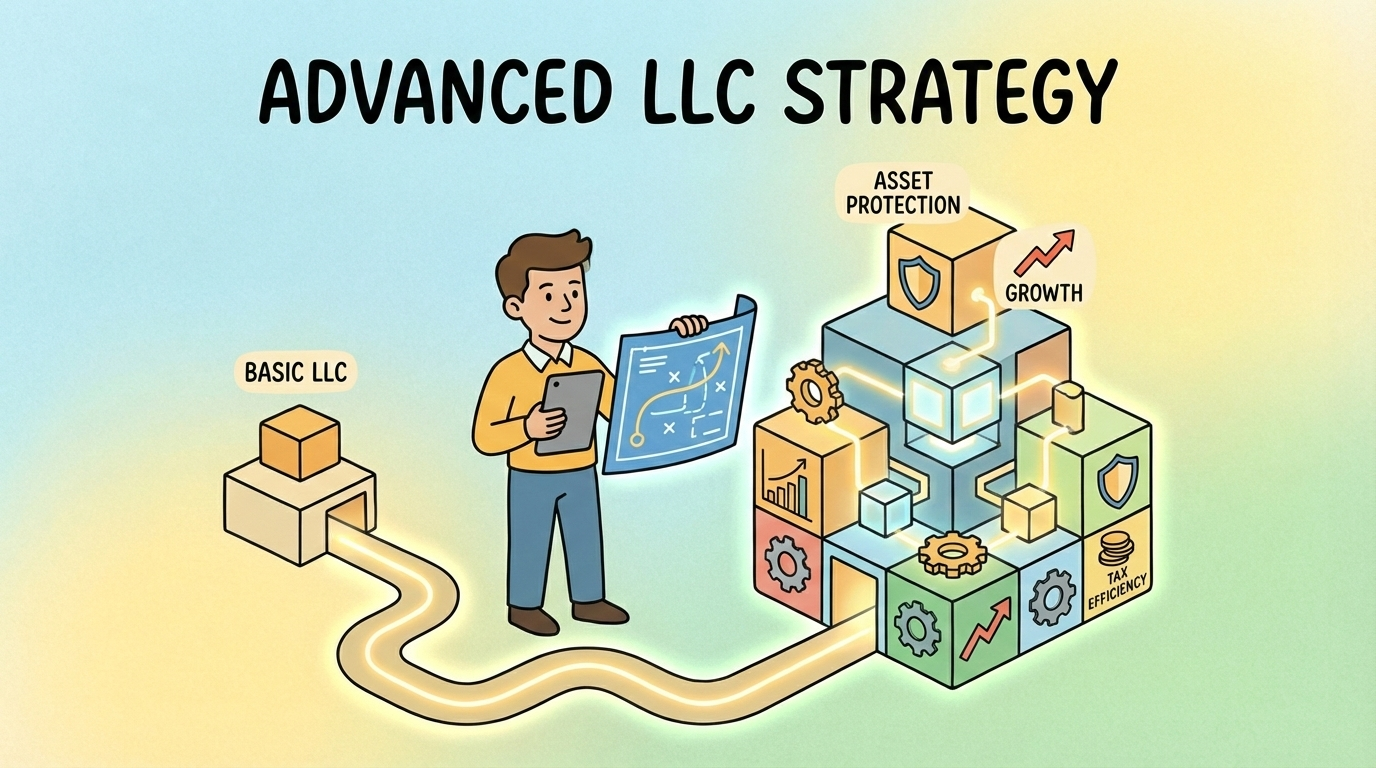

Most founders start with a single LLC because it is the simplest path to getting a tax ID. But as your revenue grows or you begin developing your own products, a single-entity setup may no longer be the most efficient choice. In 2026, the goal is to build a structure that protects your personal assets while remaining flexible enough to scale.
Here is how experienced founders structure their businesses to manage risk and optimize for long-term growth.
In this article
- The “Parent & Child” Strategy (Holding Companies)
- Strategic State Selection: Where to Place Your Entities
- Planning for an Institutional Exit
- The Strategic Path Forward
The “Parent & Child” Strategy (Holding Companies)
When all your business assets—client contracts, intellectual property (IP), and equipment—live in one LLC, they are all exposed to the same risks. If a client dispute leads to a lawsuit against that LLC, every asset inside it is potentially at risk.
The Solution: A Two-Tiered Structure
- The Parent (Holding Company): This entity acts as a “vault.” It is often registered in a state with high privacy, like Wyoming. The Parent company does not sign client contracts; instead, it owns your most valuable assets, such as your brand, software code, or specialized equipment.
- The Child (Operating Company): This is the entity that interacts with the public. It signs the contracts, hires the team, and handles daily operations.
- How it works: Because the “Child” company owns very little, a legal claim against it generally cannot reach the valuable assets held by the “Parent.” This creates a legal firewall between your daily operations and your core business assets.
Strategic State Selection: Where to Place Your Entities
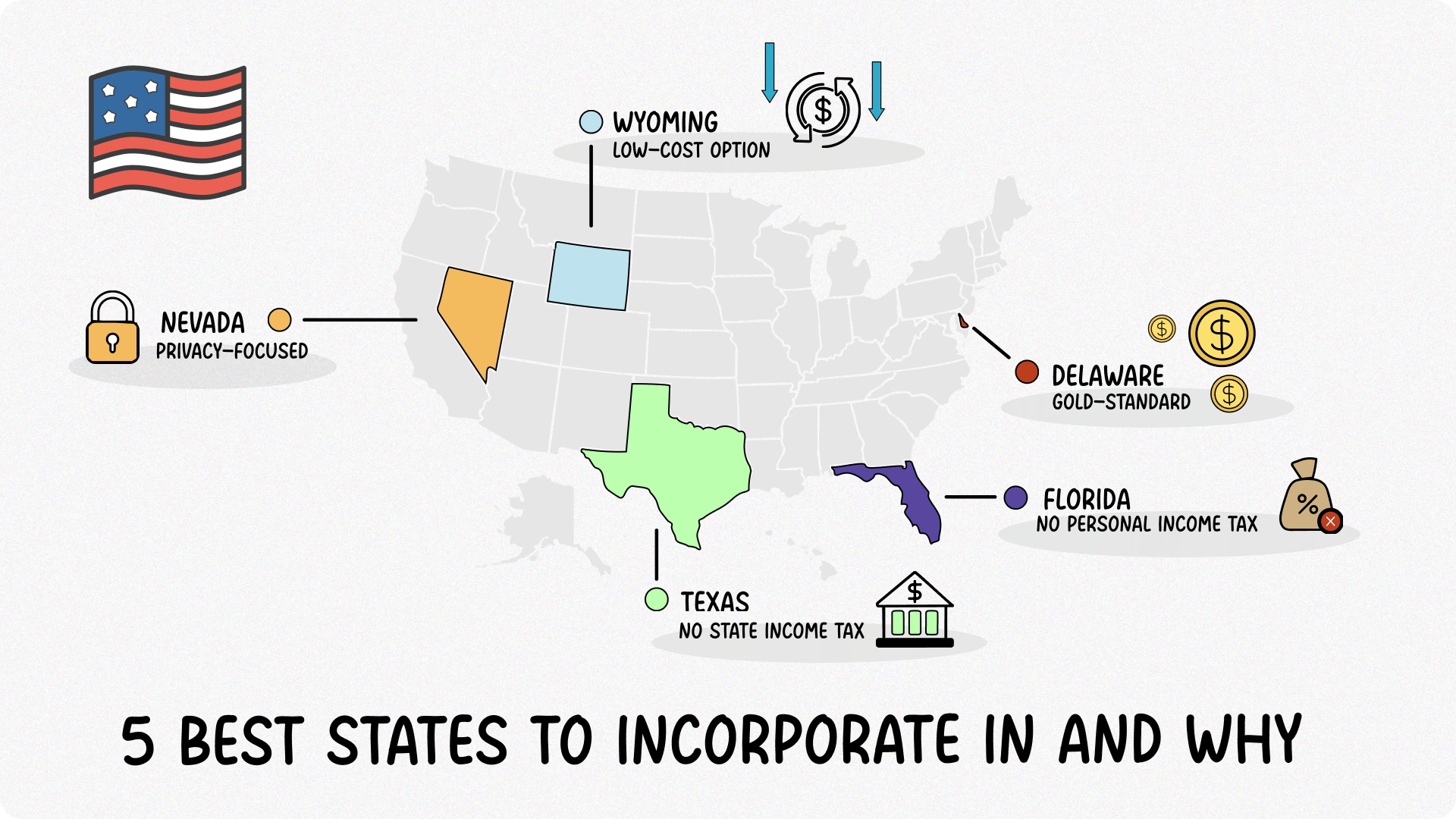
When choosing where to register your “Parent” or “Child” companies, you can take advantage of specific state rules to manage your tax burden and maximize protection.
Wyoming: The Ideal “Parent” Home
Wyoming is frequently chosen for the Parent company because it does not require the names of owners to be listed in public records. In 2026, this state-level anonymity provides a layer of data security. Additionally, Wyoming has strong Charging Order laws, meaning if you face a personal lawsuit, it is very difficult for a creditor to seize your business assets.
Texas: Scaling the “Child” Company
For an Operating Company with a physical presence, Texas offers a significant threshold for small businesses. While Texas has a “Margin Tax,” businesses with total revenue below $2,650,000 in 2026 generally owe $0 in state franchise tax. This allows you to utilize Texas’s vast talent pool and infrastructure without a state-level tax bill until you reach a significant scale.
Nevada: High-Level Liability Protection
If your business operates in a high-liability field, Nevada is a strong choice for your Operating Company. Nevada law provides an “Exclusive Remedy” protection. This means that a charging order is the only way a creditor can pursue a member’s interest, preventing them from ever seizing business assets or forcing the company to shut down to pay a debt.
Tennessee: The “Asset-Light” Advantage
Tennessee recently overhauled its tax code, which is highly beneficial for remote agencies and freelancers. In the past, the state taxed businesses based on the value of the physical property they owned (the “property measure”). As of 2026, that rule has been eliminated.
Now, the franchise tax is calculated at 0.25% of your apportioned net worth. For example, if your business has a net worth of $200,000 and 50% of your activity is in Tennessee, you are taxed on $100,000 ($250 per year). Additionally, a $50,000 standard deduction now applies to the excise tax, which exempts many small businesses with modest profits from paying that portion of the tax entirely.
Planning for an Institutional Exit
Even if you do not plan to sell your business immediately, keeping your entity “exit-ready” ensures you don’t lose value during a future sale or funding round.
The “Delaware Flip”
Most startups begin in Wyoming or their home state to save on costs. Institutional investors, though, almost exclusively require a Delaware entity because of its sophisticated court system. “Flipping” to Delaware involves a legal process called a Statutory Conversion. In this process, you file “Articles of Conversion” in both your current state and Delaware. This legally transforms your existing LLC into a Delaware Corporation while maintaining your business’s history, EIN, and contracts. Doing this 12 months before a planned sale ensures that your legal foundation is already in the format buyers expect, preventing delays in the deal.
The Financial Impact of Professional Record-Keeping
During a sale, buyers perform “due diligence” to verify your business’s health. If your financial records are unorganized or personal and business expenses are blurred, it increases the buyer’s risk. Professionally maintained books signal a mature, low-risk operation, which often results in a higher final valuation for the founder.
The Strategic Path Forward
Moving beyond a single-entity setup is a clear signal that your business has transitioned from a proof-of-concept to a scaling enterprise. While the administrative weight of managing a “Parent and Child” structure or maintaining multi-state compliance in Wyoming and Delaware can feel significant, it is the most effective way to decouple your hard-earned assets from daily operational risks.
Building this legal “firewall” today ensures that when you reach the point of an institutional exit or a major funding round, your foundation is already in the format that sophisticated buyers expect. By prioritizing professional record-keeping and clear entity separation now, you turn your corporate structure into a silent partner that supports your growth instead of a liability that limits it.
About the Author
Isabella Jones started her career at Deloitte, where she worked on tax compliance for some of the country’s fastest-growing companies. She later joined Fynlo as Senior Financial Strategist, bringing that experience to freelancers and small business owners who need practical financial guidance without the corporate complexity.
With an Accounting degree from Villanova University, Isabella focuses on making financial planning easier to understand and apply in day-to-day business. She works closely with freelancers and small businesses on areas like taxes, cash flow, and building more stable financial systems.