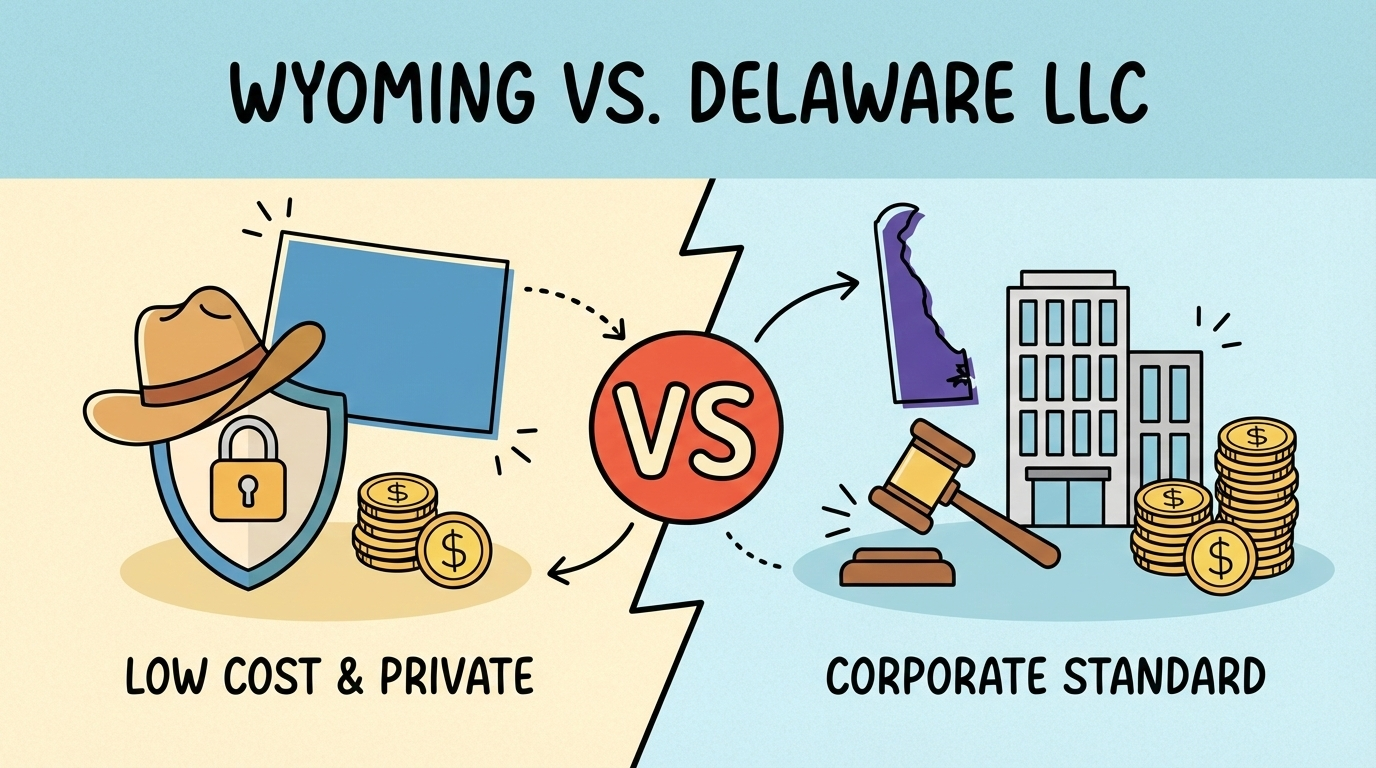

I recently caught up with a founder who was set on registering her digital agency in Delaware. When I asked why, her answer was simple: “It’s what everyone does.” After we walked through her three-year plan, it turned out she was about to take on administrative costs and legal layers that her current model didn’t actually need.
Picking a state for your LLC isn’t a one-size-fits-all choice anymore. In 2026, with state filing systems going digital and federal reporting—like the Corporate Transparency Act—getting more specific, the right choice depends on your funding path, your need for privacy, and where you actually sit at your desk.
Let’s look at the actual numbers and the logic behind both states so you can make a call based on what fits your business today.
In this article
- 2026 Maintenance and Compliance Overview
- Why Delaware is the “Legal Standard”
- The Annual Cost of Doing Business in Delaware
- The Wyoming Advantage: Privacy and Lower Overhead
- Asset Protection: The “Charging Order” Shield
- Registering “Away from Home”: The Foreign Qualification Rule
- Which State Fits Your Business?
2026 Maintenance and Compliance Overview
To see the long-term impact on your bank account, you need to look at the recurring costs. While starting an LLC costs roughly the same in both states, the yearly bills look quite different.
| Category | Wyoming LLC | Delaware LLC |
| Yearly Maintenance Fee | $60 (Annual Report) | $300 (Franchise Tax) |
| Late Filing Penalty | No late fee; but non-filing = dissolution. | $200 Flat Fee + 1.5% Interest |
| State Income Tax | 0% | 0% (unless the LLC has Delaware-source income) |
| Setup Cost (State Fee) | $100 | $110 |
| Privacy Rank (2026) | Top Tier | Mid Tier |
1. Why Delaware is the “Legal Standard”
Delaware’s biggest selling point isn’t its tax rate; it’s the legal system. The state is home to the Court of Chancery, a specialized court that only hears business disputes. Because judges (not juries) decide these cases, the outcomes are incredibly predictable.
This predictability is exactly why over 65% of Fortune 500 companies are incorporated in Delaware. If you plan to raise venture capital or offer stock options to employees, most investors will expect a Delaware entity. It’s the “legal language” they already speak, which can save you a lot of time during a fundraising round.
2. The Annual Cost of Doing Business in Delaware
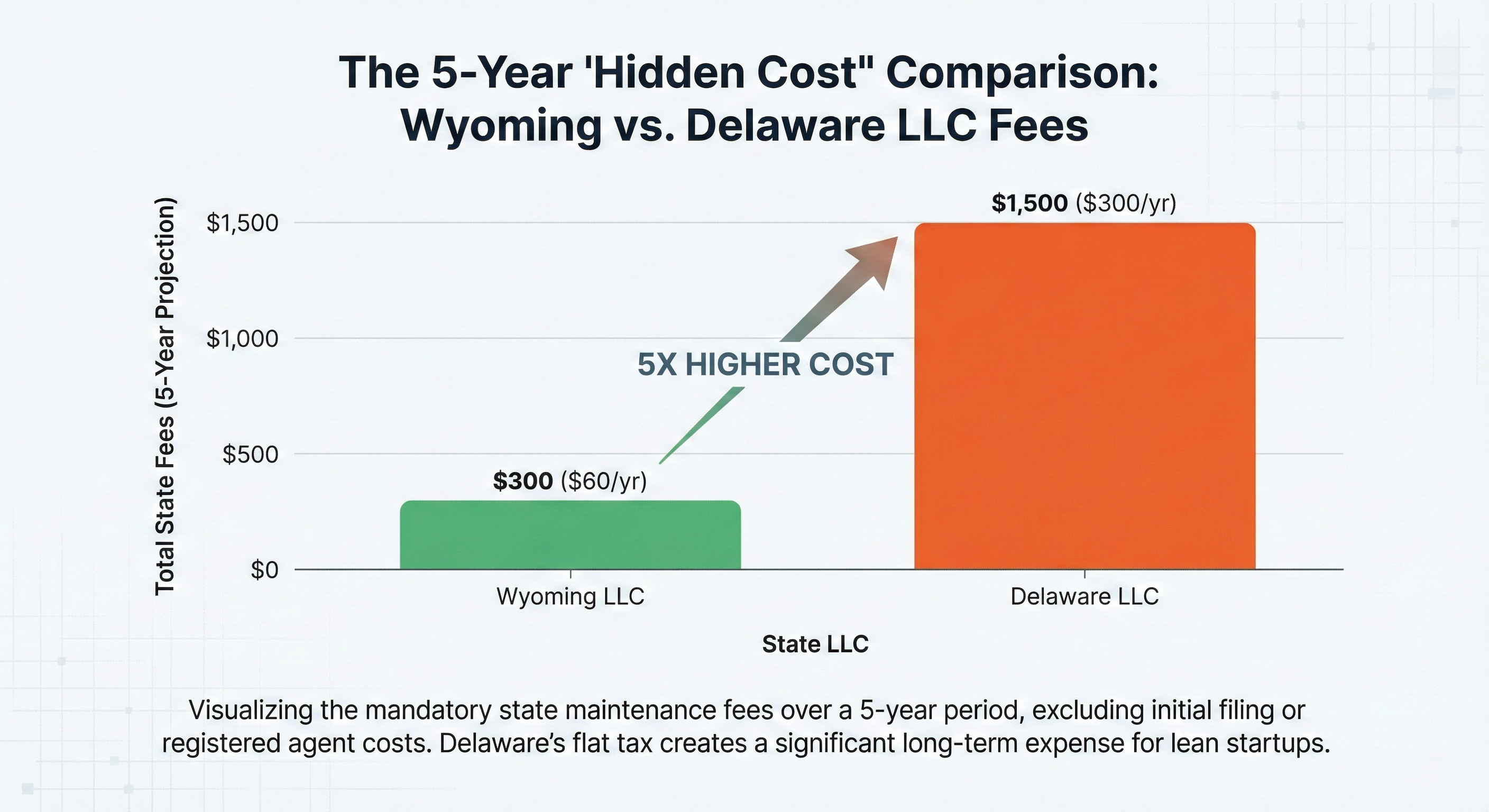
While the legal benefits are a major draw, they come with a fixed price tag. Every Delaware LLC pays a $300 Annual Franchise Tax. Think of this as a mandatory subscription fee to keep your company active.
In 2026, the state remains very strict about its June 1st deadline. If you’re even a day late, a $200 penalty hits your account. Over a five-year stretch, you’re looking at a minimum of $1,500 in state taxes just to exist in Delaware. For a bootstrapped startup, that is capital that could have been spent on your first marketing campaign or hardware.
3. The Wyoming Advantage: Privacy and Lower Overhead
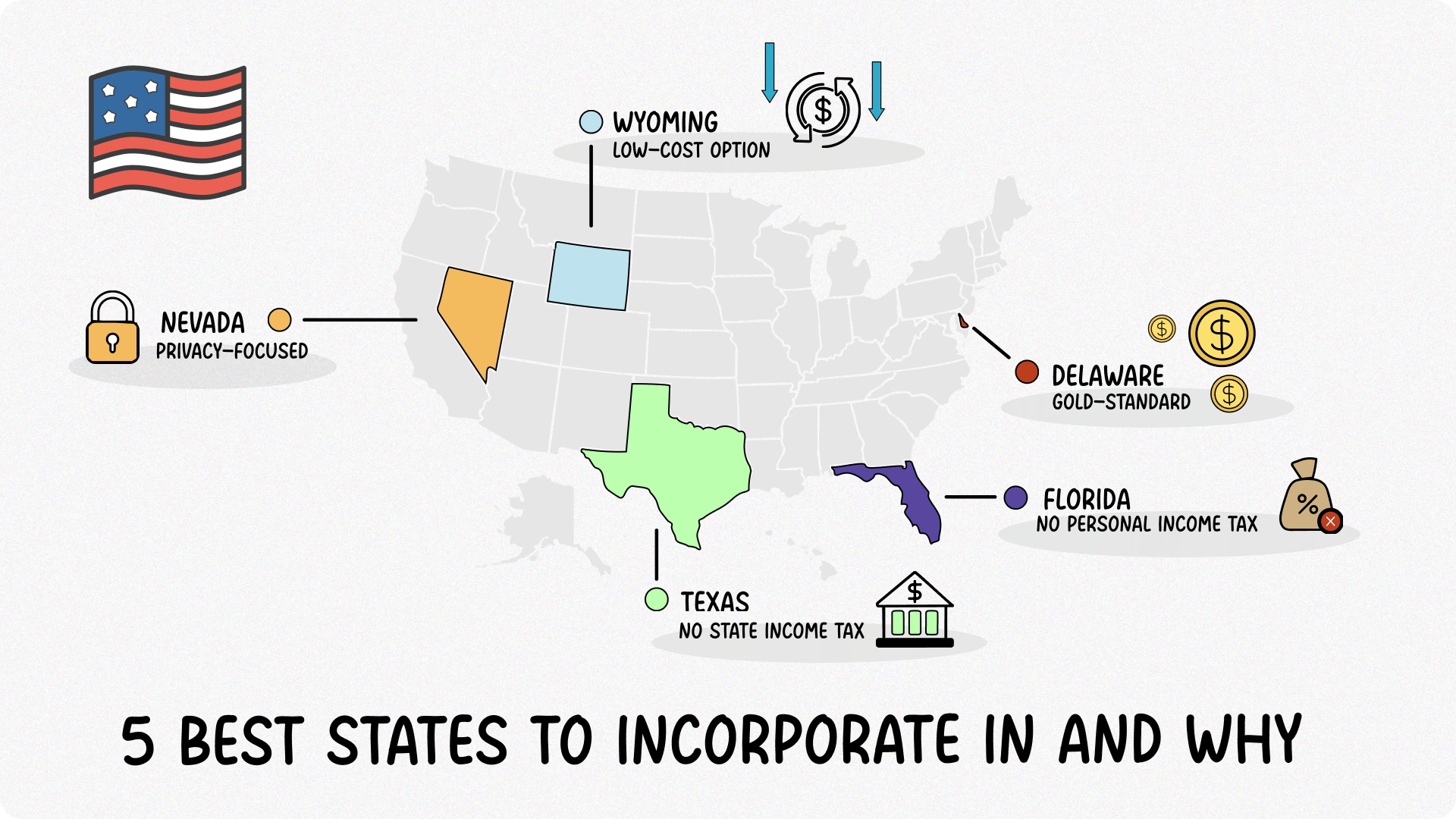
If you aren’t chasing Wall Street investors, Wyoming is often the smarter move for lean operations. They don’t have a franchise tax; they just have a $60 Annual Report Fee.
Beyond the savings, Wyoming is famous for its privacy. In 2026, data security is a top concern for founders. Wyoming allows you to keep the names of your LLC’s members and managers off the public record. In a world where your personal info is often just a Google search away, this “anonymity by default” is a huge plus for many business owners.
4. Asset Protection: The “Charging Order” Shield
One technical detail you’ll appreciate is Wyoming’s Charging Order Protection. This is a legal shield that prevents a personal creditor from seizing your business assets or forcing you to sell the company to pay a personal debt.
Wyoming was the first state to give this protection to single-member LLCs, and their laws are still among the strongest in the country. Delaware offers great protection too, but Wyoming’s statutes are often preferred by legal experts for smaller, closely-held businesses that want to keep their professional and personal lives strictly separate.
5. Registering “Away from Home”: The Foreign Qualification Rule
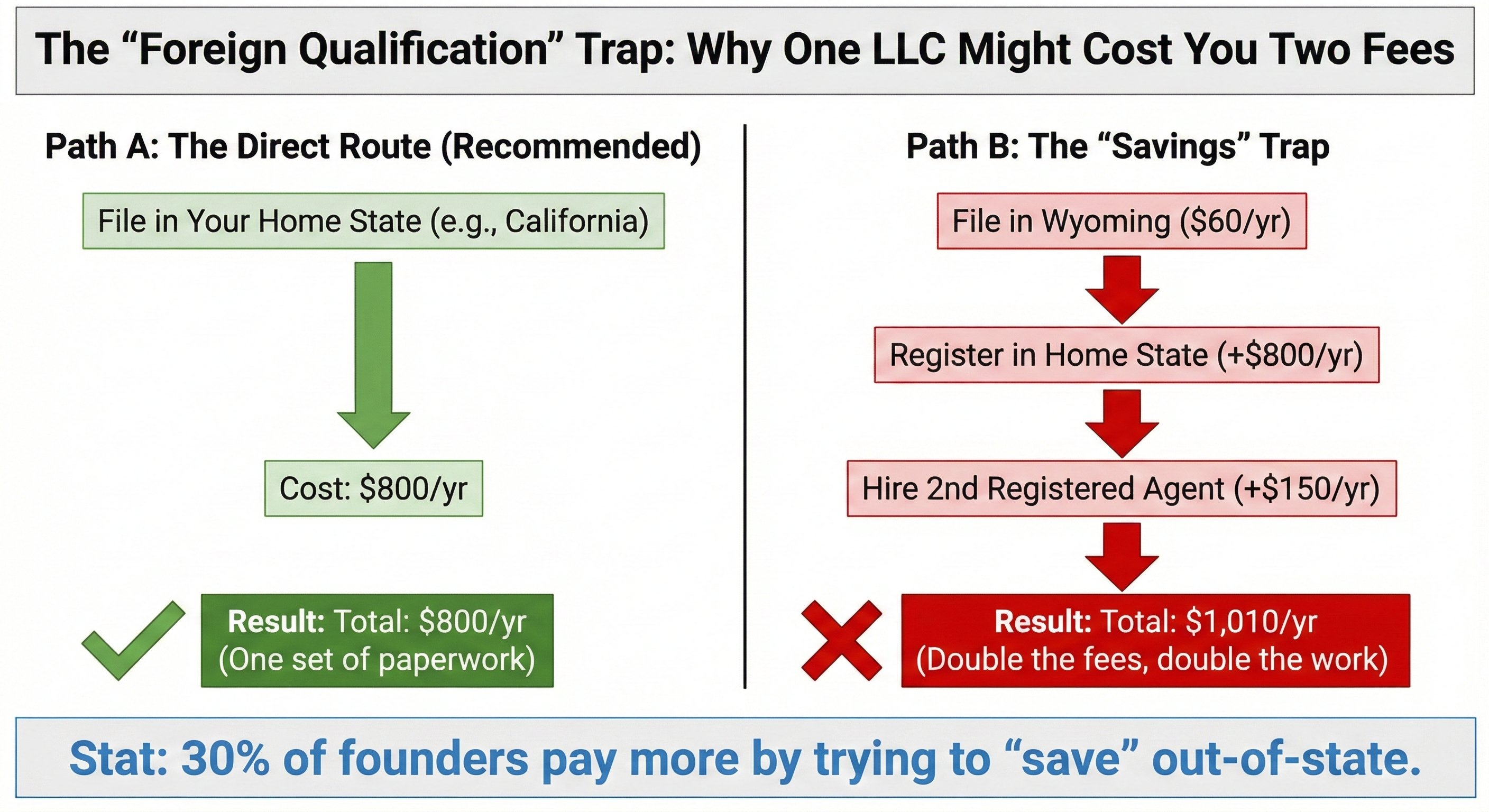
This is the part where many founders accidentally double their workload. If you live in a state like California or New York but register your LLC in Wyoming to save on taxes, you usually have to register as a “Foreign LLC” in your home state anyway.
This process often involves:
- Paying a second registration fee in your home state (averaging $100–$250).
- Paying your home state’s yearly taxes (like California’s $800 minimum tax).
- Hiring a Registered Agent in both states.
Industry data suggests that roughly 30% of founders who incorporate out-of-state eventually pay significantly more in multi-state compliance fees than they would have by simply incorporating in their home state. Unless you have a specific legal or privacy reason to be in Wyoming or Delaware, incorporating where you live is often the path of least resistance.
Which State Fits Your Business?
Deciding on a state usually comes down to your “exit strategy” and where you actually spend your time.
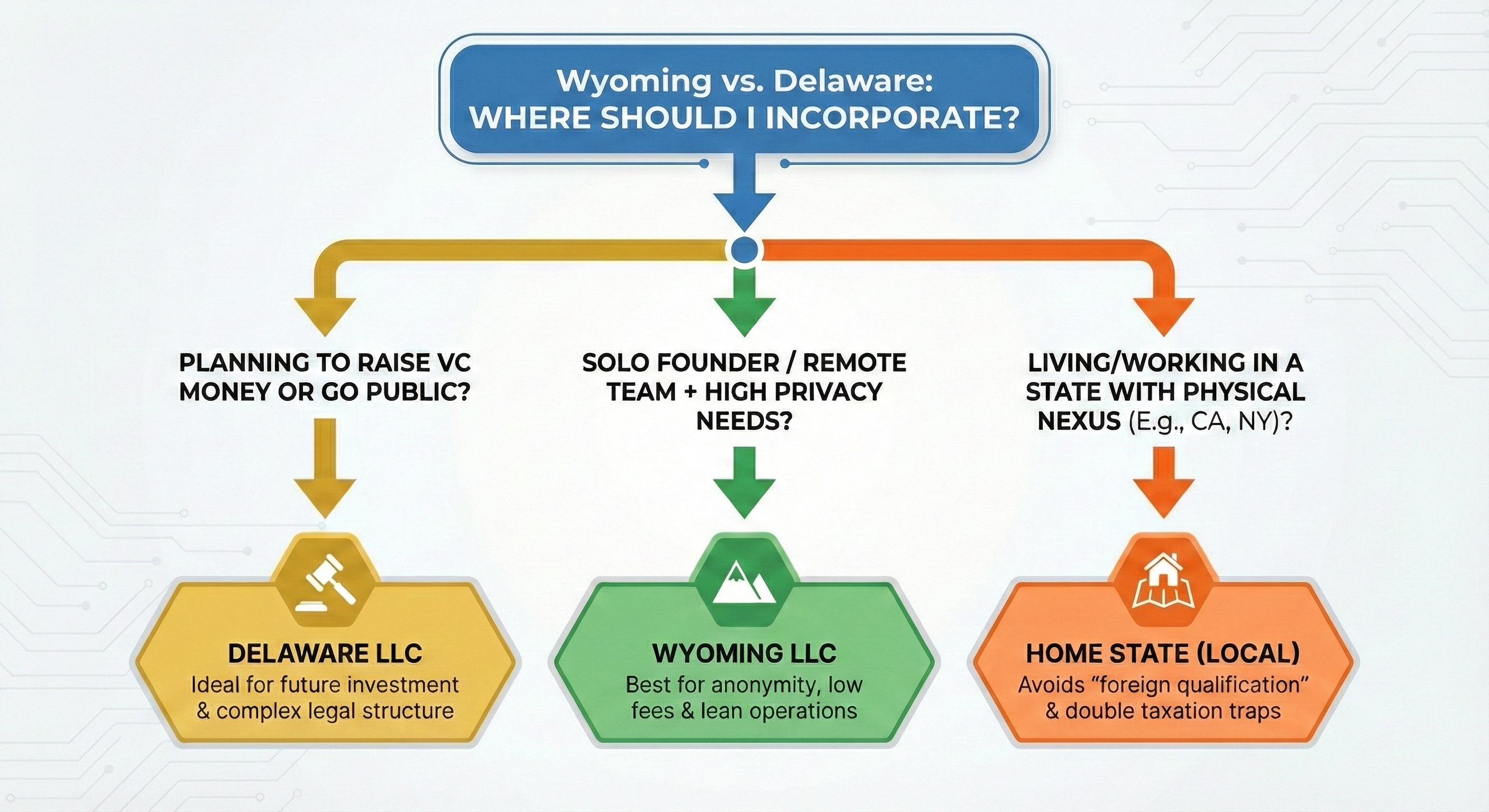
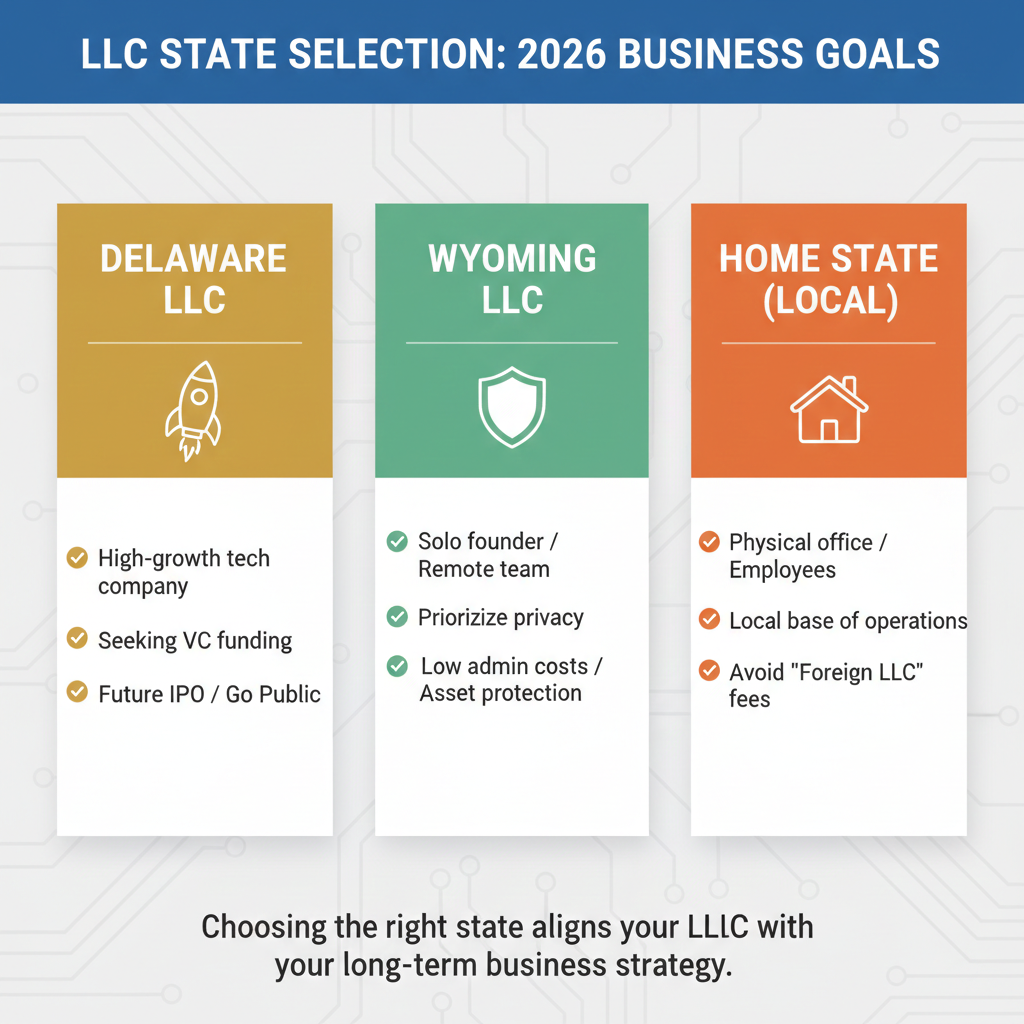
- Delaware is the right fit if: You are building a high-growth tech company, you want to raise money from VCs, or you plan to go public in the future.
- Wyoming is the right fit if: You are a solo founder or a remote team looking for privacy, low administrative costs, and strong asset protection.
- Local incorporation is the right fit if: You have a physical office, employees, or a home base in a state that requires you to pay local business taxes anyway.
Choosing Your Foundation
Don’t pick a state just because it’s “what everyone does”. Whether you need Delaware’s legal prestige for future investors or Wyoming’s low-cost privacy, the real win is in keeping your personal and business records strictly separate. By staying organized from day one, you ensure your legal foundation actually protects your assets instead of just adding to your administrative workload.
About the Author
Isabella Jones started her career at Deloitte, where she worked on tax compliance for some of the country’s fastest-growing companies. She later joined Fynlo as Senior Financial Strategist, bringing that experience to freelancers and small business owners who need practical financial guidance without the corporate complexity.
With an Accounting degree from Villanova University, Isabella focuses on making financial planning easier to understand and apply in day-to-day business. She works closely with freelancers and small businesses on areas like taxes, cash flow, and building more stable financial systems.